Ask Gibson County Knife Sharpening
Straight answers about our kitchen-knife sharpening, what we accept, how we work, and what to expect.
Answers to common questions about Gibson County Knife Sharpening, including accepted knives, pricing, appointments, edge testing, chip and tip correction, serrated bread knives, and knife care after sharpening.
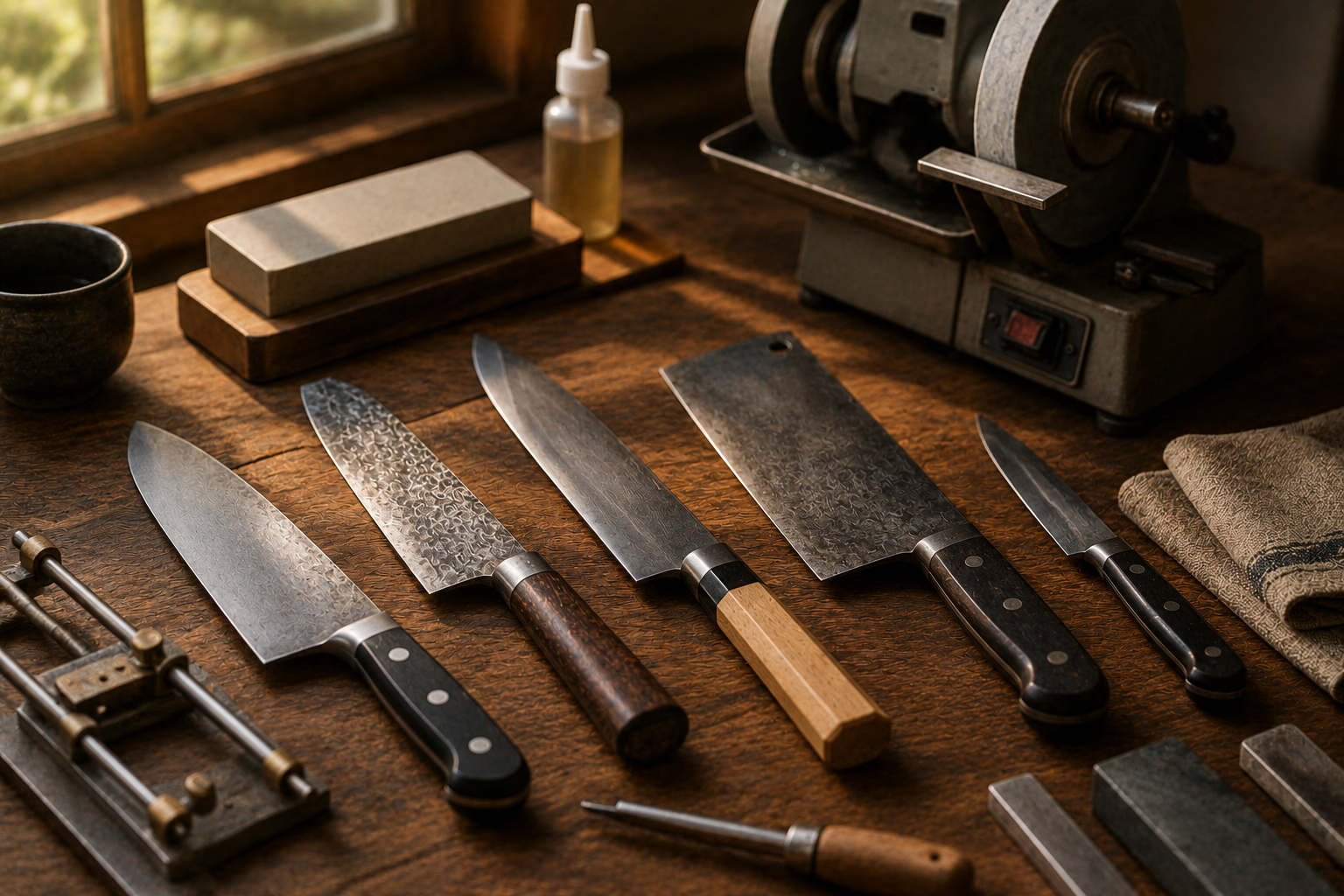
What We Do
Gibson County Knife Sharpening provides appointment-based sharpening for straight-edged kitchen knives and serrated bread knives in Medina, Tennessee. Every knife is inspected and sharpened individually rather than processed as part of a high-volume batch.
What Knives Do You Currently Sharpen?
Our current service focuses on kitchen knives:
• Chef’s knives.
• Santoku and general-purpose kitchen knives.
• Paring and utility knives.
• Carving and slicing knives.
• Boning and fillet knives used for food preparation.
• Kitchen cleavers that can be safely serviced.
• Serrated bread knives.
Unusual construction, extensive damage, very thick blades, and specialty geometry are evaluated individually before work begins.
What Do You Not Accept?
We do not currently accept:
• Ceramic knives.
• Pocket knives or everyday-carry knives.
• Scissors, salon shears, or garden tools.
• Honing rods or sharpening steels.
Ceramic-knife owners should contact the original manufacturer for approved sharpening, repair, warranty, or replacement options.
This Learning Center includes educational articles about tools we do not service, but an article does not mean that service is offered.
How Much Does Sharpening Cost?
Current listed pricing is:
• Straight-edged kitchen knives: $12 each.
• Serrated bread knives: $15 each.
The condition and construction of each knife are reviewed during intake. Significant chip correction, tip reshaping, heavy corrosion, or other unusual work may need to be discussed before sharpening begins.
Do I Need an Appointment?
Yes. Drop-off is by appointment.
Contact Gibson County Knife Sharpening before bringing knives. The drop-off location and arrangements are provided after the appointment is confirmed.
Do not leave knives without prior confirmation.
How Do You Decide How to Sharpen My Knife?
There is no single preset angle or process for every knife.
We consider:
• The existing bevel and blade geometry.
• Steel and apparent hardness.
• Blade thickness.
• Chips, rolls, tip damage, and prior sharpening.
• The knife’s intended kitchen use.
• Whether the edge needs more durability or cutting efficiency.
The goal is a stable, useful edge suited to that individual knife—not simply the smallest possible angle.
What Equipment Do You Use?
Our main sharpening system is a Tormek T8 water-cooled machine.
Controlled belt equipment may be used when a knife needs profile correction, chip work, or tip reshaping. Fine abrasives, ceramic finishing, leather, and felt are used as appropriate for refining and deburring.
The equipment is selected around the knife and the work required. We do not use bench stones as part of our current process.
How Do You Check the Finished Edge?
Sharpening is followed by inspection, deburring, cleaning, and performance testing.
Depending on the knife, evaluation may include:
• Direct-light edge inspection.
• Controlled cutting tests.
• Brubacher Edge Sharpness Scale testing with an Edge On Up instrument.
• Canon macro photography when photographs add useful documentation.
A number alone does not determine whether an edge is appropriate. The final result must also suit the steel, geometry, and intended work.
Can You Correct Chips or a Broken Tip?
Many small chips and broken tips can be corrected during sharpening.
The result depends on:
• Damage depth and location.
• Remaining blade height.
• Blade thickness and profile.
• Steel and construction.
• How much material would need to be removed.
Correction may slightly change the blade profile. Major damage is discussed before substantial material is removed.
Cracks, severe corrosion, unsafe handles, and major distortion may make sharpening inappropriate.
Do You Thin Knives or Refinish Entire Blades?
Not as part of our current service.
Our work focuses on sharpening, edge correction, limited tip reshaping, and appropriate serration work.
Full blade thinning, cosmetic refinishing, scratch removal, major rust restoration, handle rebuilding, and extensive structural work are separate specialties and are not implied by routine sharpening.
How Are Serrated Bread Knives Sharpened?
Serrated bread knives require a different process from straight-edged knives.
The serration pattern, radius, depth, wear, and blade thickness are inspected before work begins. Individual serrations are addressed with equipment suited to their shape.
Heavily damaged or extremely shallow serrations may limit what can be corrected without changing the original pattern.
How Often Should I Bring My Knives Back?
Use performance rather than a fixed calendar date.
Consider sharpening when the knife:
• Slides on tomato, pepper, or onion skin.
• Crushes soft produce.
• Tears herbs or protein.
• Requires noticeably more pressure.
• Cuts unevenly from heel to tip.
• No longer responds meaningfully to appropriate light maintenance.
A recurring calendar reminder to inspect your knives can help, but it should prompt evaluation—not automatic sharpening.
How Should I Care for a Freshly Sharpened Knife?
• Hand wash and dry the knife promptly.
• Use wood or quality plastic cutting boards.
• Avoid glass, stone, ceramic, and metal cutting surfaces.
• Do not put the knife in a dishwasher.
• Store the edge in a block, guard, drawer organizer, or suitable magnetic rack.
• Do not scrape food across the board with the cutting edge.
• Avoid bones, frozen food, twisting, prying, and opening packages unless the knife is designed for that work.
Good care protects both the edge and the value of the sharpening.
Have a Knife You Are Unsure About?
Contact Gibson County Knife Sharpening before scheduling. A description and clear photographs can help determine whether the knife falls within our current services and whether an in-person evaluation is appropriate.
Key Takeaways
Kitchen Knives Are Our Focus
We currently sharpen straight-edged kitchen knives and serrated bread knives by appointment.
Every Knife Is Evaluated
Angle, abrasives, correction, finishing, and testing are selected for the individual knife.
Ask Before Bringing Specialty Items
Contact us first when the construction, damage, or service category is uncertain.
References
The following sources were used in preparing and supporting this article.
Knife Sharpening
Tormek
tormek.com
The Tormek Way of Sharpening
Tormek
tormek.com
PT50 Series Edge Sharpness Testers
Edge On Up
edgeonup.com
How to Sharpen Your Knives
ZWILLING
zwilling.com