Common Knife Damage and Repair
Chips, rolls, broken tips, corrosion, thick geometry, and structural problems require different repairs and different expectations.
Ordinary dullness can usually be corrected through routine sharpening. Physical damage may require reshaping, thinning, bolster work, corrosion treatment, handle evaluation, or retirement of the knife.
Sharpening and Repair Are Different
Routine sharpening restores a worn but mostly continuous edge. Repair removes or reshapes damaged steel, corrects geometry, or addresses structural concerns before a new edge can be finished.
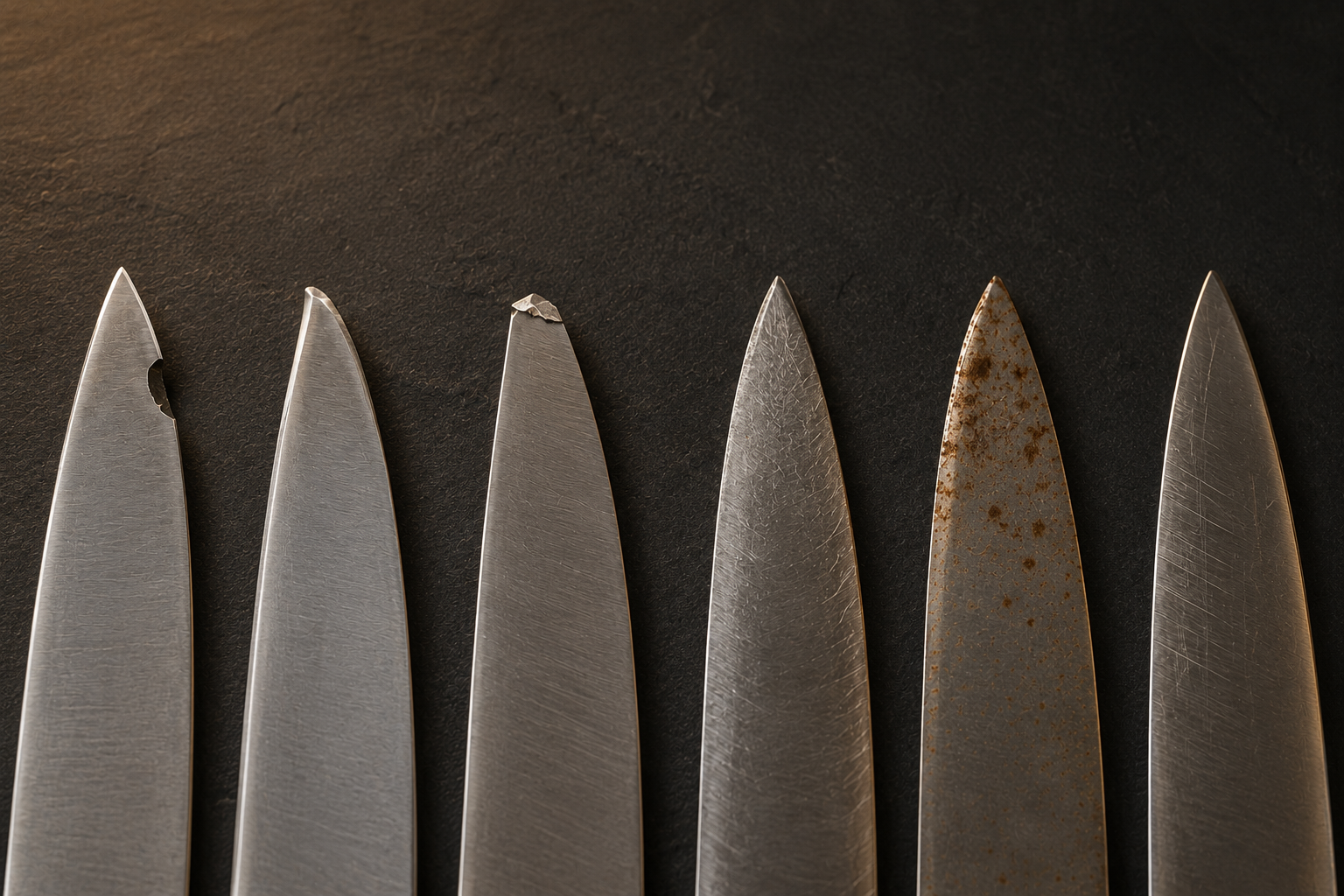
Common Types of Knife Damage
The correct repair begins with identifying the actual problem.
Chipped Edge
One or more sections of steel have broken away from the cutting edge.
Rolled Edge
The thin apex has bent or folded to one side without fully breaking away.
Broken or Bent Tip
The point is flattened, rounded, folded, or missing.
Uneven Profile
A dip, wave, flat spot, or overground section prevents consistent board contact.
Rust and Pitting
Corrosion has stained or removed steel from the blade surface or edge.
Thick Geometry
The apex may be sharp while excessive thickness behind it causes wedging and high cutting force.
Bolster Interference
A full bolster extends below the cutting line and prevents the heel from reaching the board.
Structural Damage
Loose handles, cracks, bends, twists, gaps, or damaged ferrules can make the knife unsafe.
Damage and Repair at a Glance
| Condition | Typical Correction | What May Change |
|---|---|---|
| Small chip | Lower and blend the surrounding edge until the chip disappears. | Slight blade-height loss and a wider bevel. |
| Large chip | Remove more steel across the cutting line and possibly thin afterward. | Noticeable blade-height, profile, and service-time changes. |
| Rolled edge | Remove or realign weak folded steel, then create a stable apex. | The final angle may be made more durable. |
| Broken tip | Reshape the spine, edge, or both to form a new point. | Tip shape, edge length, and appearance. |
| Recurve or flat spot | Reprofile the cutting line and address any interfering bolster. | Belly shape and blade height. |
| Thick geometry | Thin the blade above the edge. | Blade finish and bevel appearance. |
| Rust or pitting | Remove active corrosion where practical and restore usable edge steel. | Deep pits or scars may remain visible. |
Chipped and Rolled Edges
A chip is missing steel. To restore a continuous cutting line, the surrounding edge must be lowered to the deepest part of the damage. A small chip may be removed during normal sharpening or gradually over several services. A deep chip requires more metal removal and may make thinning necessary.
Chips commonly result from bone, frozen food, pits, hard cutting surfaces, twisting in the cut, impact with metal, or an edge that is too delicate for the steel and intended use.
A rolled edge is bent rather than missing. Rolls are common in softer steels and when an edge is scraped sideways, twisted, struck against hard objects, stored loose, or used with excessive pressure. Repeatedly folded steel can weaken and may need to be removed instead of continually pushed back into place.
Broken Tips and Uneven Profiles
Knife tips can flatten, bend, round over, or break when dropped or used for prying. Repair creates a new point from the steel that remains. A minor break may be corrected with little visible change, while a large break can noticeably alter the profile, edge length, blade height, or appearance.
A recurve is a dip in the cutting edge that no longer reaches the board. Waves, flat spots, and overground sections can also interrupt normal cutting. These problems often result from inconsistent sharpening or incomplete access near a full bolster.
Repair may require blending the cutting line, removing steel from surrounding areas, and reducing the bolster so the entire edge contacts the board.
Rust, Pitting, and Cosmetic Damage
Corrosion ranges from light staining to deep cavities. A stable gray or blue patina on reactive steel is different from active orange or brown rust, which continues removing material.
Surface rust can often be reduced or removed, but deep pitting cannot disappear unless all surrounding steel is taken down to the bottom of each cavity. That amount of material removal may be unsafe or impractical. A usable knife may still retain visible scars.
Scratches usually affect appearance more than cutting performance. Refinishing is separate from routine sharpening and may alter logos, etching, coatings, cladding, or decorative finishes.
When a Sharp Knife Still Cuts Poorly
Repeated sharpening moves the cutting edge into thicker blade material. The apex may still test sharp while the blade wedges in carrots, potatoes, squash, and other dense foods.
Warning signs include unusually wide bevels, high cutting force, food splitting before the blade passes through, steering, and poor release. Sharpening the apex again does not correct this problem.
Thinning removes steel above the edge to restore more efficient geometry. It is a separate operation that can change the blade finish and requires more time than ordinary sharpening.
Structural Damage Requires Caution
A sharp blade is not safe when the handle moves, cracks, separates, or no longer provides secure control. Loose scales, raised rivets, open gaps, rotated handles, and damaged ferrules or bolsters require evaluation before sharpening.
Bent and twisted blades can affect setup, bevel appearance, board contact, and the direction the knife travels through food. Attempting to straighten hardened steel can cause cracking, and not every bend is safely reversible.
A blade crack is a structural failure rather than ordinary edge damage. Continued use or sharpening may allow the crack to grow. A suspected cracked blade should be removed from service until evaluated and may need to be retired.
Damage From Previous Sharpening
Previous sharpening may leave inconsistent bevel angles, uneven widths, deep scratches, recurves, missing heel contact, rounded tips, or excessive thickness. Some asymmetry is intentional, but accidental unevenness can cause steering and poor edge support.
Carbide pull-through sharpeners may remove steel aggressively, impose a fixed angle, tear the apex, and leave the heel incomplete when the handle or bolster cannot pass through the slot.
Powered sharpening can also cause damage when excessive pressure, dull abrasives, or prolonged contact creates too much heat. Visible blue, purple, or brown discoloration is a warning, although harmful temperatures may occur before dramatic color appears.
When Repair May Not Be Practical
Safety, remaining steel, repair cost, replacement value, and sentimental value should all be considered.
Structural Crack
The blade may fail during use even after the edge is sharpened.
Severe Corrosion
Extensive pitting may leave too little sound steel for safe repair.
Major Distortion
A severe bend or twist may not be safely reversible.
Unsafe Handle
Handle repair may exceed the replacement value of an ordinary knife.
Excessive Steel Loss
Further grinding may leave the knife too narrow, weak, or awkward.
Poor Original Construction
Repair cannot correct every limitation of a weak or poorly designed knife.
When Approval Is Important
Major repairs should be discussed before work begins when they will significantly reduce blade height, alter the tip or profile, require thinning or bolster reduction, change the finish, leave visible pitting, approach replacement cost, or affect a sentimental, handmade, or collectible knife.
Preventing Common Damage
Use a Suitable Board
Wood and quality plastic are generally kinder to edges than glass, stone, ceramic, or metal.
Avoid Bone and Frozen Food
Use a tool designed for hard, dense, frozen, or bone-in materials.
Do Not Twist or Pry
Withdraw and reposition the blade instead of applying sideways force.
Use a Bench Scraper
Move chopped food without dragging the sharpened edge sideways across the board.
Wash and Dry by Hand
Avoid dishwasher impact, heat, chemicals, and prolonged moisture.
Store the Edge Protected
Use a block, magnetic system, drawer organizer, guard, or knife roll.
Maintain Before Failure
Routine sharpening usually removes less steel than correcting severe dullness or damage.
Stop When Damage Appears
Continued use can enlarge chips, deepen corrosion, worsen cracks, or make repairs more expensive.
Damage Evaluation Checklist
Inspect the edge from heel to tip for chips, rolls, flat spots, and missing steel. Check whether the tip is bent, rounded, or broken. View the blade along the spine for bends and twists. Confirm that the full edge contacts a flat cutting board. Inspect the heel and bolster for interference or recurve. Look for rust, pitting, staining, and active corrosion. Check the handle for cracks, looseness, gaps, and raised rivets. Consider whether the knife has become thick behind the edge. Document existing scratches and cosmetic damage. Identify how the damage occurred before selecting a replacement edge. Discuss permanent profile or finish changes before major repair.
Key Takeaways
Different Damage Needs Different Work
Dullness, rolls, chips, broken tips, corrosion, geometry problems, and structural failures are not repaired the same way.
Repair Can Change the Knife
Removing damage may permanently alter blade height, tip shape, bevel width, finish, or profile.
Early Attention Preserves Steel
Suitable boards, safe technique, prompt cleaning, protected storage, and timely sharpening prevent many major repairs.
References
The following sources were used in preparing and supporting this article.
How to Repair a Chipped Knife
Work Sharp
worksharptools.com
How to Repair a Broken Knife Tip
Work Sharp
worksharptools.com
Sharpening Q & A
Shun Cutlery
shun.kaiusa.com
WÜSTHOF Lifetime Warranty Details
WÜSTHOF
wusthof.com