Can Stainless Steel Knives Rust?
Stainless knife steel resists corrosion, but moisture, salt, acids, dishwashers, contamination, and damp storage can still cause staining, rust, and pitting.
Stainless steel is corrosion-resistant rather than completely rust-proof. Its protective chromium-rich surface layer can be weakened by salt, acids, trapped moisture, harsh chemicals, contamination, and neglect.
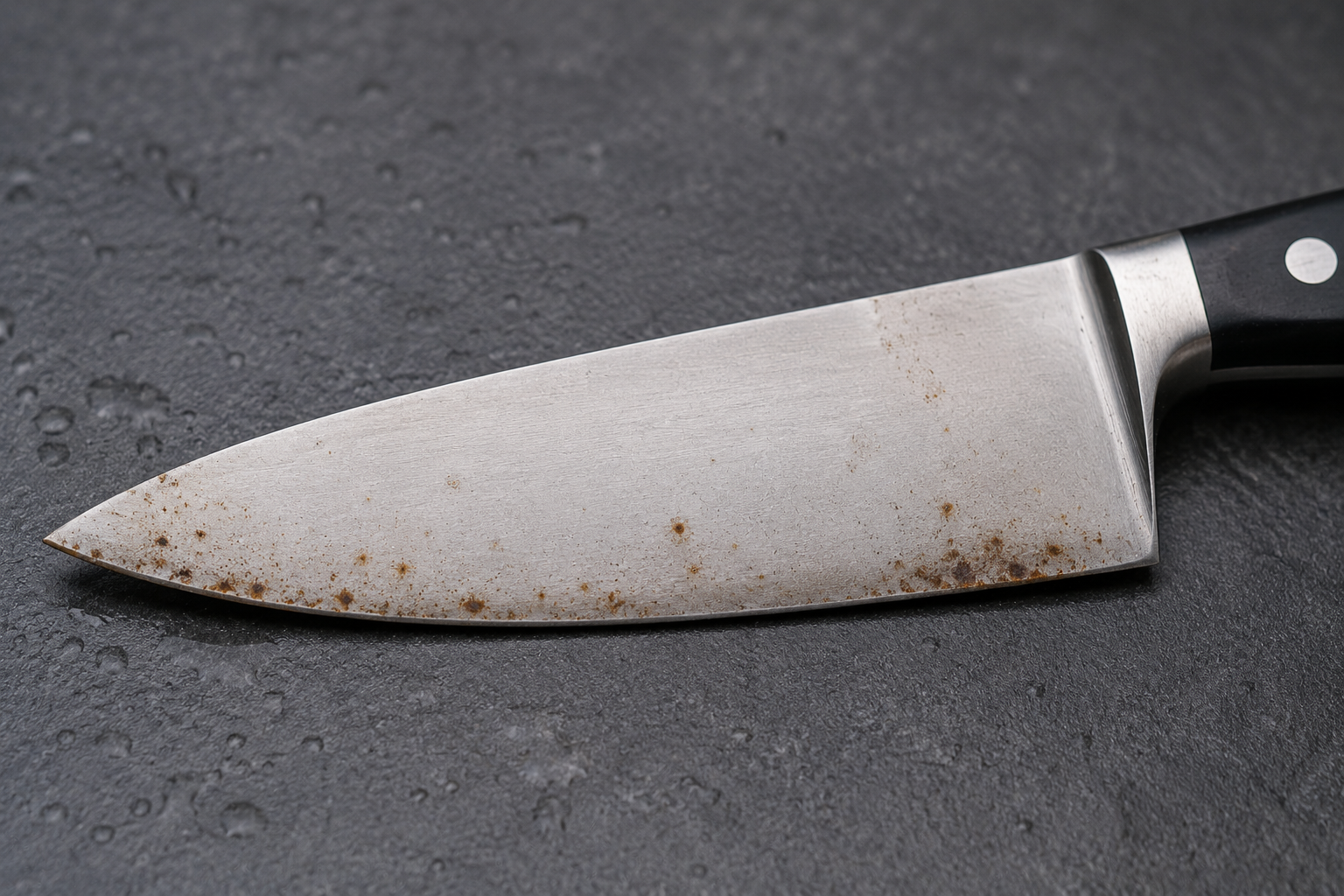
The Practical Answer
Stainless steel offers strong corrosion resistance, but it is not completely rust-proof. Moisture, salt, acids, chemicals, contamination, and damp storage can still cause staining, rust, or pitting.
Why Stainless Steel Resists Corrosion
Chromium in stainless steel helps form a very thin, chromium-rich passive layer on the surface. This layer separates the underlying metal from conditions that encourage corrosion.
When lightly damaged, the passive layer can often reform when oxygen is available. This self-renewing protection is why stainless steel performs well in kitchens.
The protection is not unlimited. Salt, harsh chemicals, trapped moisture, contamination, surface damage, and unsuitable storage can overwhelm or interfere with it.
Not All Stainless Knife Steels Are Equal
Knife steels balance corrosion resistance with hardness, toughness, wear resistance, edge stability, and ease of sharpening.
Some stainless steels prioritize corrosion resistance. Others are designed for greater hardness or wear resistance and may be more sensitive to staining or rust.
The amount of chromium listed in the alloy is not the complete story. Heat treatment and the amount of chromium remaining available in the steel also affect corrosion resistance.
What Can Make a Stainless Knife Rust?
Standing Moisture
Water left on the blade can encourage corrosion, especially near scratches, logos, joints, and handle areas.
Salt
Brines, salted foods, saltwater, and coastal air can attack stainless steel more aggressively than plain water.
Acidic Foods
Citrus, tomatoes, vinegar, onions, and similar foods can stain or corrode a blade when residue remains.
Dishwasher Exposure
Heat, detergent, prolonged moisture, and contact with utensils can damage the blade, edge, handle, and finish.
Metal Contamination
Particles from ordinary carbon steel can lodge on the surface and rust, making the stainless blade appear to be corroding.
Trapped Moisture
Damp guards, sheaths, blocks, towels, and drawer liners can hold moisture against the knife.
Rust, Staining, Patina, and Pitting
| Condition | Typical Appearance | What It Means |
|---|---|---|
| Staining | Discoloration without obvious roughness or missing steel. | May be cosmetic, but the cause should still be corrected. |
| Active rust | Orange, reddish-brown, rough, or powdery areas. | Ongoing oxidation that should be addressed promptly. |
| Patina | Gray, blue, brown, or dark discoloration on reactive carbon steel. | A generally stable surface change, not the same as active rust. |
| Pitting | Small holes, cavities, or rough depressions. | Permanent steel loss that may weaken the edge or trap residue. |
Why Rust Often Appears Near the Edge
The cutting edge is extremely thin and receives repeated contact with food, cutting boards, abrasives, and cleaning materials.
Sharpening exposes fresh steel at the bevel and apex. Moisture or food residue left along that narrow area can cause fine rust even when the larger blade surface appears dry.
A knife placed into a block, guard, or sheath too soon may trap moisture along the edge. Corrosion there can reduce cutting performance and eventually form weak or pitted sections.
Keep Quality Knives Out of the Dishwasher
Hand washing and immediate drying are safer for nearly every quality kitchen knife. Dishwashers combine strong detergent, heat, prolonged moisture, and impacts against racks or utensils.
How to Prevent Rust
Wash Promptly
Remove food residue soon after use, especially after cutting salty or acidic ingredients.
Dry Completely
Dry the edge, heel, bolster, rivets, handle joints, and blade faces before storage.
Avoid Soaking
Do not leave knives in sinks, dishwater, wet towels, or damp preparation areas.
Store Dry
Make sure blocks, guards, racks, sheaths, and drawers are clean and dry.
Oil When Appropriate
A very light coating of food-safe mineral oil may help during long storage or in humid conditions.
Inspect Regularly
Small spots are easier to address before they deepen into permanent pits.
What to Do When Rust First Appears
Begin with the gentlest method likely to work:
• Wash and dry the knife so the surface is clean.
• Use a mild rust-removal or polishing product suitable for the steel and finish.
• Work carefully and follow the direction of the existing finish when practical.
• Keep abrasives away from the cutting edge unless the edge is also being sharpened.
• Wash, rinse, and dry the knife thoroughly afterward.
• Inspect the area for remaining roughness or pitting.
Deep rust, widespread corrosion, pitting near the edge, or corrosion around the handle should be evaluated before continued use.
Avoid Aggressive Rust Removal
Coarse sanding, wire wheels, harsh chemicals, and careless polishing can erase markings, alter satin or mirror finishes, damage patterned blades, round the edge, and create deep scratches. Test cosmetic methods carefully or seek professional help when appearance matters.
When a Rusted Knife May Be Unsafe
A small amount of removable surface rust does not automatically make a knife unusable.
More serious concerns include:
• Deep pitting that reaches or weakens the cutting edge.
• Corrosion near the tang, bolster, ferrule, or handle joints.
• A loose, cracked, or separating handle.
• Structural cracking or severe blade thinning.
• Rough cavities that cannot be cleaned adequately.
A knife with heavy corrosion or structural damage should be inspected before further use or sharpening.
Humidity and Long-Term Storage
Humid kitchens, garages, outdoor cooking areas, coastal environments, and poorly ventilated storage can keep moisture on metal surfaces longer.
Knives stored for extended periods should be clean, completely dry, and periodically inspected. A light coating of food-safe mineral oil may help protect vulnerable surfaces when appropriate.
Do not store a damp knife in a leather sheath. Leather can retain moisture and may contain compounds that encourage corrosion.
Key Takeaways
Stainless Means Resistant
Stainless steel resists corrosion but is not completely rust-proof.
Moisture, Salt, and Acids Matter
Standing water, salty foods, acidic residue, dishwashers, and damp storage can cause rust or pitting.
Prompt Care Prevents Most Problems
Hand washing, immediate drying, clean storage, and regular inspection provide the best protection.
References
The following sources were used in preparing and supporting this article.
Corrosion Resistance Testing of Stainless Knife Steels
Knife Steel Nerds
knifesteelnerds.com
Which Knife Steels Have the Best Corrosion Resistance?
Knife Steel Nerds
knifesteelnerds.com
Pickling and Passivating Stainless Steel
Nickel Institute
nickelinstitute.org
How to Clean and Care for Your Knife
ZWILLING
zwilling.com