Sharpening Grit Guide: What Each Stone Does
Choose grit based on the condition of the edge and the amount of steel that needs to be removed.
Sharpening stone grit describes the approximate size of the abrasive particles. Coarse stones repair and reshape edges, medium stones handle most routine sharpening, and fine stones refine the scratch pattern and finished edge.
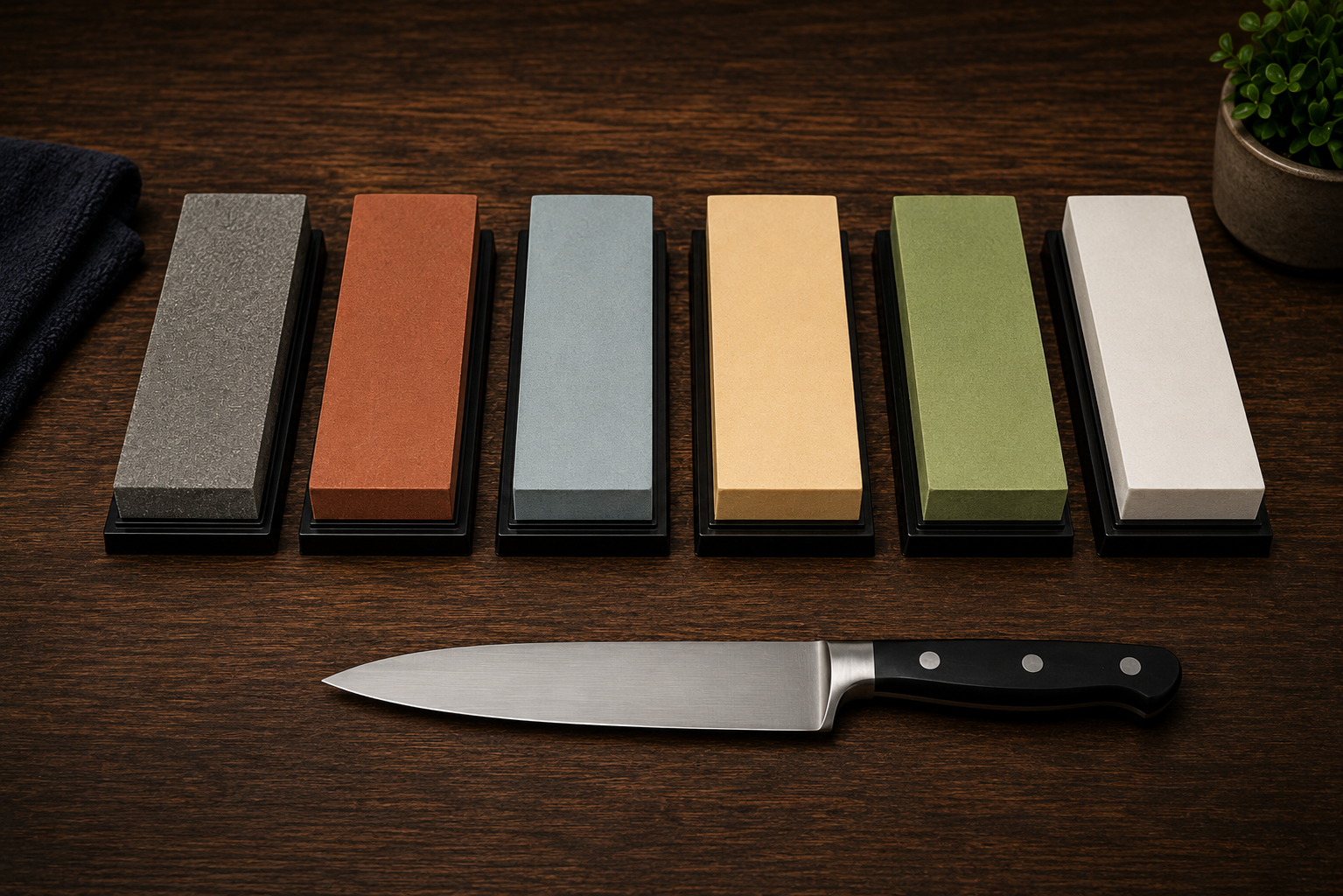
What Sharpening Grit Means
Grit describes the approximate size of the abrasive particles in a sharpening stone. Lower grit numbers use larger particles that remove steel quickly, while higher grit numbers use smaller particles that leave a finer scratch pattern.
Grit numbers are useful guides, but they are not perfectly standardized between manufacturers. Two stones with the same labeled grit may cut differently because of the abrasive material, binder, stone hardness, and how quickly fresh abrasive is exposed.
Choose grit according to the condition of the edge and the work that needs to be done—not simply by selecting the highest number available.
What Each Grit Range Does
| Grit Range | Primary Use | What It Does |
|---|---|---|
| 120–400 | Repair and reshaping | Removes chips, resets bevels, and changes edge geometry quickly |
| 500–800 | Coarse sharpening | Restores very dull edges and establishes a fresh apex |
| 1000–2000 | Routine sharpening | Handles most normal sharpening and leaves a useful working edge |
| 3000–5000 | Fine refinement | Reduces scratches, improves smoothness, and refines the apex |
| 6000 and above | Polishing | Produces a finer finish and may reduce useful bite |
Coarse Grit vs. Fine Grit
Use coarse grits to correct problems and finer grits to refine an edge that is already formed.
Coarse Grit
Fast Steel RemovalPros
Repairs chips, resets bevels, and restores very dull edges quickly.
Cons
Removes more steel and can leave deep scratches if used longer than necessary.
Best For
Damaged, chipped, or severely dull knives.
Fine Grit
Edge RefinementPros
Smooths the scratch pattern, reduces burr remnants, and refines cutting feel.
Cons
Works slowly and cannot efficiently repair damage or establish a missing apex.
Best For
Final refinement after the edge has already been sharpened.
Match the Starting Grit to the Edge
Start with the least aggressive grit that can complete the job efficiently.
A knife with chips, a damaged bevel, or a severely rounded edge may need a coarse stone. A normally dull kitchen knife often needs only a medium grit to restore the apex. A knife that is already sharp may require nothing more than light refinement on a fine stone.
Starting too coarse removes unnecessary steel. Starting too fine wastes time and may polish an edge that has not yet been fully formed.
A Simple Grit Progression
| Edge Condition | Starting Grit | Suggested Progression |
|---|---|---|
| Chipped or damaged | 120–400 | Repair grit, then 800–1000, then refine if needed |
| Very dull | 500–800 | Establish the apex, then finish around 1000–2000 |
| Normally dull | 1000 | Sharpen and finish on the same stone or move to 2000–3000 |
| Already sharp | 3000–5000 | Light refinement only |
| Polishing only | 6000 and above | Use after the edge is already clean and stable |
Pressure and Technique Matter Too
Grit alone does not determine the result. Pressure, angle control, stone condition, and the number of passes all affect how quickly steel is removed and how refined the edge becomes.
Use enough pressure to let the stone cut, then reduce pressure as the apex is completed. Heavy pressure late in the process can create a larger burr, deepen scratches, or make the edge less consistent.
A clean, flat stone and steady sharpening angle will usually matter more than adding extra grit steps.
Know When to Stop
Stop sharpening when the bevels meet cleanly, the burr has been removed, and the edge performs as intended.
Continuing through finer stones is not automatically an improvement. Extra refinement may reduce useful bite, remove more steel, and add time without making the knife work better.
The best finishing grit is the one that produces the cutting feel and durability the knife needs.
Key Takeaways
Choose grit according to the condition of the edge and the work that needs to be done.
Start With the Edge Condition
Damaged or severely dull knives need coarser abrasives. Normally dull knives often need only a medium grit.
Coarse Grit Repairs
Lower grit numbers remove steel quickly for chips, bevel correction, and major sharpening work.
Fine Grit Refines
Higher grit numbers smooth the scratch pattern and refine an edge that has already been formed.
Technique Still Matters
Angle control, pressure, stone condition, and burr removal affect the result as much as the grit number.
Stop When the Edge Is Ready
More grit steps are not always better. Finish when the edge is clean, stable, and suited to the knife’s use.
References
The following sources were used in preparing and supporting this article.
KS-123 Knife Angle Setter
Tormek
tormek.com
Knife Sharpening Basics
Korin
korin.com
How to Sharpen Any Knife: Back to Basics
Work Sharp
worksharptools.com