Pocket Knives and Everyday Carry
A dependable pocket knife requires more than a sharp edge. Blade design, steel, lock function, pivot condition, cleaning, storage, and responsible use all matter.
Pocket knives handle many everyday cutting tasks, but their folding mechanisms and varied blade designs require different care than kitchen knives. Safe use depends on both edge condition and reliable mechanical operation.
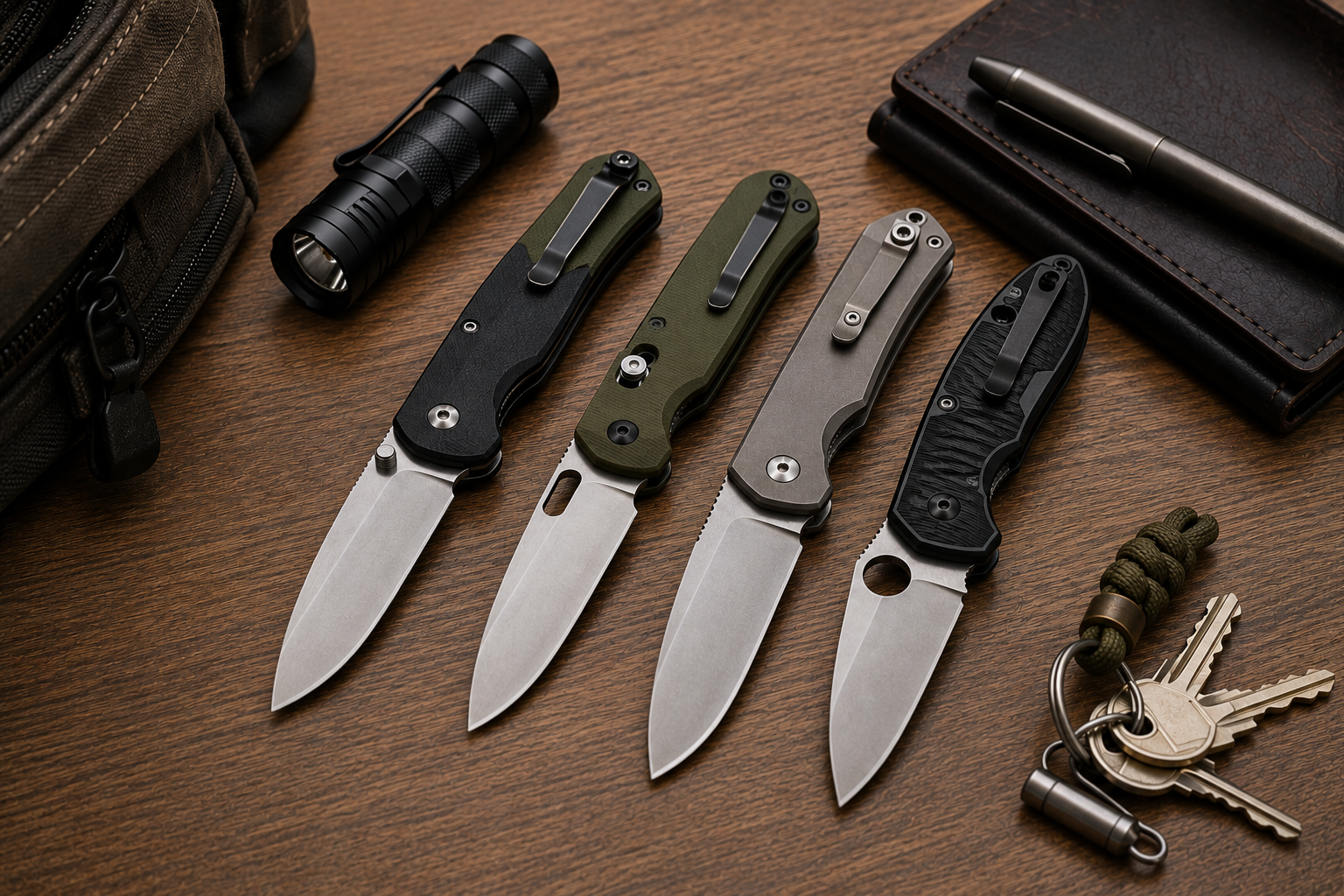
The Practical Approach
Choose a pocket knife for the cutting tasks you actually perform, keep the edge and mechanism clean, and stop using it whenever the lock, pivot, handle, or blade cannot be trusted.
What Is an Everyday-Carry Knife?
An everyday-carry knife, often called an EDC knife, is a compact tool carried for routine cutting work.
Common tasks include opening packages, cutting cord, trimming material, removing labels, and other light utility work.
Some people prefer traditional slip-joint knives. Others use modern locking folders with pocket clips and one-handed opening.
The best design depends on intended use, hand size, carry method, maintenance preferences, and the rules that apply where the knife is carried.
Pocket-Knife Design Choices
Blade Size
A modest blade is often easier to control and carry than a larger, heavier design.
Blade Shape
Drop points, clip points, sheepsfoot blades, tantos, and hawkbills favor different cutting motions.
Edge Type
Plain, fully serrated, and partially serrated edges each have different strengths and sharpening needs.
Handle
The handle should provide enough grip and control without creating uncomfortable pressure points.
Opening Method
Thumb studs, holes, flippers, and nail nicks change how the knife is opened and controlled.
Lock or Slip Joint
A locking knife depends on reliable engagement, while a slip joint requires careful pressure control because it does not lock open.
Plain and Serrated Edges
Spyderco distinguishes plain, serrated, and combination-edge formats because they behave differently in use.
Plain Edge
VersatilePros
Easy to sharpen and well suited to controlled slicing, carving, and everyday utility.
Cons
May lose useful bite sooner on rope, webbing, and abrasive packaging.
Best For
General cutting tasks and users who value simple maintenance.
Serrated or Combination Edge
Fibrous MaterialsPros
Can continue cutting rope, webbing, and tough packaging after a plain edge begins to feel dull.
Cons
Requires tools and technique that preserve the serration pattern; combination edges shorten the usable length of each section.
Best For
Users who regularly cut rope, straps, cardboard, or similar materials.
Steel Selection Involves Tradeoffs
Pocket-knife steels are commonly compared by edge retention, toughness, corrosion resistance, hardness, and ease of sharpening.
No steel provides the maximum possible performance in every category.
Knife Steel Nerds testing shows that higher wear resistance may improve edge retention while making sharpening more demanding. Tougher steels may tolerate abuse better but may need more frequent maintenance.
Heat treatment, hardness, blade thickness, and edge geometry can matter as much as the steel name.
A Sharp Edge Cannot Correct a Mechanical Problem
Do not use a folding knife when the lock slips, the blade opens unexpectedly, the pivot is loose, the handle is cracked, or the blade moves vertically when open.
Common Folding-Knife Concerns
Blade Play
Excess side-to-side or vertical movement may indicate pivot, lock, or hardware problems.
Incomplete Lockup
Dirt, wear, corrosion, damage, or poor adjustment may prevent reliable engagement.
Weak Closed Retention
A weak detent or damaged mechanism may allow the blade to begin opening during carry.
Poor Centering
A closed blade that rubs the liner or handle may indicate adjustment, wear, or alignment issues.
Loose Hardware
Pivot screws, handle screws, and pocket clips can loosen during repeated carry and use.
Internal Contamination
Lint, grit, adhesive, moisture, and corrosion can interfere with opening, closing, and lock function.
Inspect Before Carrying
• Confirm that the blade opens and closes smoothly.
• Check that the lock engages fully.
• Look for side-to-side and vertical blade movement.
• Confirm that the closed blade remains secure.
• Inspect the pivot, handle screws, and pocket clip.
• Check the edge and tip for chips, bends, or cracks.
• Look for rust, adhesive, moisture, and debris inside the handle.
• Remove the knife from service when any mechanical part cannot be trusted.
Use It as a Cutting Tool
A folding knife is especially vulnerable to sideways force because the blade, pivot, and lock must absorb the load.
• Do not pry.
• Do not twist the blade while it is embedded.
• Do not use the tip as a screwdriver.
• Avoid staples, wire, metal, concrete, tile, and masonry.
• Stop when the task requires excessive force.
• Use a safety cutter, screwdriver, pry tool, saw, or other purpose-built tool when appropriate.
Safe Opening, Closing, and Cutting
Learn how the specific opening method and lock work before carrying the knife.
• Keep fingers out of the opening and closing path.
• Open the blade deliberately and away from other people.
• Confirm lock engagement before cutting.
• Control the blade while releasing the lock.
• Move fingers out of the handle channel before closing.
• Make sure the blade is fully seated before returning it to a pocket.
• Cut away from the body and supporting hand.
• Never cut toward the thigh while seated.
• Never attempt to catch a falling knife.
Package Opening Has Hidden Risks
Cardboard, plastic bands, clamshell packaging, tape, and shipping materials may conceal staples, wire, batteries, products, or hard surfaces.
Use shallow cuts when contents are close to the surface. Keep the expected blade path away from the body and guiding hand.
For frequent package-opening work, a guarded safety cutter may be more appropriate than a pocket knife.
Clean According to How the Knife Was Used
Benchmade and Kershaw both emphasize regular cleaning and maintenance for folding knives, especially after exposure to water, dust, debris, or heavy use.
• Brush out pocket lint and loose debris.
• Remove adhesive with a cleaner compatible with the blade and handle materials.
• Dry the pivot and internal areas after moisture exposure.
• Lubricate sparingly so excess oil does not attract grit.
• Check the manufacturer’s instructions before disassembly.
• Do not assume disassembly is required for routine cleaning.
Food, sap, grease, salt, and chemical residue may require more thorough cleaning than ordinary pocket lint.
Use a Kitchen Knife for Routine Food Preparation
A dedicated kitchen knife is generally easier to clean and better suited to regular food preparation than a folding pocket knife with an enclosed pivot and internal mechanism.
Sharpening Must Match the Knife
Pocket knives use many steels, blade shapes, grinds, edge angles, and intended finishes.
A durable working edge may be more useful than an extremely thin polished edge on a knife used for cardboard, rope, and packaging.
• Inspect for chips, rolls, flat spots, and tip damage.
• Follow the existing bevel unless a change is justified.
• Choose an abrasive suitable for the steel.
• Preserve curves, serrations, tanto transitions, and recurve shapes.
• Maintain the angle through the belly without rounding the tip.
• Reduce and remove the burr completely.
• Clean abrasive residue from the blade and mechanism afterward.
Mechanical problems should be addressed before the knife is returned to use. Manufacturer service may be the safest option for lock, pivot, blade, or warranty concerns.
Store It Clean and Dry
• Remove debris from the blade, handle, pivot, lock, and clip.
• Dry completely, including spaces between liners and scales.
• Apply a suitable light protectant when needed.
• Avoid long-term storage in damp leather.
• Store the knife where the blade cannot open accidentally.
• Inspect periodically for corrosion, sticky action, loose hardware, and lubricant breakdown.
Know the Rules Where You Carry
Knife laws and policies can differ by state, city, school, workplace, venue, building, and property owner.
Blade length, locking mechanisms, opening methods, concealment, and restricted locations may all matter.
Rules change, and a knife that is lawful in one place may be prohibited in another. Verify current laws and policies before carrying.
This article provides general knife-care information and is not legal advice.
Key Takeaways
Match the Knife to the Task
Choose a practical blade size, shape, edge, steel, and carry method for the work actually performed.
Maintain the Entire Knife
The pivot, lock, closed retention, handle, hardware, and clip matter as much as edge sharpness.
Stop When It Is Unreliable
A sharp blade should not be carried or used when the mechanism, handle, or blade cannot be trusted.
References
The following sources were used in preparing and supporting this article.
Use and Care
Benchmade Knife Company
support.benchmade.com
How to Care for Your Kershaw Pocketknife
Kershaw Knives
kershaw.kaiusa.com
Edge Grinds
Spyderco
spyderco.com
Knife Steels Rated by a Metallurgist: Toughness, Edge Retention, and Corrosion Resistance
Knife Steel Nerds
knifesteelnerds.com