Custom vs. Production Knives
Price reflects manufacturing, labor, materials, availability, and ownership experience—not just cutting performance.
Production and custom knives can both be excellent. The better choice depends on geometry, heat treatment, fit, availability, support, personalization, budget, and how the knife will actually be used.
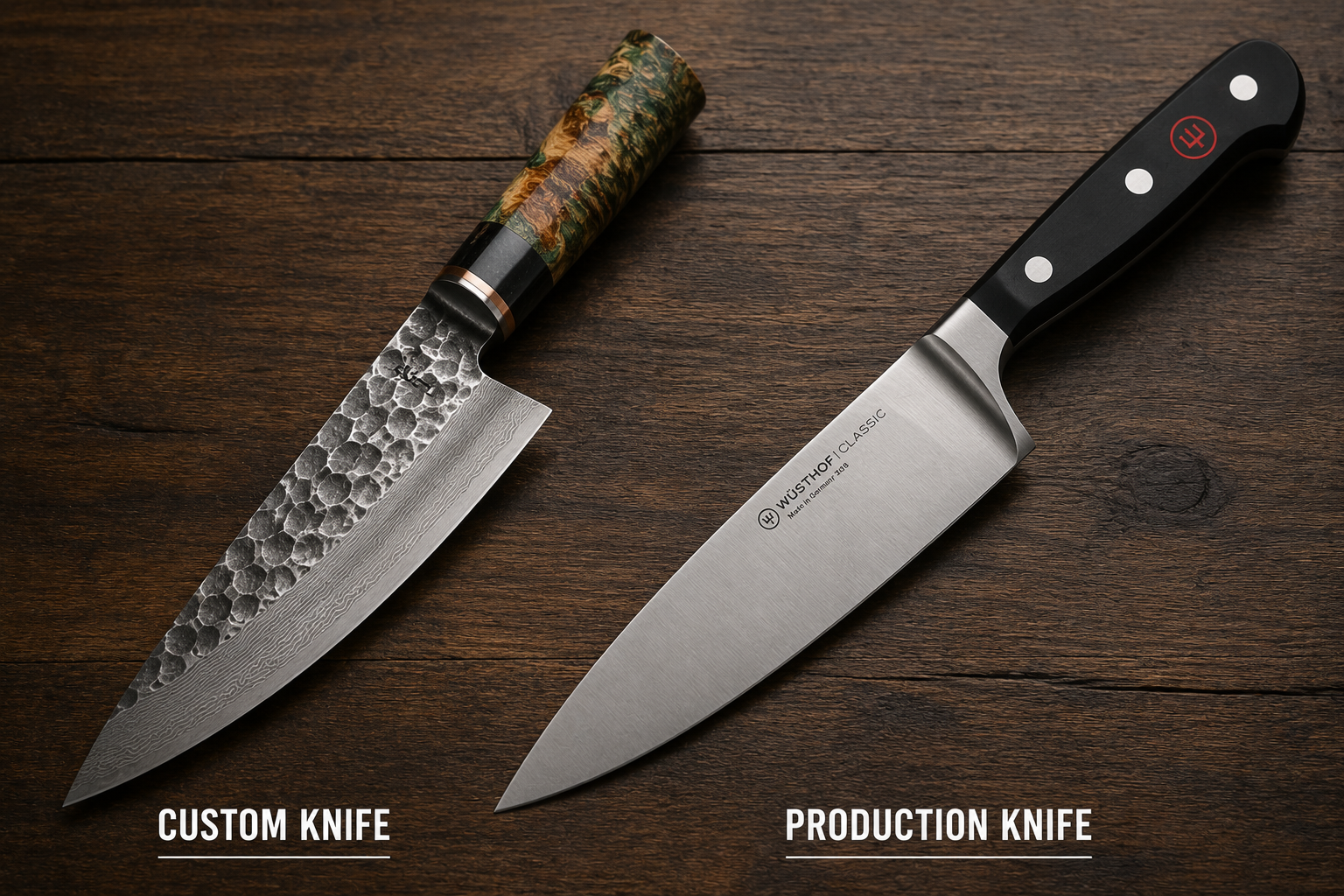
The Important Distinction
Production and custom describe how a knife was made—not how well it cuts. A well-designed production knife can outperform a poorly executed custom knife, while a skilled custom maker can create a knife that closely matches a particular cook.
Custom and Production at a Glance
Neither category is automatically superior. Each offers a different combination of consistency, individuality, cost, and availability.
Production Knife
Repeatable ManufacturingPros
Established designs, consistent dimensions, immediate availability, formal warranties, reviews, and easier replacement.
Cons
Fewer opportunities for personal dimensions, materials, balance, or one-of-a-kind details.
Best For
Most first-time buyers, working kitchens, limited budgets, and anyone who values predictability.
Custom Knife
Individual or Small-Batch WorkPros
Personal dimensions, direct maker involvement, distinctive materials, individual finishing, and rarity.
Cons
Higher cost, longer waits, less predictable support, and greater dependence on the maker’s skill and reputation.
Best For
Experienced buyers who know their preferences or value craftsmanship, personalization, or collecting.
What Production Manufacturing Can Provide
Production knives are made as repeatable models using standardized materials, tooling, dimensions, heat-treatment processes, and quality-control procedures.
Efficient manufacturing lowers cost without automatically lowering quality. Reputable companies can invest in engineering, testing, controlled hardening, automated grinding, inspection, customer service, warranties, and long-term availability.
A production knife is often easier to compare before purchase because measurements, reviews, replacement options, and owner experience are widely available.
What Custom Work Can Provide
A custom knife is usually made by an individual maker or small workshop, either one at a time or in limited batches. The amount of customization varies: some knives are fully commissioned, while others are maker-designed pieces or standard patterns with selected materials.
The price reflects individual labor, design experience, equipment, finishing time, limited output, distinctive materials, and the maker’s reputation. It may also include direct collaboration and a knife that cannot be replaced with an identical model.
Customization is most useful when the buyer already understands preferred blade length, height, profile, thickness, balance, weight, handle size, and cutting style.
What Actually Determines Performance
The production label matters less than the quality of the design and execution.
Blade Geometry
Thickness, taper, grind, edge angle, and thickness behind the edge strongly affect how easily the knife moves through food.
Heat Treatment
Hardening and tempering determine how the steel balances hardness, toughness, wear resistance, and stability.
Fit and Finish
Handle alignment, spine and choil comfort, surface finishing, grind symmetry, gaps, and transitions affect comfort and perceived quality.
Balance and Handle
Weight distribution and handle dimensions influence control, fatigue, and whether the knife suits the user’s hand.
Edge Quality
A clean, suitable edge often matters more in daily use than decorative materials or exclusivity.
Intended Use
A knife should match the foods, cutting style, maintenance habits, and working environment where it will be used.
Research the Maker, Not Just the Knife
Attractive photographs reveal little about geometry, heat treatment, durability, or support. Before commissioning a knife, look for consistent completed work, clear technical information, experienced-user feedback, realistic delivery estimates, and written policies.
Confirm the steel, expected hardness, blade dimensions, grind, weight, balance, handle materials, maintenance requirements, deposit, cancellation terms, estimated completion date, warranty, and repair support.
Custom orders may take months or longer, and schedules can change. A completed custom knife or a production model may be a better choice when predictable cost and delivery matter.
Which Choice Fits You?
The better purchase is the one that matches the buyer’s actual priorities.
Choose Production
Practical and PredictablePros
Lower entry cost, easier comparison, immediate availability, established support, and straightforward replacement.
Cons
Less individuality and fewer opportunities for exact personal specifications.
Best For
A first quality knife, professional use, a limited budget, or buyers still learning their preferences.
Choose Custom
Personal and DistinctivePros
Tailored dimensions, maker collaboration, individual handwork, rare materials, and personal significance.
Cons
Higher cost, waiting periods, additional maintenance, and the risk of ordering features before knowing what works for you.
Best For
Experienced users with specific needs, collectors, milestone purchases, and buyers who value the maker’s process.
Common Buying Mistakes
Most disappointments come from buying the story or appearance before evaluating the working knife.
Assuming Custom Means Better
Handwork does not guarantee excellent geometry, heat treatment, comfort, or cutting performance.
Choosing Appearance First
Decorative materials and finishes may distract from unsuitable dimensions or a poor grind.
Ordering Too Early
A buyer without experience may request features that sound appealing but do not suit actual cutting habits.
Ignoring Maintenance
Reactive steel, natural handles, and polished finishes may require more care than expected.
Treating It as an Investment
Some knives retain value, but resale and appreciation are uncertain. Buy primarily to own and use the knife.
Stretching the Budget
Rarity, handmade construction, or temporary availability should not create financial stress.
Sharpening and Long-Term Ownership
Both production and custom knives eventually need sharpening. Unusual geometry, asymmetrical grinds, very hard steel, specialty finishes, or delicate construction may require a sharpener familiar with that type of knife.
Before service, discuss the intended angle, finish, asymmetry, blade geometry, and any surface treatments that should be protected.
An expensive custom knife can become a display piece if the owner is afraid of scratches, patina, wear, or sharpening marks. That is not wrong, but it is worth deciding before purchase whether the knife is meant to work, collect, commemorate, or display.
Key Takeaways
Pay for the qualities you actually value.
Method Does Not Guarantee Performance
Geometry, heat treatment, balance, fit, and edge quality matter more than the custom or production label.
Production Offers Predictability
Established models provide easier comparison, availability, support, and replacement.
Custom Offers Individuality
A skilled maker may tailor dimensions, materials, balance, and finishing to the buyer.
Buy for the Real Goal
Decide whether the knife is primarily a working tool, personal commission, milestone object, or collectible.
References
The following sources were used in preparing and supporting this article.
All About How We Make Our Knives
ZWILLING
zwilling.com
Materials and Production by MIYABI
MIYABI / ZWILLING
zwilling.com
Mel Pardue: Custom and Production Knife Design
KnifeArt
knifeart.com