Caring for High-Carbon Steel
Clean it promptly, dry it completely, and protect it from prolonged moisture.
High-carbon steel is more reactive than most stainless steel. Moisture, salt, acidic foods, and poor storage can cause discoloration or rust, but a few simple cleaning and drying habits can protect both the blade and its edge.
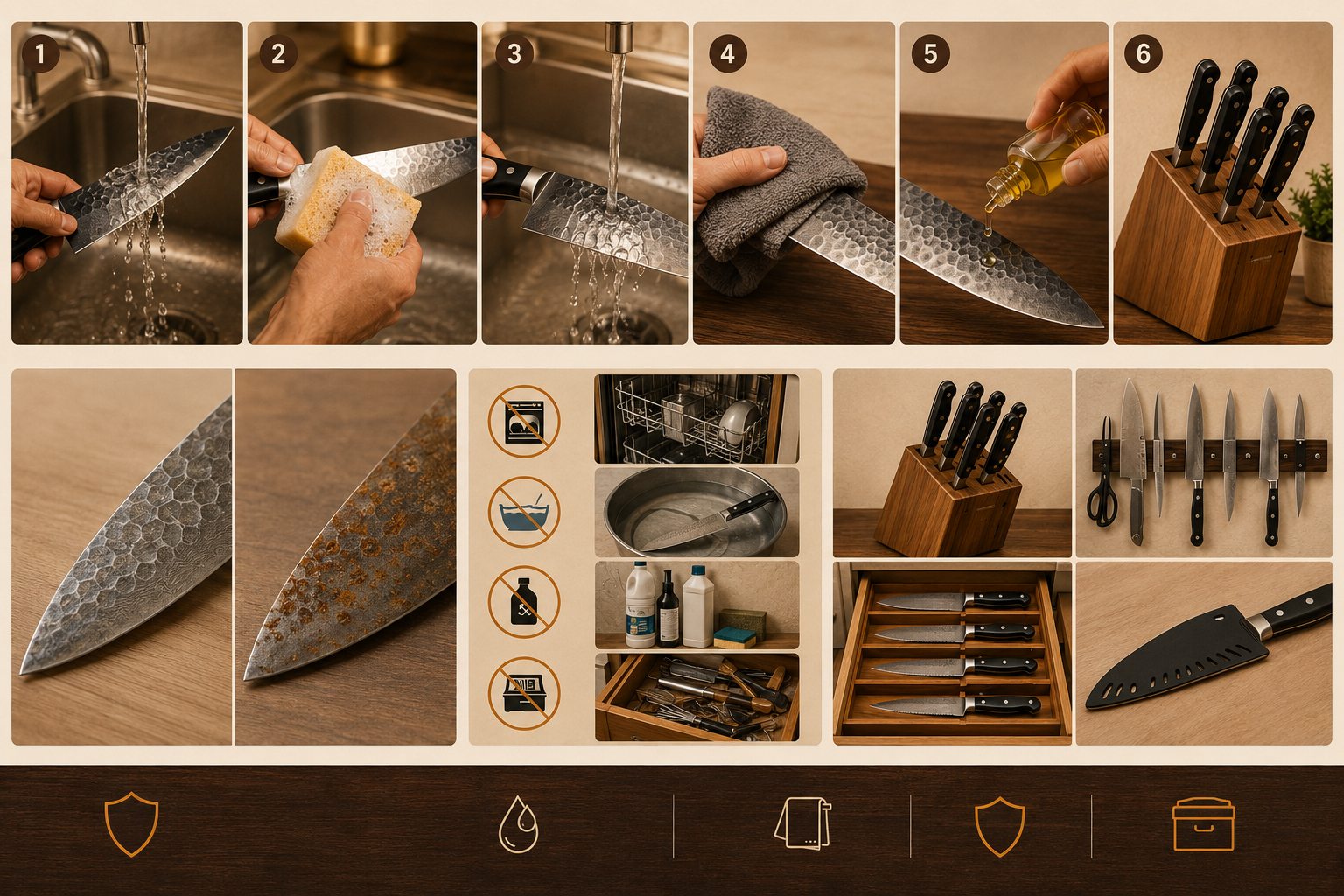
What Is High-Carbon Steel?
High-carbon steel is valued for its sharpening response, cutting feel, and ability to take a fine edge.
Unlike most stainless steels, it contains less corrosion-resistant alloying material. That makes it more reactive to moisture, salt, and acidic foods.
Discoloration or patina can be normal, but active orange rust should be removed before it spreads.
Simple Rust Prevention
High-carbon steel care is mostly about keeping moisture and residue off the blade.
Clean Promptly
Wash the knife soon after use, especially after cutting acidic or salty foods.
Dry Completely
Wipe the blade dry immediately, including the heel, spine, and area near the handle.
Avoid Soaking
Do not leave the knife in a sink, wet towel, or dishwater where moisture can sit against the steel.
Store It Dry
Use a dry knife block, sheath, drawer insert, or magnetic strip that allows the blade to remain clean and dry.
Use Light Protection When Needed
For longer storage, a very thin coat of food-safe mineral oil can help protect the blade.
What to Do If Rust Appears
Light surface rust can often be removed with a gentle, non-scratching cleaner and a soft cloth or pad. Work carefully and avoid harsh abrasives that may scratch the blade or alter its finish.
After cleaning, rinse if appropriate, dry the knife completely, and apply a very thin coat of food-safe mineral oil if the blade will be stored.
Deep pitting, widespread corrosion, or rust near the cutting edge may require professional evaluation.
Key Takeaways
High-carbon steel performs well when it is kept clean, dry, and protected.
Clean Soon After Use
Remove food residue promptly, especially after cutting acidic or salty ingredients.
Dry the Entire Knife
Moisture left near the heel, spine, or handle can lead to rust.
Do Not Soak or Use a Dishwasher
Prolonged moisture, heat, and harsh detergent can damage the blade and handle.
Patina Is Not Always Rust
- Gray or blue discoloration can be a normal protective patina
- orange or rough corrosion needs attention.
Use Mineral Oil for Storage
A very thin coat of food-safe mineral oil can help protect the blade during longer storage.
References
The following sources were used in preparing and supporting this article.
About Carbon Knife Care
Korin
korin.com
How to Keep Your Shun Knives in Top Condition
Shun Cutlery
shun.kaiusa.com
Chef’s Knives & Cooking Knives
ZWILLING
zwilling.com