Knife and Sharpening Gift Guide
The best gift fits the way the recipient already cooks, stores, and maintains their knives.
Professional sharpening, a quality cutting board, safe storage, or a simple kitchen accessory can be more useful than an unfamiliar knife. Choose according to the recipient’s habits, experience, space, and willingness to perform maintenance.
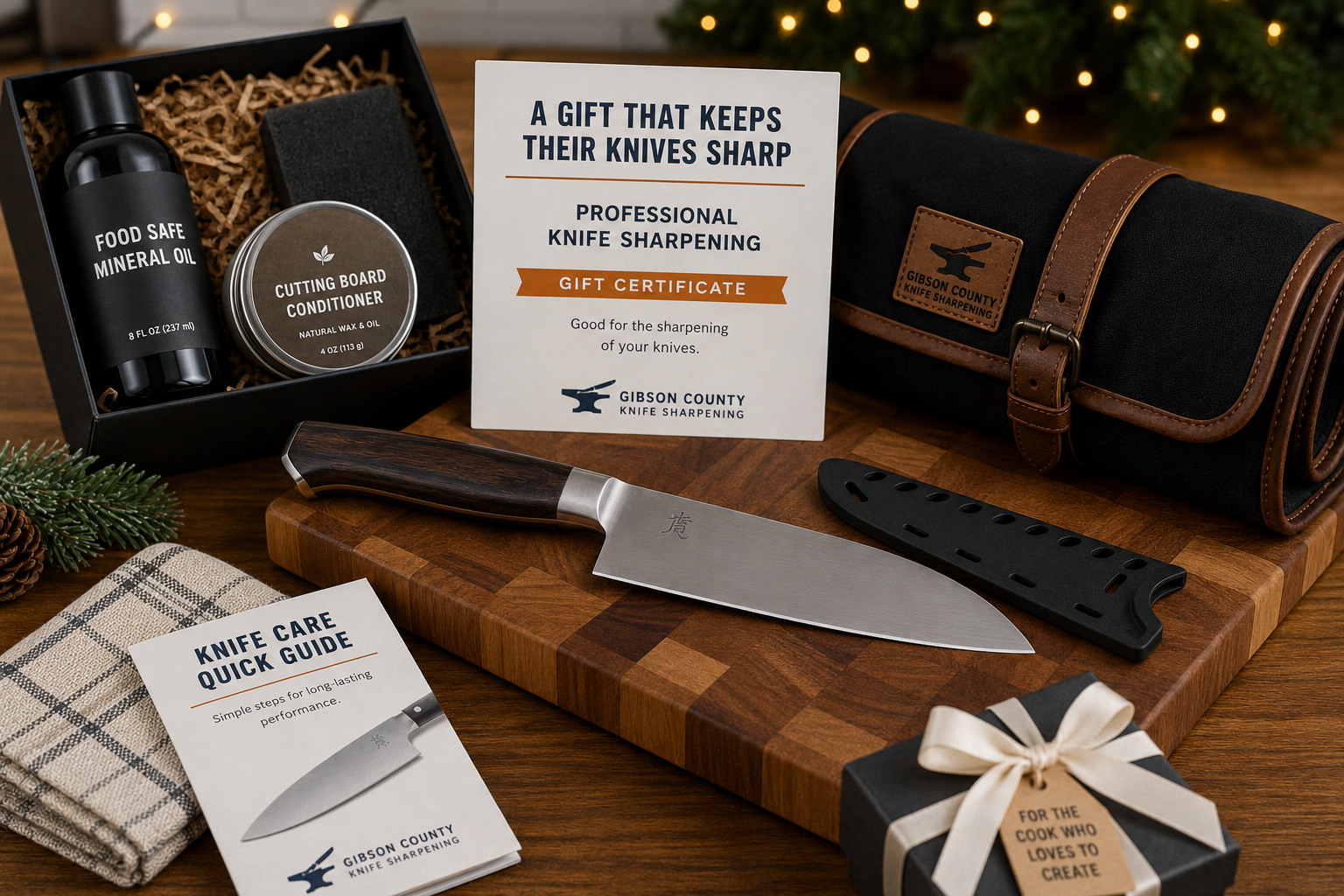
Start With the Recipient
The best guiding question is simple: What would make this person’s current kitchen routine easier or more enjoyable?
Consider how often the recipient cooks, experience level, maintenance habits, available space, existing knives, and whether the person prefers practical tools, experiences, or decorative objects.
Low-Risk Gifts and Personal Gifts
Some gifts improve equipment the recipient already owns. Others require detailed knowledge of personal preferences.
Lower-Risk Gifts
Usually Easier to ChoosePros
Professional sharpening, cutting boards, blade guards, bench scrapers, towels, classes, and gift certificates solve practical problems.
Cons
Size, scheduling, storage space, and compatibility still need consideration.
Best For
Recipients whose exact knife preferences are unknown.
Highly Personal Gifts
Choose With InputPros
Chef’s knives, specialty knives, sharpening stones, rods, strops, and custom equipment can be excellent when correctly matched.
Cons
Blade length, weight, balance, steel, handle shape, grit, angle, and maintenance requirements vary widely.
Best For
A requested model, shared shopping trip, detailed wish list, or returnable purchase.
Professional Sharpening as a Gift
Professional sharpening improves knives the recipient already selected and uses. It can restore ordinary dullness, rolled edges, small chips, and uneven cutting without guessing about a new knife.
A gift certificate lets the owner choose which knives are serviced and when. A prepaid package can work when the collection and pricing are known.
Do not take someone else’s knives for service without permission. Sentimental, collectible, heavily damaged, cracked, loose, bent, or severely corroded knives may require special evaluation rather than routine sharpening.
Practical Gifts for Almost Any Cook
These gifts support everyday knife use without requiring the recipient to learn a new blade or sharpening system.
Quality Cutting Board
Choose wood, quality plastic, or rubber in a size that fits the counter, sink, storage space, and largest everyday knife.
Blade Guards
Affordable protection for drawer storage or transport when correctly sized and used only with clean, dry knives.
Knife Roll or Case
Useful for culinary students, professional cooks, classes, travel, and trips to a sharpening service.
Bench Scraper
Moves chopped food, portions dough, and cleans work surfaces without scraping the knife edge across the board.
Kitchen Towels
Absorbent towels help keep hands, knives, and work surfaces dry during preparation and cleanup.
Knife-Skills Class
Instruction can improve grip, cutting motion, confidence, efficiency, and safe handling without adding clutter.
Care Products and Maintenance Gifts
Food-safe mineral oil or board conditioner can help maintain unfinished wood cutting boards, handles, and utensils. Select products specifically intended for food-contact surfaces.
A carbon-steel care kit may include food-safe blade oil, soft cloths, a correctly sized guard, and a rust eraser. This only makes sense for someone who already owns or intentionally wants reactive steel. Rust erasers and other abrasives may alter finishes.
Most kitchen knives need only mild dish soap, warm water, a nonabrasive sponge, and prompt drying. Avoid gifting bleach, metal scouring pads, harsh abrasive cleaners, or aggressive rust removers.
Sharpening Tools Require Compatibility
Sharpening equipment is best given to someone who has requested it or already understands edge maintenance.
Sharpening Stones
Excellent for an interested learner, but a complete setup may also need stable support, flattening equipment, instruction, and a practice knife.
Honing Rods
The rod must suit the knife’s steel, hardness, geometry, and condition. Smooth steel, grooved steel, ceramic, and diamond rods behave differently.
Strops and Compounds
Useful for someone who already understands sharpening and deburring. Stropping cannot restore a dull or damaged edge by itself.
Giving a Chef’s Knife
A chef’s knife can be a meaningful gift, but it is highly personal. Blade length, profile, weight, balance, steel, handle shape, finish, and maintenance all affect whether the recipient enjoys using it.
Safer approaches include a gift certificate, shopping trip, exact wish-list model, or purchase from a retailer with a clear return policy.
A smaller set containing a chef’s knife, paring knife, and serrated bread knife is often more useful than a large block filled with redundant blades and accessories.
Gift Ideas by Recipient
| Recipient | Good Choices | Use Caution With |
|---|---|---|
| Beginner cook | Durable chef’s knife selected with input, medium cutting board, blade guard, skills class, bench scraper, sharpening certificate | Reactive steel, advanced stones, complicated systems, and delicate specialty knives |
| Experienced home cook | Premium board, identified specialty knife, fitted storage, knife roll, requested sharpening equipment, professional repair | Duplicating equipment or guessing at preferred brands and dimensions |
| Professional cook | Durable transport case, guards, sharpening service, replaceable working tools, washable accessories | Bulky, fragile, decorative, or irreplaceable equipment |
| Enthusiast or collector | Maker or retailer certificate, requested consumables, storage upgrade, book, class, or exact wish-list item | Surprise knives, steels, grits, compounds, or systems chosen without specifics |
Gift Ideas by Budget
Price matters less than usefulness and fit.
Budget-Friendly
Blade guards, towels, bench scraper, food-safe board oil, soft cloths, a small sharpening credit, or a useful book.
Mid-Range
Sharpening package, quality cutting board, knife roll, in-drawer organizer, beginner sharpening kit by request, or knife-skills class.
Premium
Recipient-selected chef’s knife, large premium board, custom commission, requested advanced sharpening system, restoration, or specialized course.
Gifts to Approach Cautiously
These products may create damage, clutter, or unwanted maintenance when chosen without careful matching.
Pull-Through Sharpener
May remove metal aggressively or use a fixed angle that does not suit the knife.
Glass or Stone Board
Hard surfaces can dull or damage knife edges quickly.
Large Knife Set
May contain redundant blades, low-use accessories, and lower-quality pieces.
Unrequested Carbon-Steel Knife
Creates cleaning, drying, oiling, patina, and corrosion responsibilities the recipient may not want.
Self-Sharpening Block
Built-in abrasives may remove steel whenever the knife is inserted or removed.
Decorative Knife
Attractive materials cannot compensate for uncomfortable dimensions, poor geometry, or unsuitable maintenance.
Questions to Ask Before Buying
• What knives and accessories does the recipient already own?
• Which knife or kitchen task causes the most frustration?
• Are the current knives dull, damaged, or poorly stored?
• How much cleaning, oiling, sharpening, or conditioning will the recipient perform?
• Is there enough counter, drawer, wall, sink, and storage space?
• Does the recipient travel with knives?
• Has a specific knife, stone, brand, grit, compound, or accessory been requested?
• Can the gift be returned or exchanged?
• Would a service, class, or shared shopping trip be more useful than another object?
Key Takeaways
The best gift supports the way the recipient already cooks.
Choose for the Recipient
Cooking habits, experience, space, existing equipment, and maintenance preferences should guide the purchase.
Practical Gifts Often Win
Sharpening, a stable cutting board, safe storage, or a bench scraper may improve daily cooking immediately.
Personal Tools Need Input
Knives and sharpening equipment should usually be requested, selected together, or easily returnable.
Avoid Unwanted Obligations
A gift should not create maintenance, storage, learning, or repair responsibilities the recipient did not ask for.
References
The following sources were used in preparing and supporting this article.
Holiday Gift Guide
WÜSTHOF
wusthof.com
Knife Guide
ZWILLING
zwilling.com
Gifting Guide
Work Sharp
worksharptools.com
How to Choose the Correct Cutting Board
WÜSTHOF
wusthof.com