Reading the Kanji: A Primer on Japanese Knife Terminology
Japanese knife markings can tell you more about the blade, but they rarely tell the whole story.
Many Japanese kitchen knives have kanji or other markings on the blade. These markings may identify the maker, steel type, knife style, region, or construction method. You do not need to become fluent in Japanese to understand the basics.
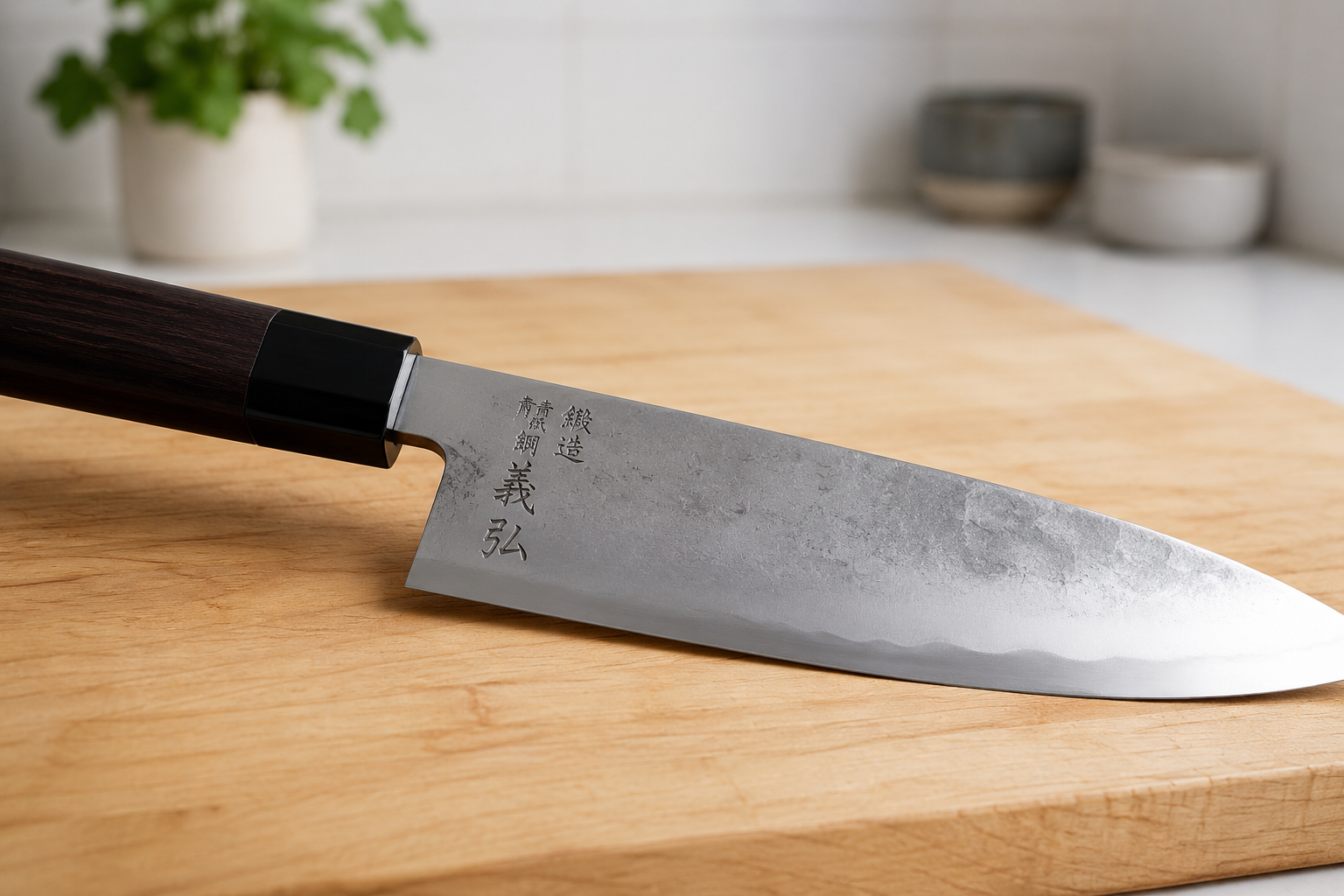
Why Japanese knives have markings
Blade markings are often part branding, part identification, and part tradition. On some knives, the marks are stamped. On others, they are engraved or hand-chiseled.
The markings may tell you who made the knife, what steel was used, what style of knife it is, or where it came from. They can be useful, but they should not be treated as a complete specification.
What the markings usually tell you
Not every knife is marked the same way, but most markings fall into a few broad categories.
Maker or Brand
Many knives show the blacksmith, sharpener, workshop, brand, or distributor name.
Steel Type
Some blades identify carbon steel, stainless steel, powdered steel, or a named steel type.
Knife Style
Some markings refer to the knife pattern, such as gyuto, santoku, nakiri, deba, or yanagiba.
Construction or Finish
Some markings describe forging, cladding, finish, or traditional construction methods.
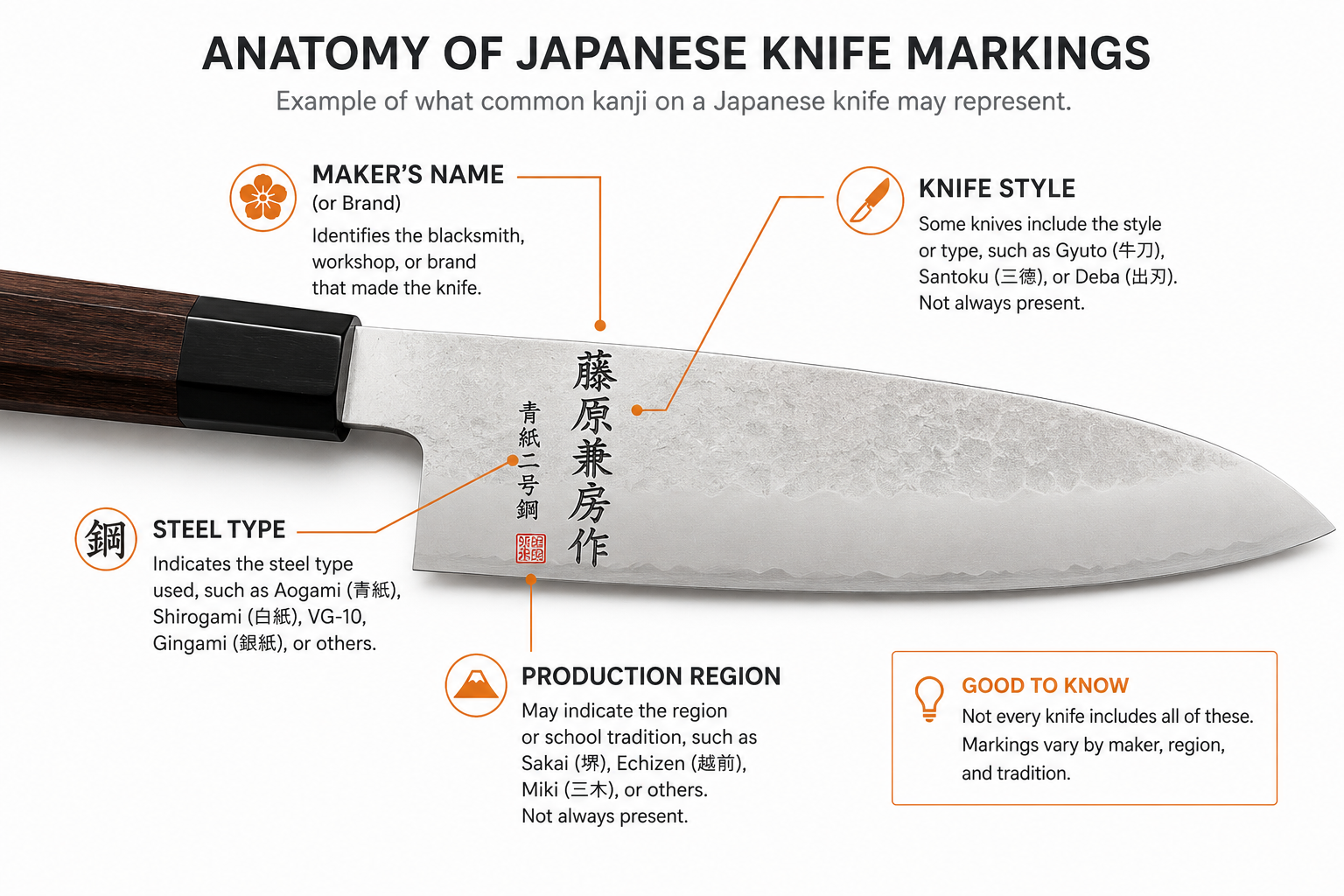
Common Japanese knife names
Japanese knife names usually describe the style or purpose of the knife. These are some of the most common terms customers may see when shopping for or researching Japanese knives.
| Term | Common Meaning | Typical Use |
|---|---|---|
| Gyuto | Japanese chef knife | General kitchen prep, slicing, chopping, and meat or vegetable work. |
| Santoku | Multipurpose kitchen knife | Vegetables, meat, fish, and everyday home cooking. |
| Nakiri | Vegetable knife | Clean vegetable prep with a flatter edge profile. |
| Bunka | Multipurpose knife with angled tip | General prep with a more pronounced tip for detail work. |
| Petty | Small utility knife | Trimming, peeling, small prep work, and detail cuts. |
| Deba | Fish butchery knife | Breaking down fish and heavier protein work. |
| Yanagiba | Sashimi slicer | Long, clean slicing cuts for fish and delicate proteins. |
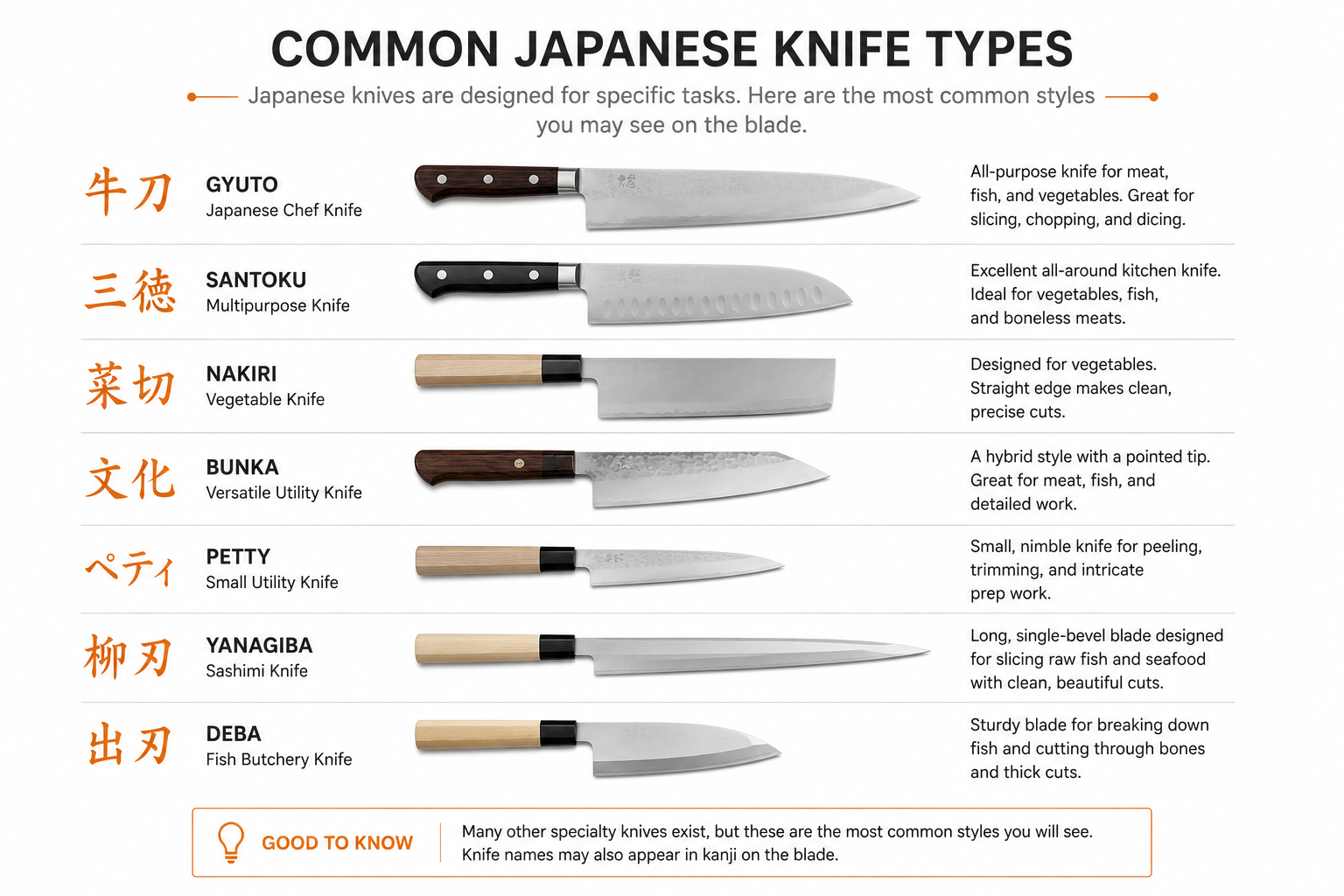
Common steel-related terms
Steel markings can be helpful, but they are not always present. Some knives clearly identify the steel, while others only show a maker or brand name.
| Marking or Term | General Meaning | What to Know |
|---|---|---|
| Hagane | Steel | A general steel-related term. Context matters. |
| Aogami | Blue paper steel | A carbon steel family known for excellent edge potential. |
| Shirogami | White paper steel | A carbon steel family known for very keen edges and easy sharpening. |
| Gingami | Silver steel | A stainless steel often used in Japanese kitchen knives. |
| VG-10 | Stainless knife steel | A popular stainless steel used in many Japanese-style kitchen knives. |
| AUS-10 | Stainless knife steel | A common stainless steel used in production kitchen knives. |
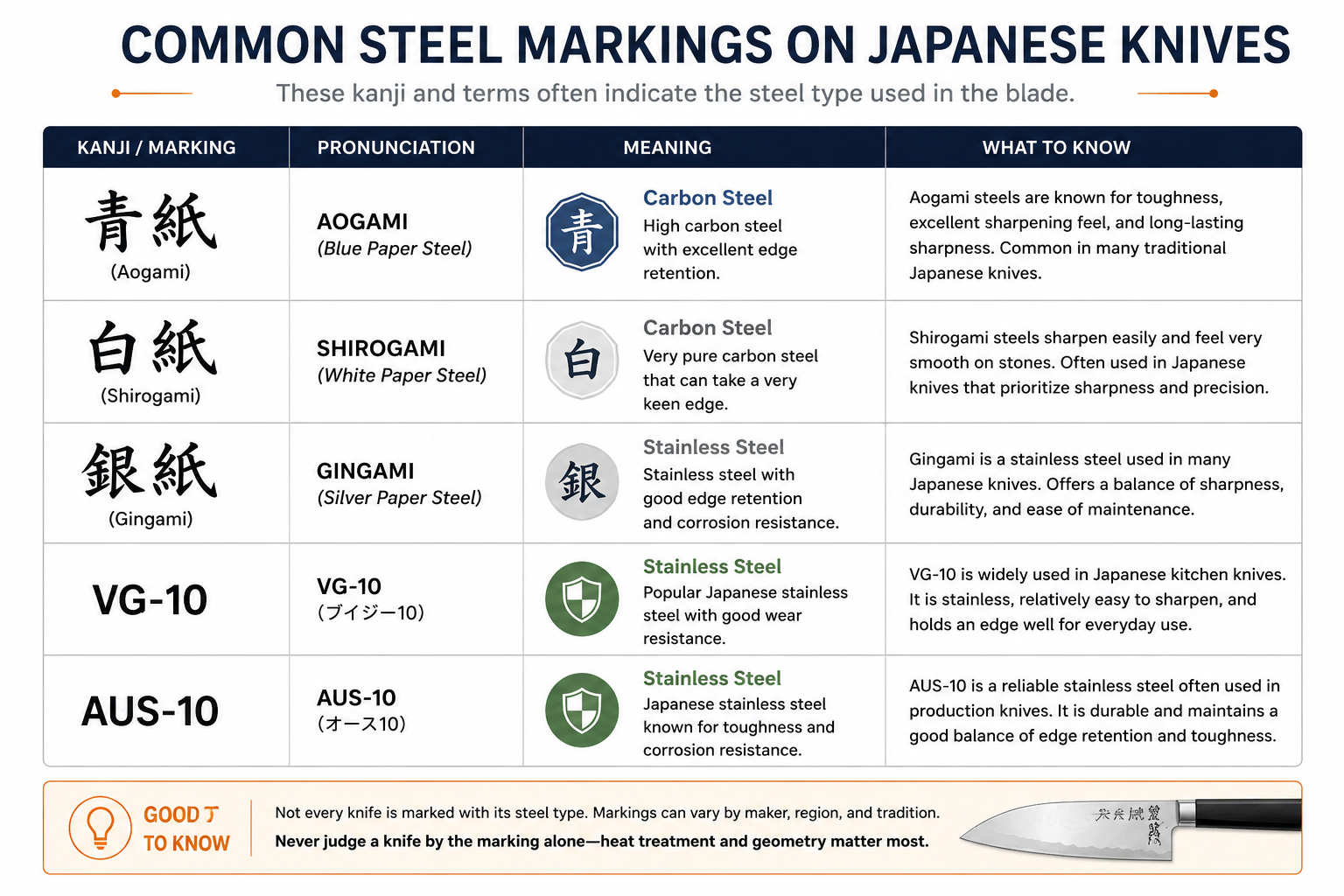
Maker side vs. steel side
Some Japanese knives have markings on both sides. One side may show the maker, brand, or workshop. The other may show steel type, knife style, or production details.
This varies by maker, so it is best not to assume every knife follows the same layout.
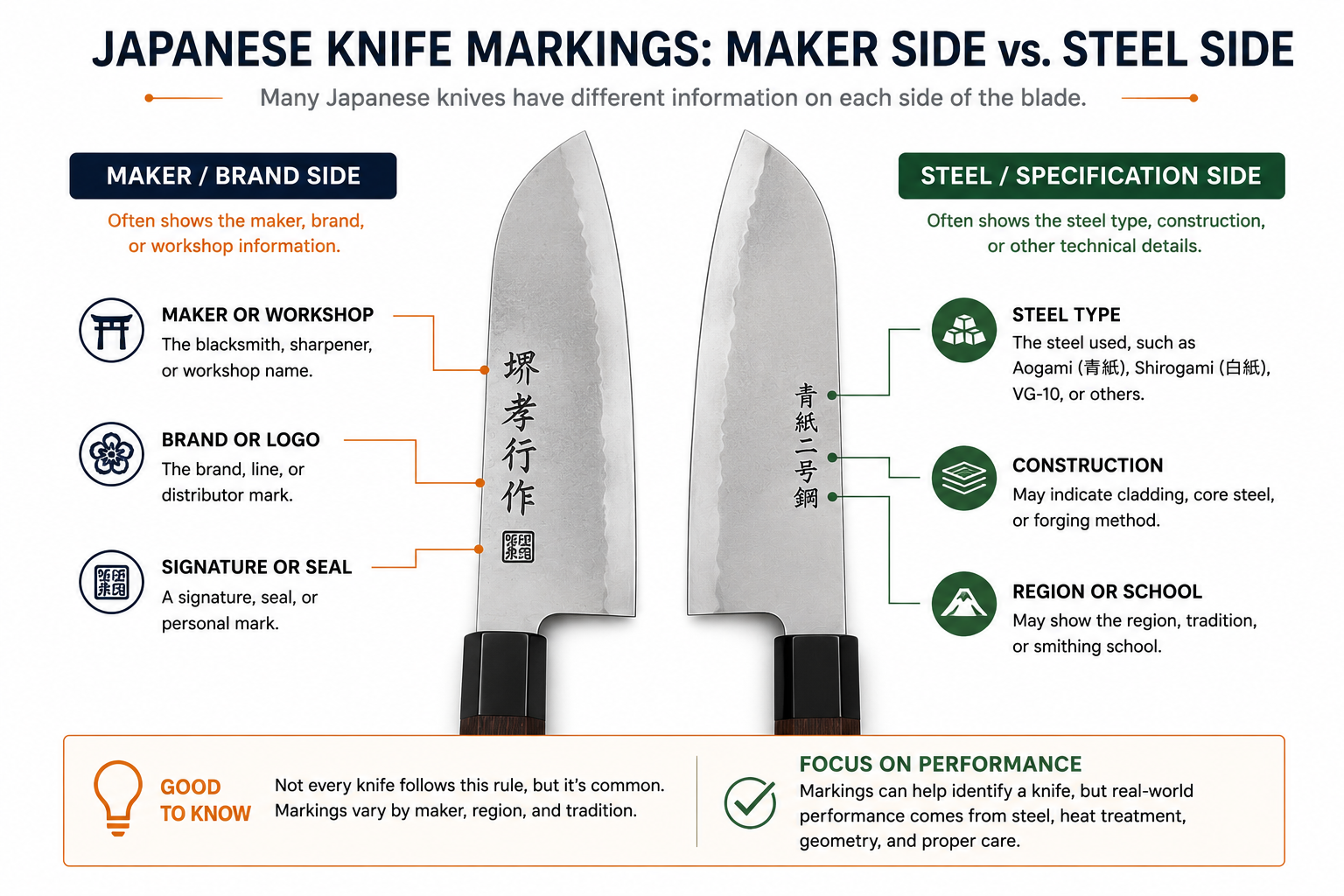
A simple kanji cheat sheet
These terms are not a complete dictionary, but they can help you recognize common markings.
| If You See | It May Refer To | Plain-English Meaning |
|---|---|---|
| 包丁 | Hocho | Kitchen knife. |
| 作 | Saku | Made by or crafted by. |
| 鋼 | Hagane | Steel. |
| 青紙 | Aogami | Blue paper steel. |
| 白紙 | Shirogami | White paper steel. |
| 本焼 | Honyaki | Traditional single-steel construction. |
What if you cannot read the markings?
That is completely normal. Many markings are stylized, partially worn, or difficult to interpret without context. Some knives also include branding rather than useful steel information.
For sharpening, the markings can help, but they are not required. The blade can still be evaluated by its geometry, steel behavior, edge condition, wear, chips, and intended use.
Common misconceptions
Kanji Does Not Guarantee Quality
Markings can look impressive, but performance still depends on steel, heat treatment, geometry, and craftsmanship.
Japanese Does Not Always Mean Fragile
Some Japanese knives are delicate. Others are durable daily-use tools. Knife style and steel matter.
Steel Names Are Not the Whole Story
The same steel can perform differently depending on heat treatment, grind, thickness, and use.
Key Takeaways
Kanji Usually Identifies the Knife
Japanese knife markings may reference the maker, steel, knife style, region, or construction method.
Do Not Guess From One Marking
A single character or symbol rarely tells the whole story. Context matters.
Markings Help, But Condition Matters More
When sharpening, the actual steel, geometry, edge condition, and use matter more than the engraving alone.
References
The following sources were used in preparing and supporting this article.
Knife Sharpening: How to Sharpen Your Knives
Tormek
tormek.com
Knife Sharpening Basics
Korin
korin.com
How to Sharpen Any Knife: Back to Basics
Work Sharp
worksharptools.com