Commercial Kitchen Knife Storage
Safe storage protects employees, preserves knife edges, and supports a cleaner, more efficient kitchen.
Commercial kitchens need storage systems that keep knives accessible to authorized staff while protecting them from moisture, contamination, impacts, and accidental contact. A consistent storage policy also helps identify missing tools, damaged edges, and unsafe habits.
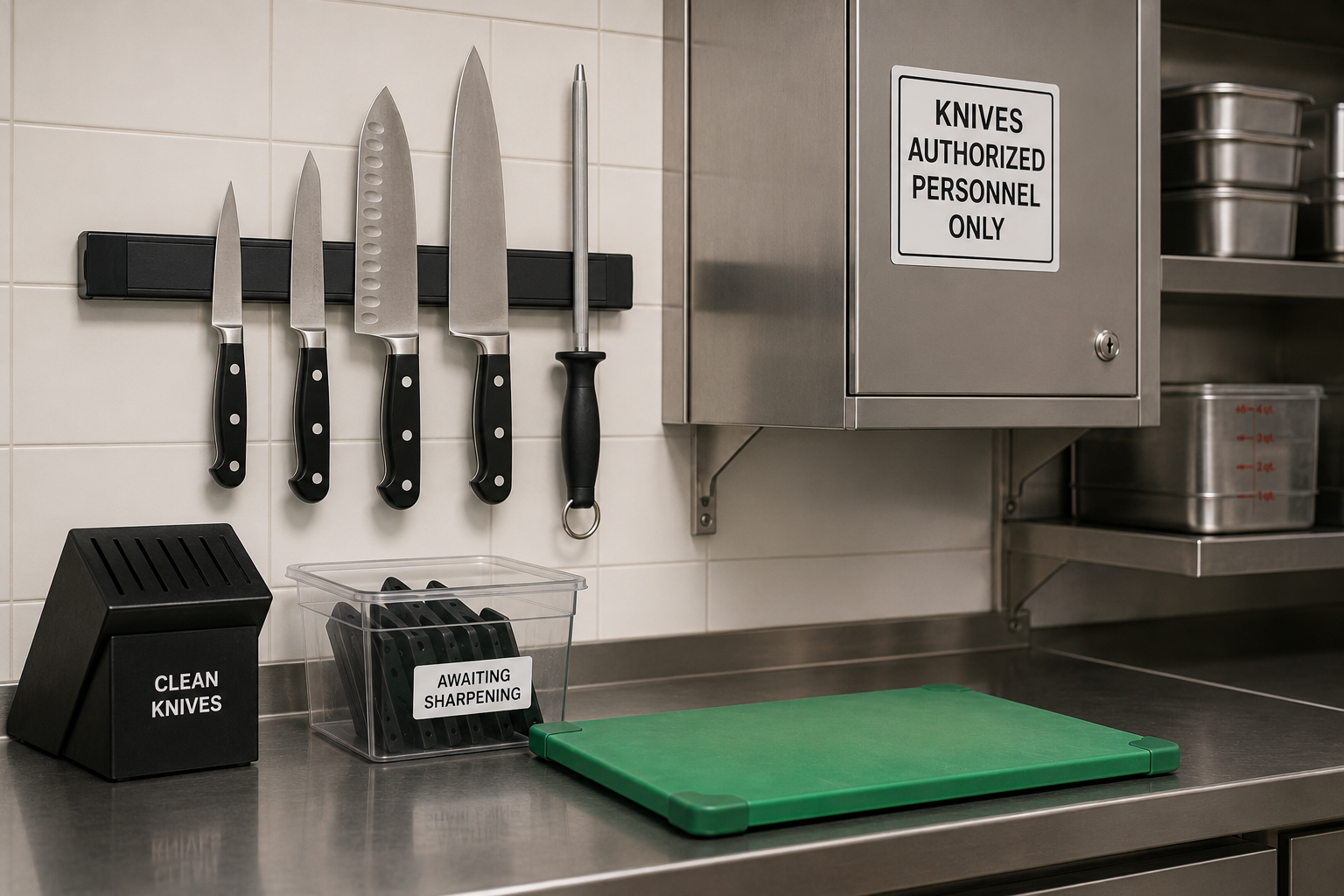
Why Commercial Knife Storage Matters
Commercial kitchens need knife storage that supports safety, sanitation, edge protection, and efficient work.
Knives should be easy for authorized staff to find while remaining protected from moisture, contamination, impacts, and accidental contact.
A consistent storage system also makes missing tools, damaged edges, and unsafe habits easier to identify.
Common Storage Options
The best system depends on available space, cleaning requirements, security, and how the knives are used.
Magnetic Strips
Keep knives visible and accessible when mounted securely and positioned away from traffic, heat, and splashing water.
Sanitary Knife Racks
Separate individual knives and are often designed for easy cleaning in busy commercial environments.
Drawer Inserts
Protect edges and reduce accidental contact when the drawer is organized, clean, dry, and limited to knife storage.
Secured Cabinets or Cases
Provide controlled access and help account for knives when security or tool tracking is especially important.
What Good Storage Should Prevent
Knives should not be stored loose with other utensils or placed where the edge can strike metal, ceramic, or another blade.
The storage area should prevent standing moisture, food debris, and contact with contaminated surfaces. It should also keep handles accessible without exposing employees to unprotected edges.
Each knife should have a defined location so missing or incorrectly stored tools are easy to notice.
Choosing Storage for a Commercial Kitchen
| Storage Method | Main Advantage | Main Consideration |
|---|---|---|
| Magnetic strip | Visible and quick to access | Must be mounted securely and kept away from traffic and moisture |
| Sanitary rack | Separates knives and supports organized cleaning | Slots and surfaces must be inspected for debris and damage |
| Drawer insert | Protects edges while keeping knives out of the open | Drawer must remain organized, dry, and dedicated to knives |
| Secured cabinet or case | Controls access and helps account for tools | May be slower to access during busy service |
Cleaning and Inspection
Knife storage should be cleaned on a regular schedule and whenever food residue, moisture, or debris is found.
Inspect racks, inserts, magnets, guards, and mounting hardware for cracks, looseness, corrosion, or worn surfaces that could damage a knife or create a safety hazard.
Return only clean, completely dry knives to storage. Replace damaged storage components rather than allowing sharp edges to contact rough or unstable surfaces.
Key Takeaways
Good commercial storage protects people, knives, and kitchen workflow.
Protect Every Edge
Keep knives separated so their edges do not strike other blades, utensils, or hard surfaces.
Keep Storage Clean and Dry
Moisture and food debris can promote corrosion, contamination, and unsafe handling.
Give Every Knife a Place
Assigned positions make missing, damaged, or incorrectly stored knives easier to identify.
Inspect the Storage System
Loose mounts, cracked inserts, damaged guards, and worn racks should be corrected promptly.
References
The following sources were used in preparing and supporting this article.
Food Preparation: Knives and Cuts
Occupational Safety and Health Administration
osha.gov
Food Services: Kitchen Equipment
Occupational Safety and Health Administration
osha.gov
2022 FDA Food Code
U.S. Food and Drug Administration
fda.gov