Kitchen Knife Care
Simple habits help knives stay sharper longer.
A professionally sharpened knife can stay sharp for months with proper care. Hand washing, drying, safe storage, the right cutting surface, and good daily habits all help protect the edge.
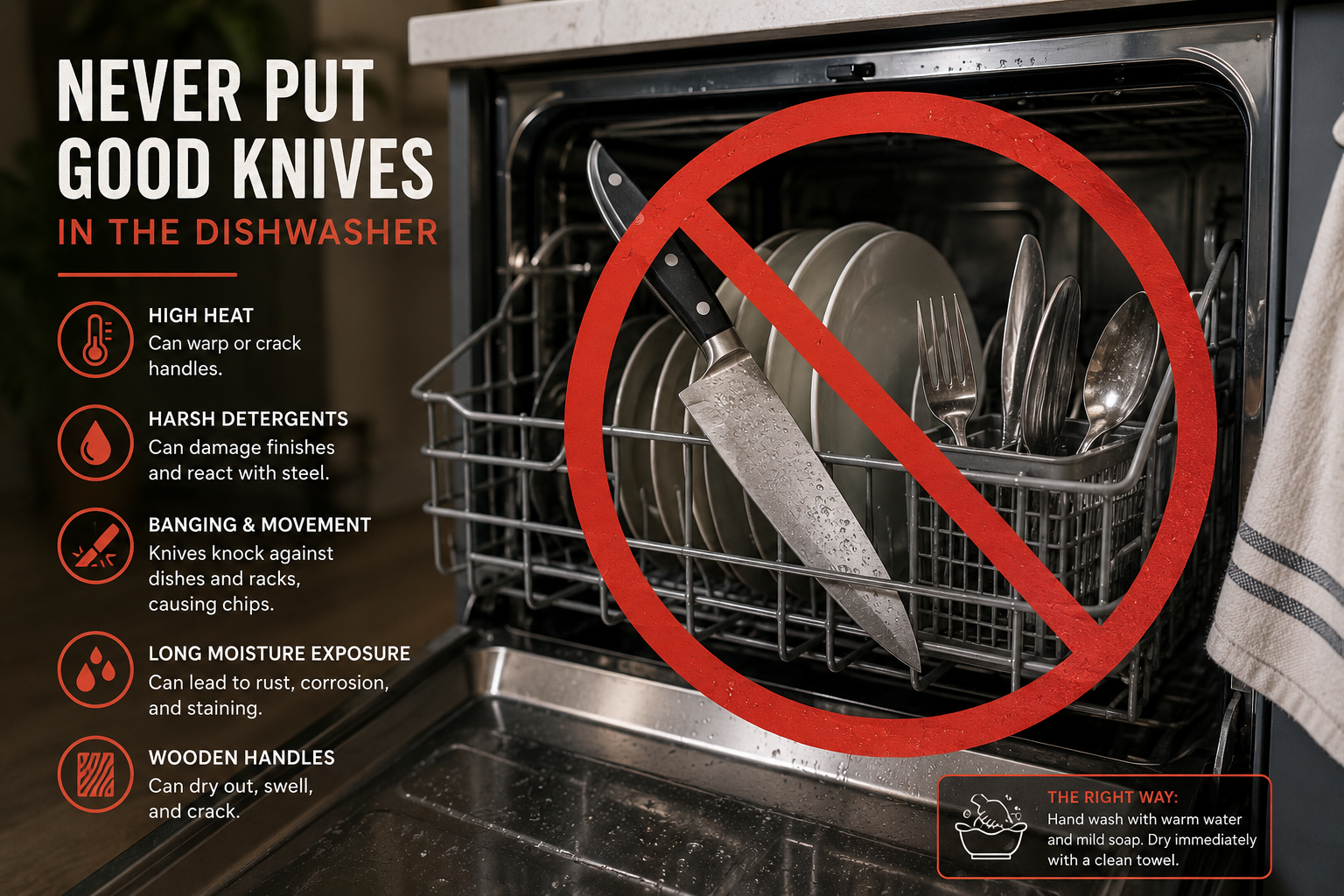
Never put good knives in the dishwasher
Heat, harsh detergent, long moisture exposure, and contact with racks or utensils can damage the edge, stain the blade, and loosen or crack handles.
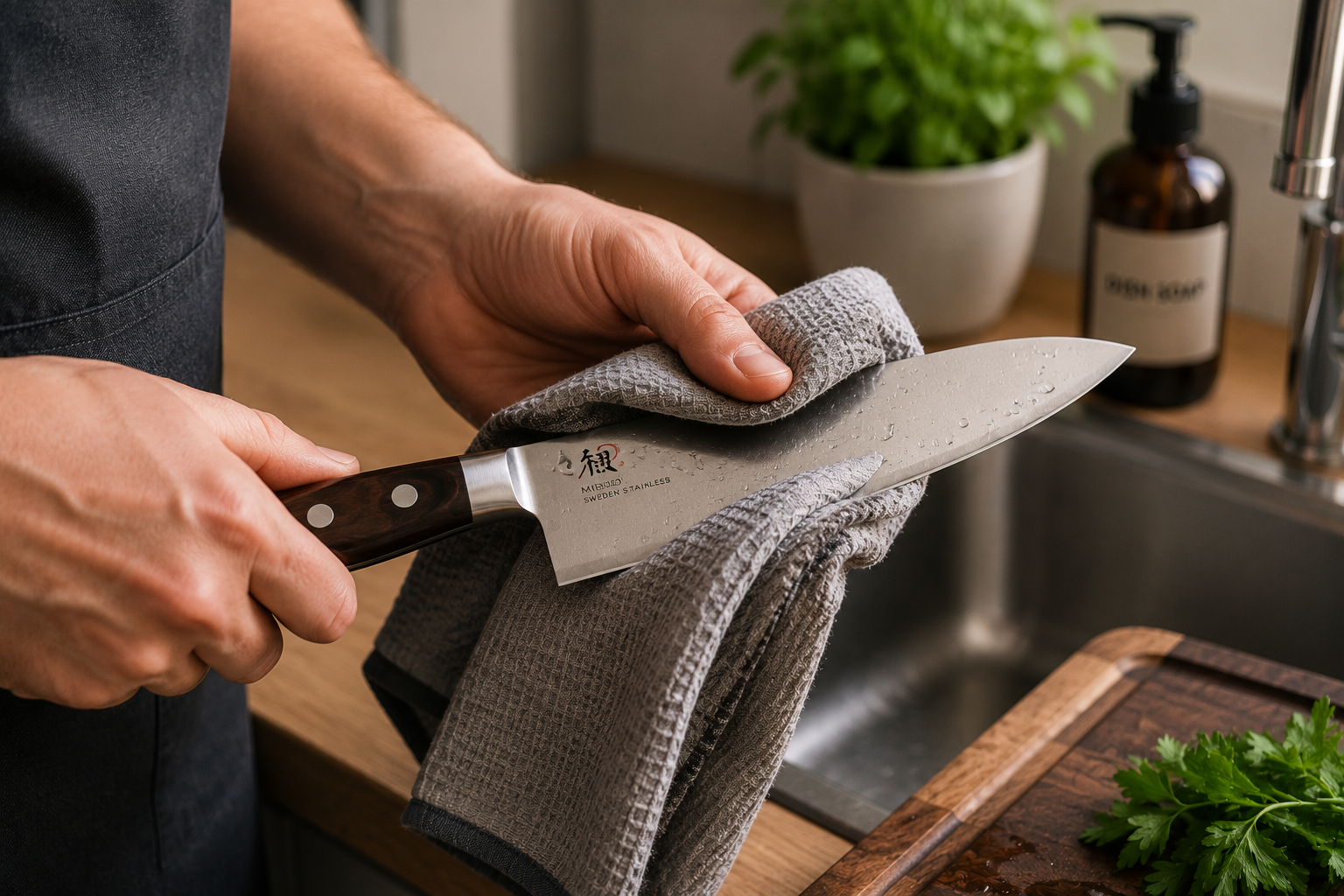
Keep knives clean and dry
Do not leave knives soaking in the sink or sitting wet on the counter. Moisture can cause rust spots, staining, handle swelling, and corrosion near the edge.
Acidic foods like tomatoes, citrus, and onions should also be rinsed off promptly.
Use the right cutting surface
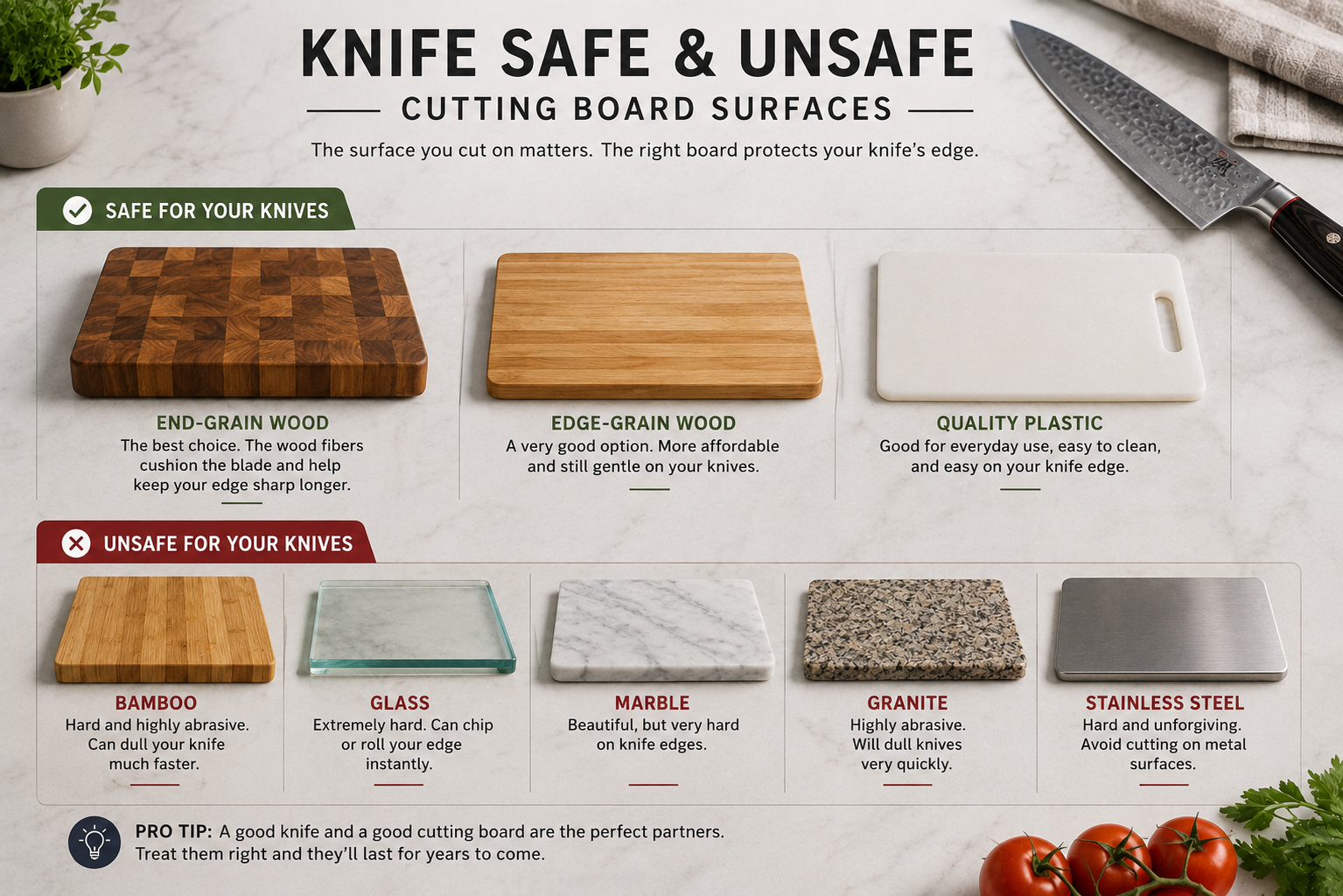
Your cutting board matters. Hard surfaces can roll, flatten, or chip a sharp edge very quickly.
| Surface | Edge Friendly? | Recommendation |
|---|---|---|
| End-grain maple, walnut, or cherry | Excellent | Best choice for quality kitchen knives. |
| Edge-grain wood | Very good | A practical everyday option. |
| Quality plastic or rubber | Good | Easy to clean and acceptable for most kitchens. |
| Bamboo | Use caution | Often harder on edges than traditional wood boards. |
| Glass, marble, granite, ceramic, or steel | Poor | Avoid. These surfaces can dull or damage an edge quickly. |
Store knives safely
Loose knives in a drawer are dangerous and dull quickly as edges bang into other tools. Use a knife block, magnetic strip, in-drawer organizer, knife roll, or individual blade guards.
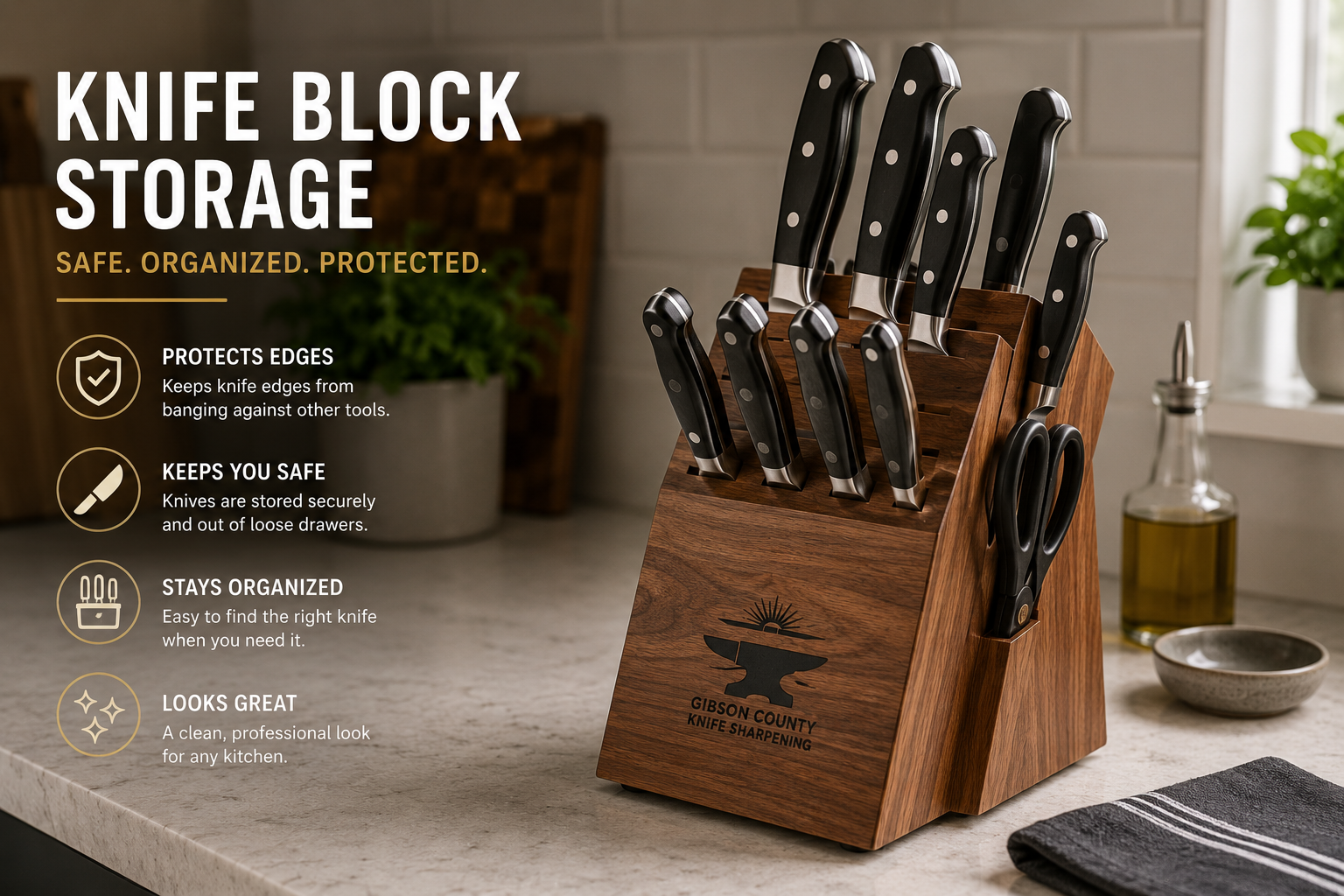
Knife Block
Knife blocks keep edges separated and protected.
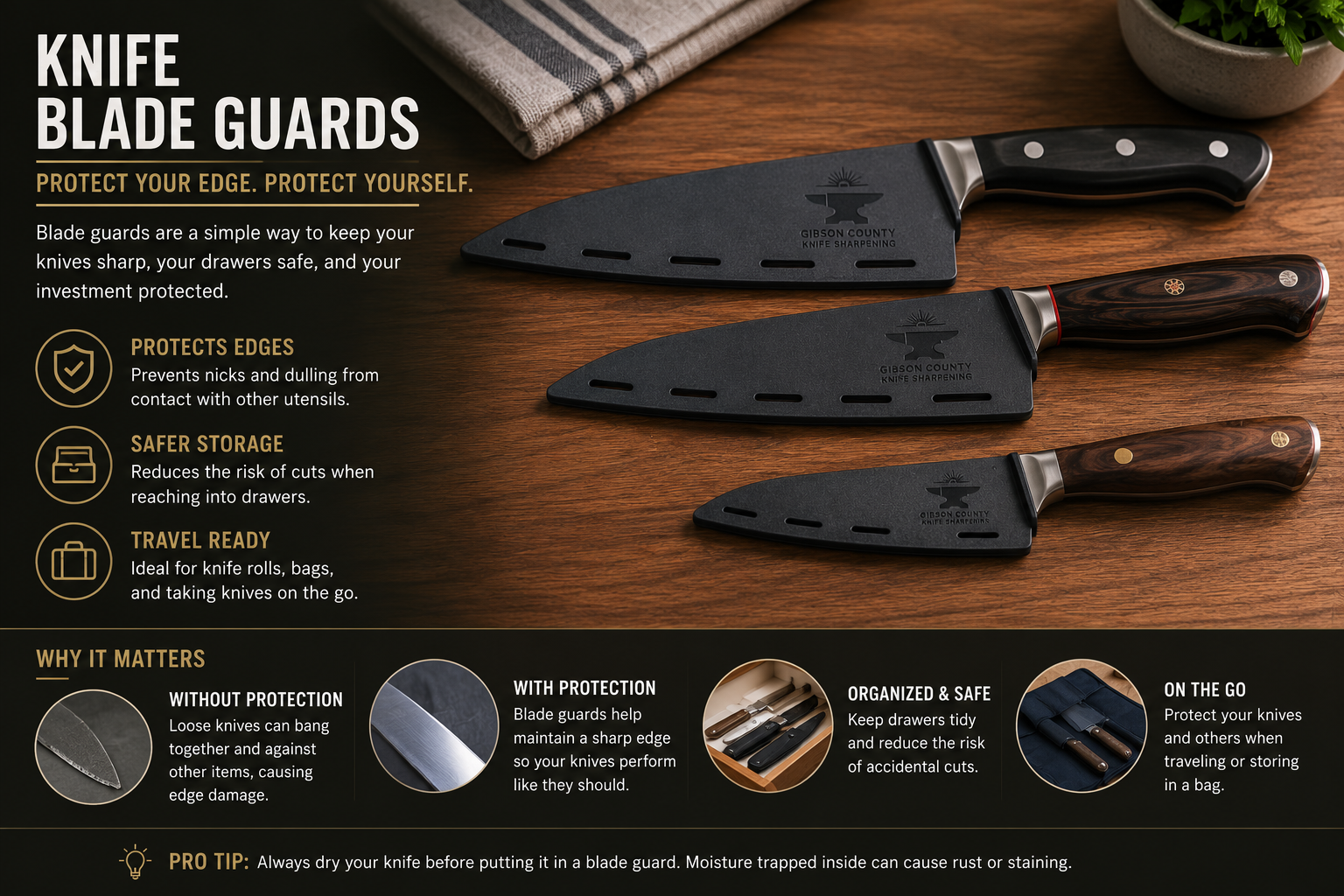
Blade Guards
Blade guards are useful when knives must be stored in a drawer.
Use the spine, not the edge, to move food
Scraping chopped food across the board with the sharp edge is one of the fastest ways to roll or dull it. Flip the knife over and use the spine, or use a bench scraper.
Do not pry, twist, or chop frozen foods
A kitchen knife is made to cut, not pry. Twisting the blade in hard squash, frozen food, bones, or packaging can chip the edge or damage the tip.
• Do not use a chef knife as a screwdriver, can opener, or pry bar. • Do not twist the blade to separate hard foods. • Do not cut frozen foods unless the knife is specifically made for that task. • Use a cleaver or heavier tool for bones and hard impact work.
Care for wooden handles
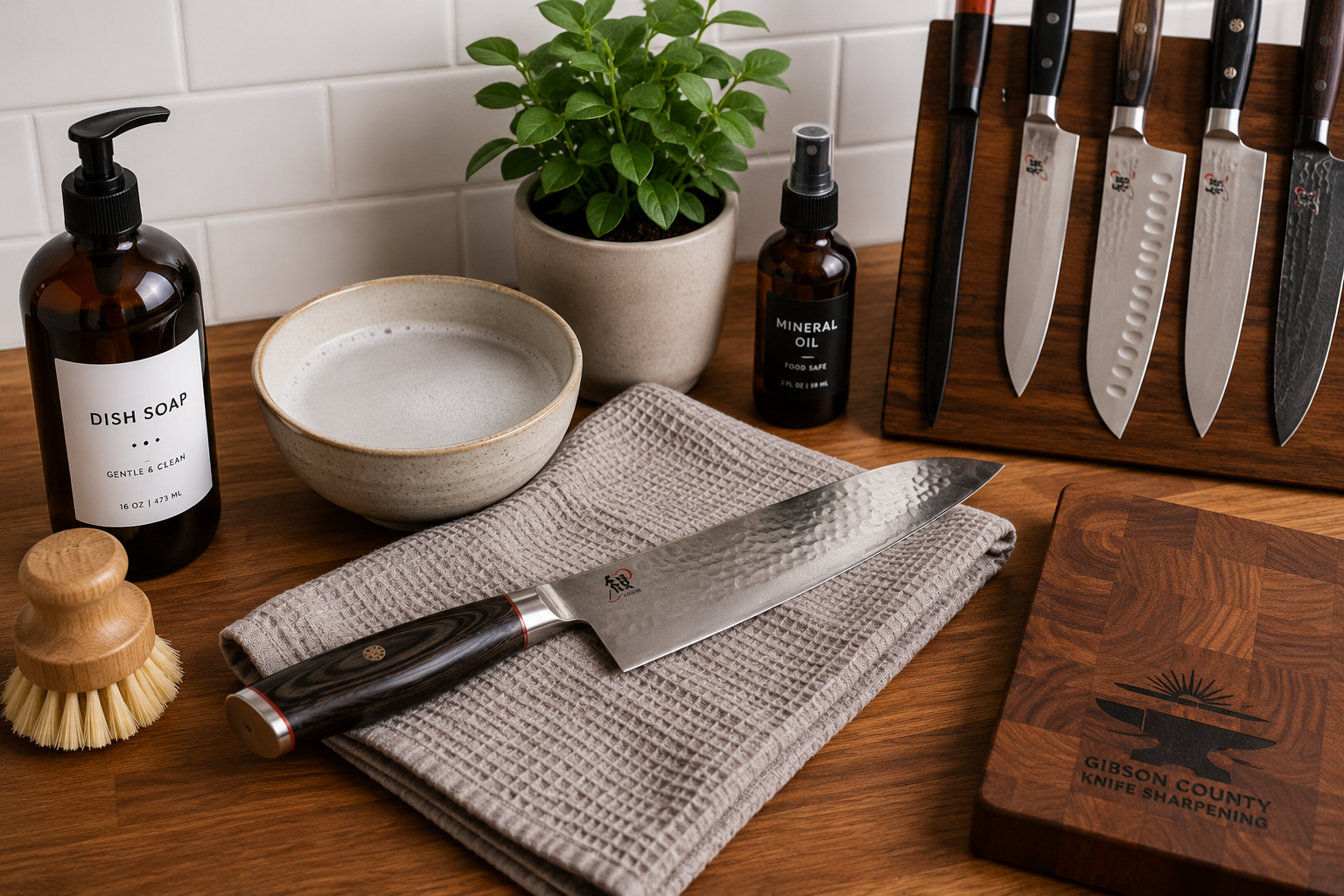
Wood handles can dry out over time. A light coat of food-safe mineral oil or a board-safe wax and oil blend can help keep the handle from drying, shrinking, or cracking.
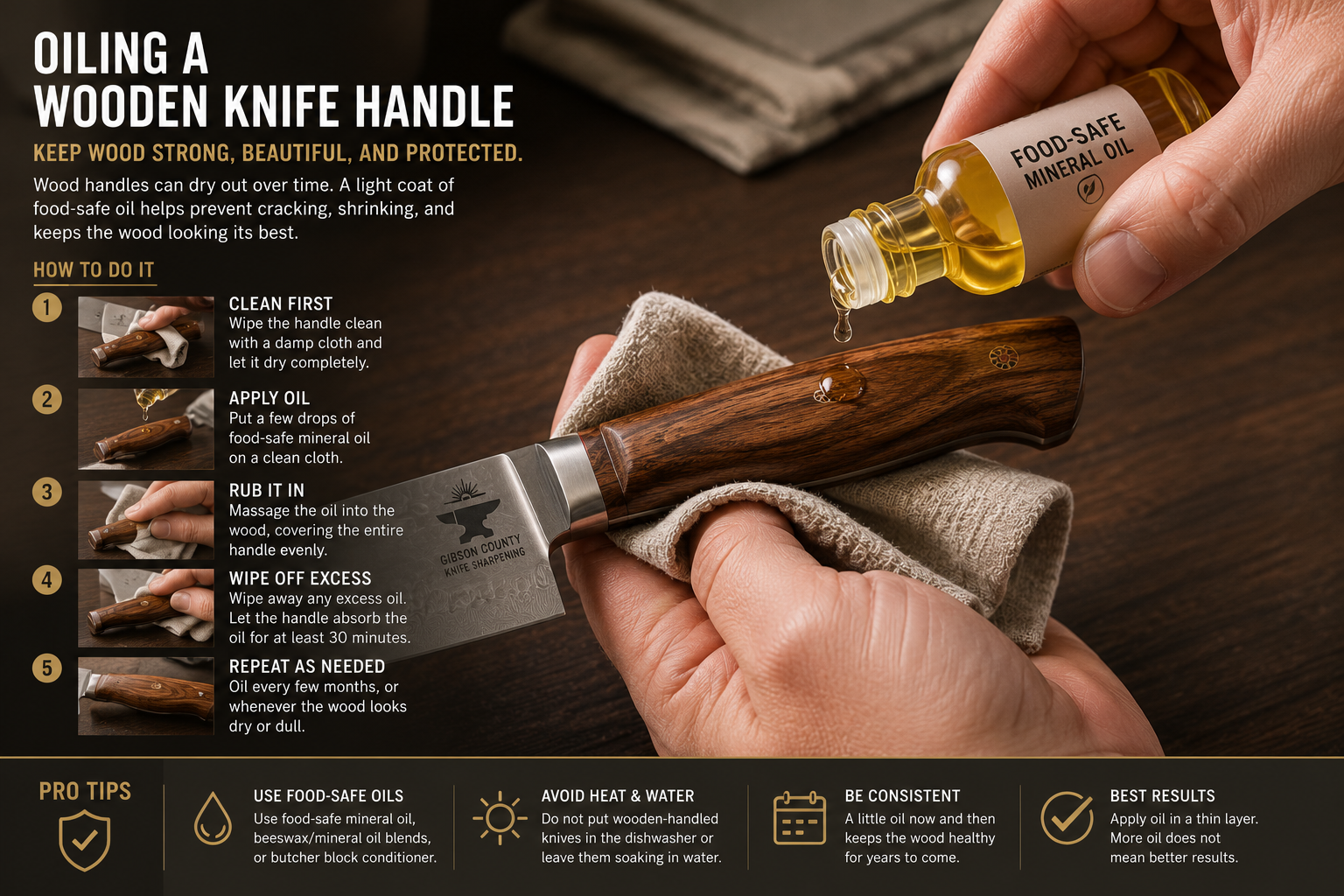
Avoid Cooking Oils
Avoid olive oil, vegetable oil, canola oil, and other cooking oils. They can become sticky or rancid.
Honing and sharpening are different
Honing helps realign a slightly rolled edge. Sharpening removes metal to create a fresh edge. If honing no longer improves the knife, it is time for sharpening.
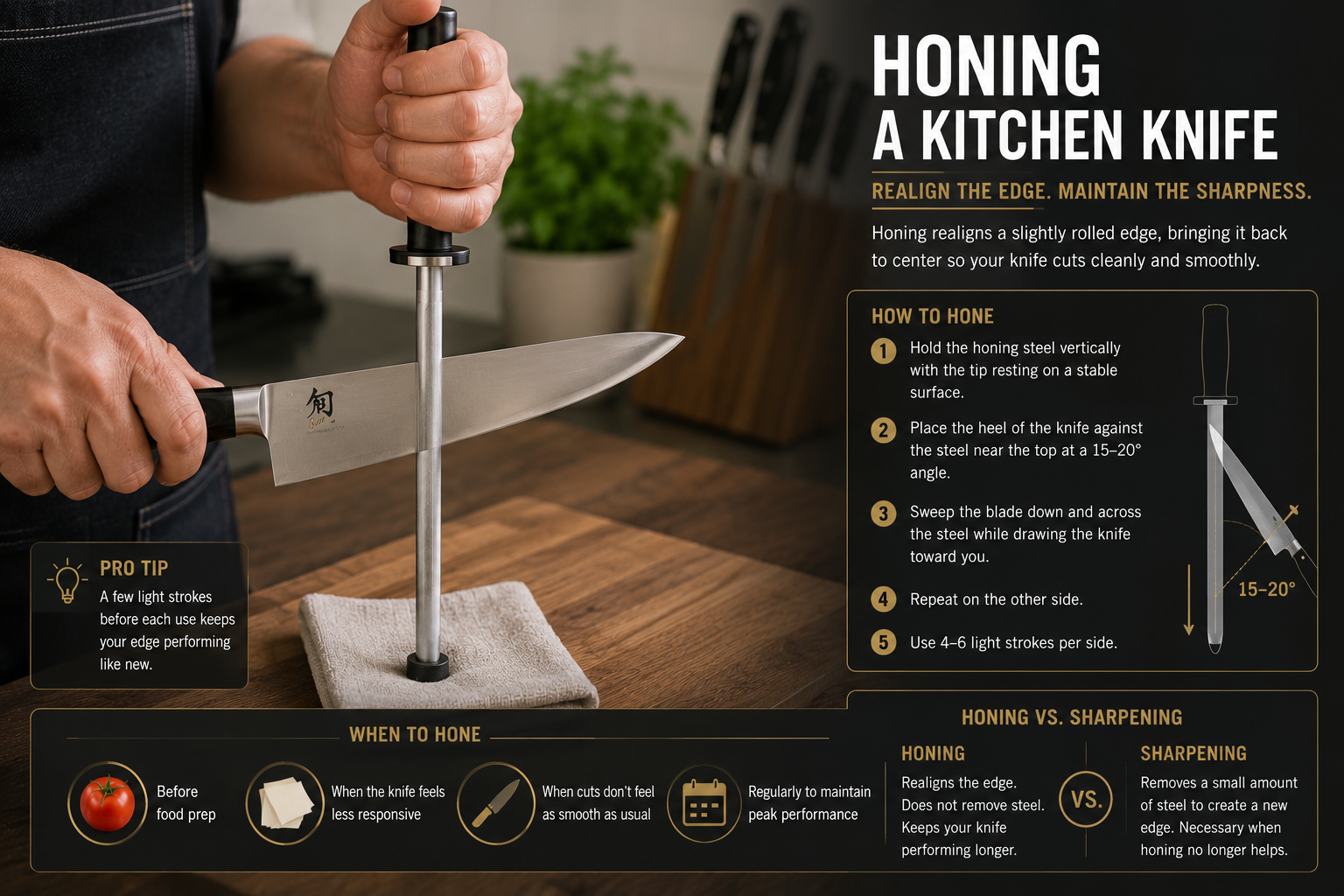
Honing
Realigns a slightly rolled edge.
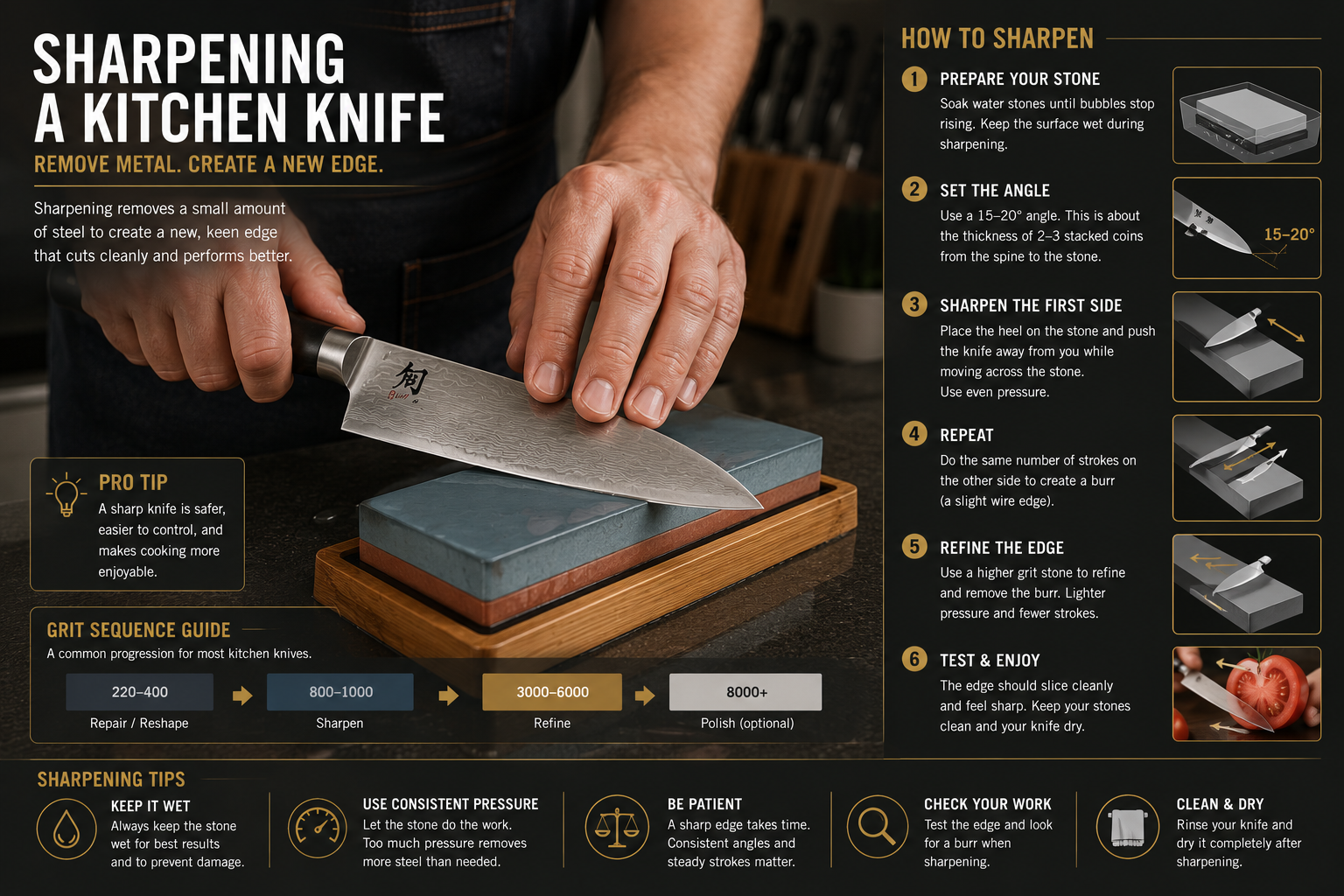
Sharpening
Creates a new cutting edge.
How often should knives be sharpened?
There is no single schedule for everyone. It depends on the knife, steel, cutting board, frequency of use, and care habits.
| Use Level | Typical Sharpening Schedule |
|---|---|
| Occasional home cook | Every 6–12 months. |
| Frequent home cook | Every 3–6 months. |
| Heavy home use or professional use | Monthly or as needed. |
Signs your knife needs sharpening
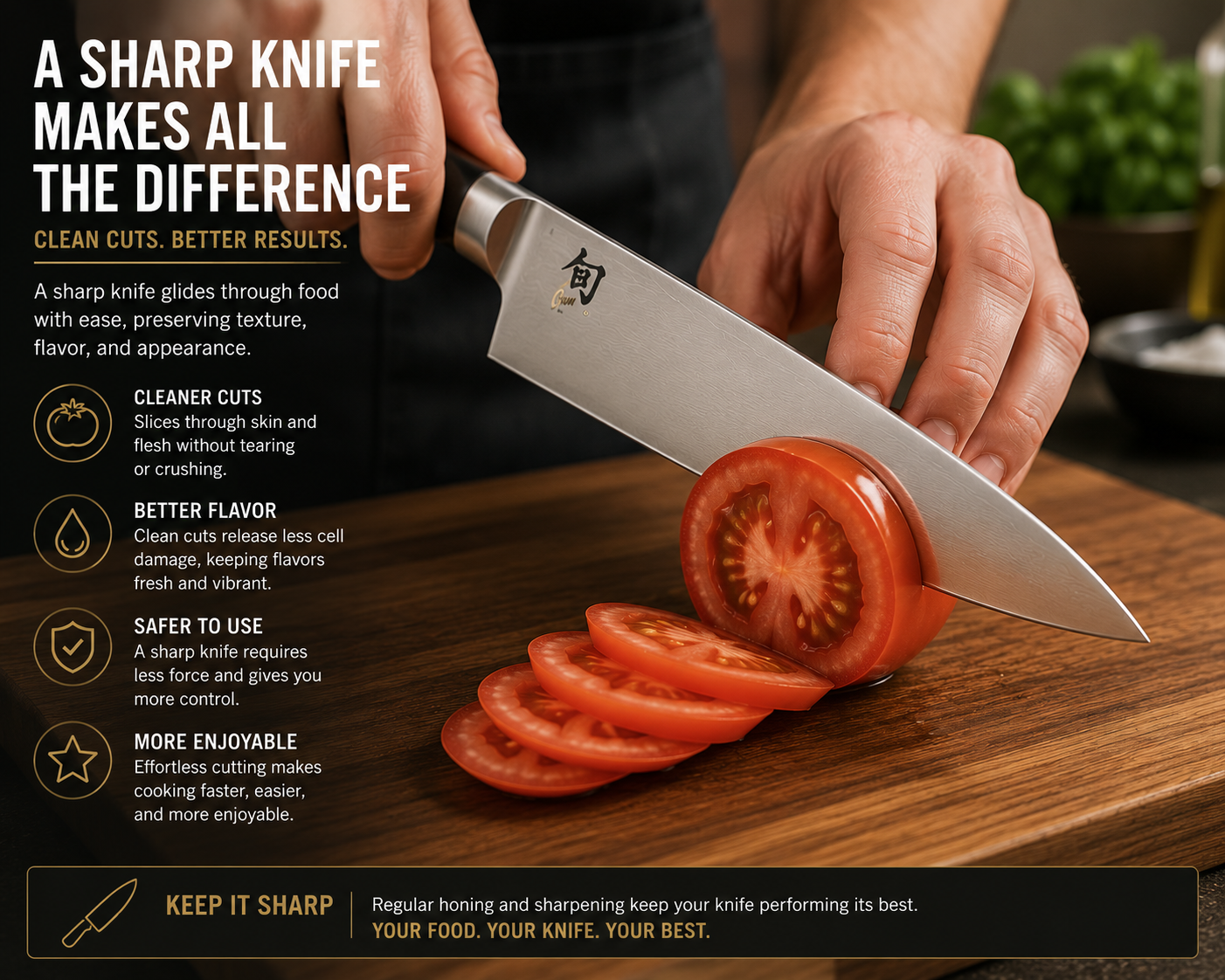
• It crushes tomatoes instead of slicing cleanly. • It slips on onion skins or pepper skins. • It tears herbs instead of cutting them cleanly. • You need extra pressure to make normal cuts. • It no longer responds well to honing. • You can see chips, flat spots, or a rounded edge.
Carbon steel needs extra attention
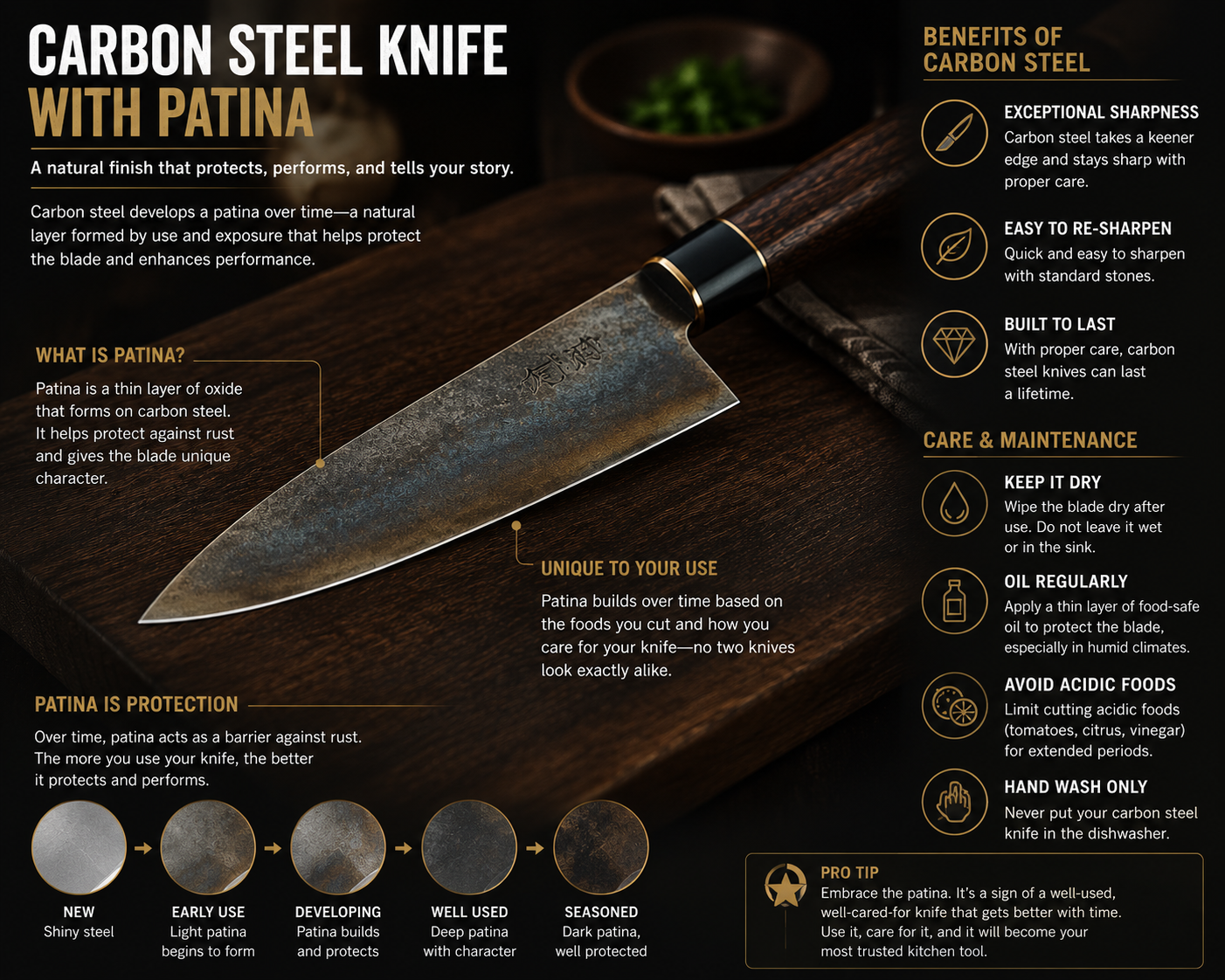
Carbon steel knives can take excellent edges, but they require more care than stainless steel. Wipe them during prep, dry them immediately after washing, and apply a very light coat of food-safe mineral oil if storing for a while.
A gray or blue patina is normal. Orange rust is not.
Common knife care mistakes
• Putting knives in the dishwasher. • Leaving knives soaking in the sink. • Cutting on glass, stone, or ceramic surfaces. • Scraping food with the cutting edge. • Using a chef knife as a pry bar, screwdriver, or box cutter. • Storing knives loose in a drawer. • Waiting until the knife is completely dull before sharpening.
Key Takeaways
Avoid the Dishwasher
Hand washing and immediate drying are two of the best ways to protect both the blade and handle.
Protect the Edge
Use knife-friendly cutting boards, safe storage, and avoid scraping food with the sharpened edge.
Sharpen Before It Gets Bad
Routine maintenance usually removes less steel than waiting until a knife is completely dull or damaged.
References
The following sources were used in preparing and supporting this article.
Knife Safety and Responsible Knife Ownership
American Knife and Tool Institute
akti.org
Six Tips to Sharpen and Maintain Your Knives
Work Sharp
worksharptools.com
Safe Food Handling
U.S. Food and Drug Administration
fda.gov