Forged vs. Stamped: Understanding How Your Knife Was Made
The manufacturing method matters, but it is not the whole story.
Knife makers often describe blades as forged or stamped. Those terms explain how the blade started its life, but they do not automatically tell you whether a knife is good, bad, sharp, durable, or worth buying.
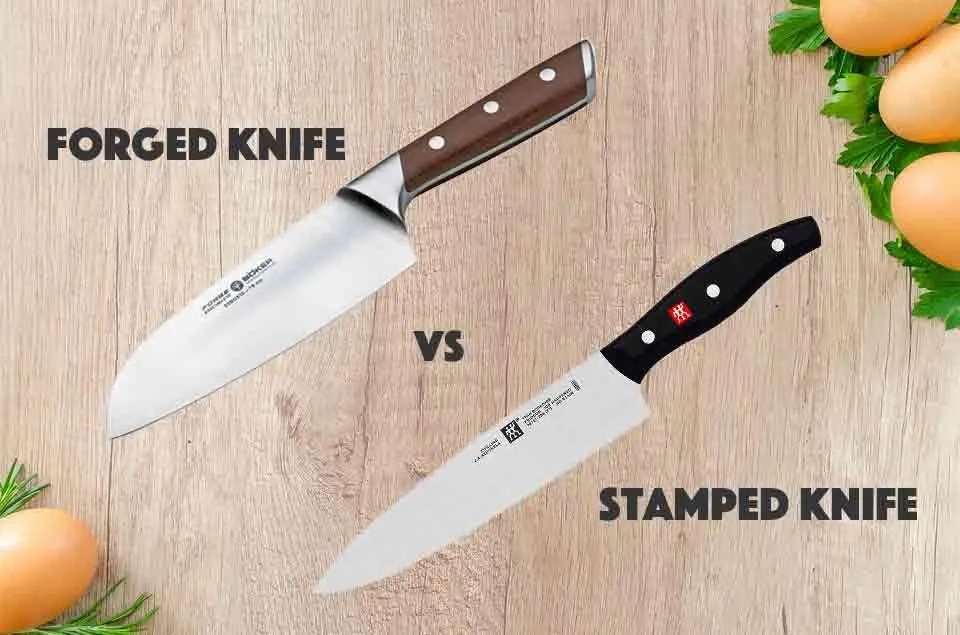
What does forged mean?
A forged knife is made from steel that is heated and shaped under pressure. Traditionally, that shaping was done with a hammer and anvil. Modern forged knives may use presses, dies, and controlled factory processes.
Forged knives are often associated with heavier construction, bolsters, thicker spines, and a more substantial feel. Many classic German-style chef knives fall into this category.
What does stamped mean?
A stamped knife is cut from a flat sheet of steel. After the blade shape is cut out, it is heat treated, ground, sharpened, finished, and fitted with a handle.
Stamped knives are often lighter and thinner than forged knives. Some inexpensive stamped knives are very basic, but many excellent professional kitchen knives are also stamped.
Quick comparison
| Feature | Forged Knife | Stamped Knife |
|---|---|---|
| Starting material | Heated steel shaped under pressure. | Blade cut from flat sheet steel. |
| Typical feel | Often heavier and more substantial. | Often lighter and thinner. |
| Bolster | More commonly has a bolster. | Often has little or no bolster. |
| Sharpening access | Large bolsters can make heel sharpening harder. | Often easier to sharpen all the way to the heel. |
| Performance | Can be excellent, but depends on design and steel. | Can also be excellent, especially when thin and well heat treated. |
Forged does not automatically mean better
Many people assume forged knives are always superior. That is not always true. A knife's real performance depends on the steel, heat treatment, blade geometry, edge angle, handle comfort, and how well it is sharpened.
A well-designed stamped knife can feel faster, slice better, and be easier to maintain than a heavy forged knife with poor geometry.
Stamped does not automatically mean cheap
Some stamped knives are inexpensive, flexible, and basic. Others are high-quality tools used in professional kitchens because they are light, efficient, easy to sharpen, and comfortable during long prep sessions.
The label tells you how the knife was made. It does not tell you the whole story about how the knife will perform.
How construction affects sharpening
Forged knives with large bolsters may need extra attention near the heel. If the bolster drops below the edge line, it can prevent the heel from contacting the board and may require careful correction.
Stamped knives often have simpler heel access, but they may be thin, flexible, or made from softer steel. That affects pressure, angle control, and finishing.
What should you actually look for?
Blade Geometry
A thin, well-shaped blade often cuts better than a thick blade, regardless of whether it was forged or stamped.
Steel and Heat Treatment
Good steel needs proper heat treatment. Without it, even an impressive-looking knife can disappoint.
Comfort and Balance
The best knife is one you can control comfortably. Weight and handle shape matter in real use.
Which one should you choose?
Choose a forged knife if you like a heavier, more substantial feel and prefer classic construction. Choose a stamped knife if you prefer lighter handling, thinner blades, and easy maintenance.
For most home cooks, either style can work well. The better question is whether the knife feels good in your hand, suits your cutting style, and has geometry that matches how you cook.
Key Takeaways
Construction Is Only One Factor
Forged and stamped knives can both perform well when the steel, heat treatment, geometry, and sharpening are good.
Forged Does Not Automatically Mean Better
A well-made stamped knife can outperform a poorly made forged knife.
Fit the Knife to the Job
Weight, balance, blade shape, handle comfort, and maintenance matter more than the manufacturing label alone.
References
The following sources were used in preparing and supporting this article.
Japanese Chef Knife Catalog and Sharpening Guide
Korin
korin.com
Knife Steels Rated by a Metallurgist
Knife Steel Nerds
knifesteelnerds.com
Six Tips to Sharpen and Maintain Your Knives
Work Sharp
worksharptools.com