The Role of the Spine: How Blade Thickness Affects Cutting
One of the biggest differences between an average knife and an exceptional one isn't the edge—it's the steel behind it.
Most people notice how sharp a knife feels. Professional sharpeners often notice how thick the blade is. Spine thickness influences how a knife enters food, how much resistance it creates, how durable it feels, and how comfortable it is during extended use.
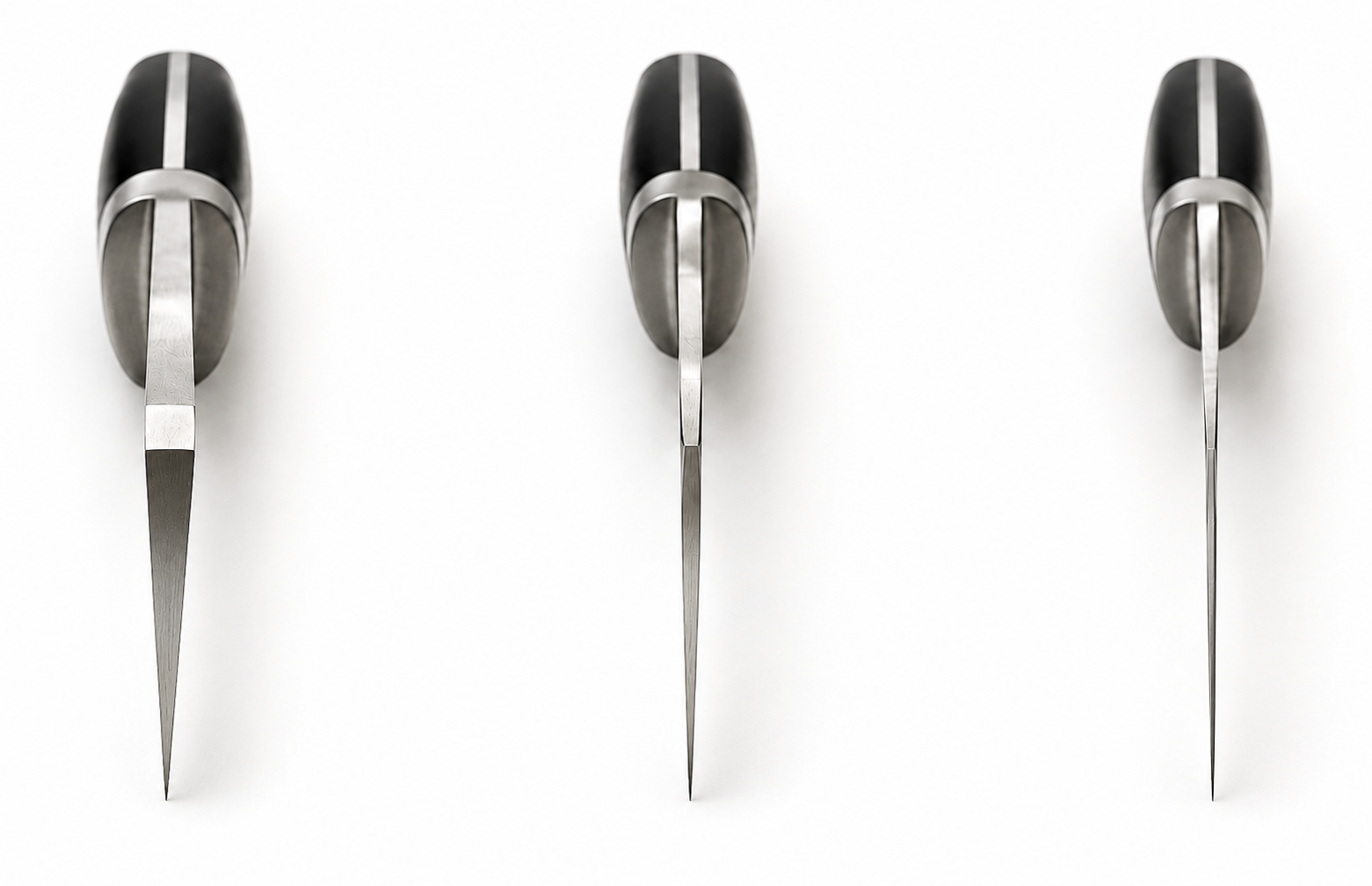
What is the spine?
The spine is the unsharpened top edge of the blade. It extends from the handle to the tip and provides much of the knife's strength and rigidity.
Although the cutting edge receives most of the attention, the spine often determines how the knife feels in your hand and how efficiently it moves through food.
Why spine thickness matters
Cutting Resistance
A thinner blade usually separates food with less effort because it displaces less material.
Strength
A thicker spine provides greater rigidity and can better withstand twisting or heavier cutting tasks.
Weight
Thicker blades often feel more substantial, while thinner knives typically feel quicker and more agile.
Balance
Spine thickness contributes to how the knife balances in the hand, especially when combined with blade taper.
Think of it this way:
A laser-thin Japanese slicer and a heavy European chef's knife are both excellent—they simply excel at different jobs.
Thin doesn't always mean better
Ultra-thin blades can glide effortlessly through vegetables and boneless meats, but they are not designed for every task. A knife that is too thin for its intended purpose may flex more, chip more easily, or feel delicate during heavy use.
Examples from the kitchen
| Knife Type | Typical Spine | Designed For |
|---|---|---|
| Laser Gyuto | Very Thin | Exceptional slicing performance. |
| German Chef's Knife | Medium | Balanced everyday kitchen work. |
| Chinese Vegetable Cleaver | Thin to Medium | Fast vegetable preparation. |
| Meat Cleaver | Very Thick | Heavy chopping and bone work. |
Distal taper
Many premium knives become progressively thinner as they approach the tip. This gradual reduction is called distal taper.
Distal taper improves balance and gives the tip greater precision without making the entire blade fragile.
What professional sharpeners notice
One of the most common issues we see isn't a dull edge—it's a blade that has become thick behind the edge after years of repeated sharpening.
Even when freshly sharpened, these knives can feel like they wedge through food because the geometry behind the edge has changed.
In some cases, thinning the blade restores cutting performance more dramatically than sharpening alone.
Choosing the right blade thickness
Choose Thinner If...
- You primarily slice vegetables
- You value effortless cutting
- You enjoy lighter knives
- You use proper cutting technique.
Choose Thicker If...
- You want maximum durability
- You frequently prepare tougher foods
- You prefer a heavier knife
- You need a more forgiving edge.
Key Takeaways
Thickness Changes Cutting Feel
Blade thickness has a major impact on how easily a knife passes through food.
Thinner Is Not Always Better
Very thin blades excel at slicing but may sacrifice durability depending on the steel and intended use.
Balance Is Everything
The best spine thickness depends on the knife, the steel, and what the knife was designed to do.
References
The following sources were used in preparing and supporting this article.
Knife Sharpening: How to Sharpen Your Knives
Tormek
tormek.com
Knife Sharpening Basics
Korin
korin.com
How to Sharpen Any Knife: Back to Basics
Work Sharp
worksharptools.com