Does Sharpening Remove Too Much Metal?
Proper sharpening removes only the steel needed to restore a clean, useful edge.
Every sharpening removes a small amount of metal. That is how worn or damaged steel is replaced by a fresh cutting edge. However, routine sharpening should not dramatically shorten a knife, change its profile, or grind away large amounts of useful blade material.
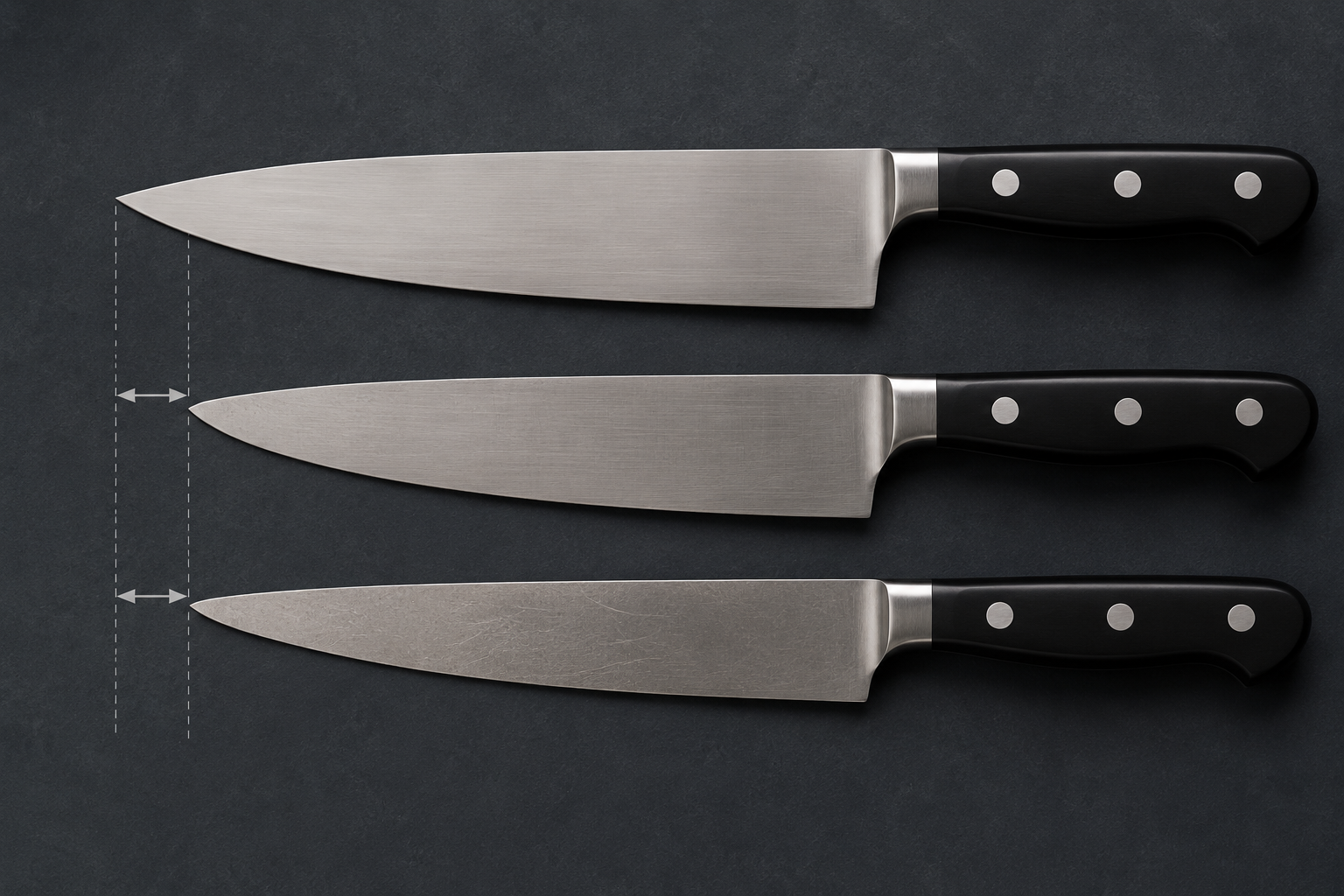
The practical answer: sharpening removes metal, but careful routine sharpening removes very little. Major steel loss is more commonly associated with repairs, reprofiling, thinning, or unnecessarily aggressive technique.
The myth
Some knife owners postpone sharpening because they believe each service will noticeably wear down the blade. The concern sounds reasonable because sharpening uses abrasives, and abrasives remove steel.
The missing distinction is the difference between controlled edge maintenance and aggressive grinding. A normal sharpening concentrates on the narrow bevels at the cutting edge. Only enough steel should be removed to reach sound metal, form a consistent apex, and eliminate the remaining burr.
Why sharpening must remove some steel
A dull edge is not simply an edge that needs to be polished. At a microscopic level, the apex may be rounded, rolled, chipped, worn, or fractured. Sharpening removes weakened material and brings the two bevels together again at a clean cutting edge.
Avoiding all metal removal would leave that worn or damaged steel in place. A honing rod may realign some rolled edges temporarily, but it cannot replace missing steel or remove chips that interrupt the cutting edge.
Routine sharpening and repair are different
Repair work may require noticeably more removal because the edge must be moved beyond the damaged steel. That is not the same as an ordinary maintenance sharpening and should be explained before the work is performed.
What can cause unnecessary metal removal?
Starting Too Coarse
Coarse abrasives are valuable for repairs, but they can remove more steel than necessary when used for a simple touch-up.
Using Excessive Pressure
Heavy pressure makes abrasives cut more aggressively and can make precise angle control more difficult.
Changing the Angle Repeatedly
Regrinding a knife to a different angle during every service wastes steel and can create wide or uneven bevels.
Grinding After the Edge Is Formed
Continuing to sharpen after a consistent apex has been reached does not make the knife endlessly sharper. It only removes additional material.
Poorly Controlled Powered Equipment
Powered abrasives can be efficient, but incorrect speed, pressure, angle, or technique can remove steel very quickly.
Waiting for Severe Damage
A badly worn or heavily chipped knife normally requires more corrective work than one maintained before the edge deteriorates that far.
How careful sharpening preserves a knife
Good sharpening begins with inspection. The sharpener evaluates the existing bevel angle, edge condition, blade thickness, intended use, and visible damage before selecting an abrasive.
For routine sharpening, the goal is usually to follow or closely match the existing edge geometry, use the least aggressive abrasive that will do the work efficiently, and stop once a clean, consistent apex has been formed and properly deburred.
Precise angle control helps reduce unnecessary grinding. Working directly on the existing bevel reaches the edge efficiently. Repeatedly missing that bevel or unintentionally creating a new one requires more steel removal.
Light maintenance may remove less over time
It may seem logical to sharpen as rarely as possible, but allowing a knife to become extremely dull can require more work when it is finally serviced. A light touch-up performed before the edge is badly rounded may be less invasive than rebuilding a severely neglected edge.
This does not mean a knife should be sharpened according to a rigid calendar. Sharpen when cutting performance has meaningfully declined, and use appropriate honing or light maintenance when the knife and edge type benefit from it.
A knife is a working tool. Preserving every microscopic amount of steel is not useful when the cutting edge is too worn or damaged to perform effectively.
Will repeated sharpening eventually wear out a knife?
Any knife that is used and sharpened for a very long time will gradually become smaller. Professional kitchen knives used every day may show noticeable wear after years of frequent service. A household knife sharpened only when needed usually changes much more slowly.
Long-term wear is not automatically evidence of poor sharpening. The important questions are whether the metal removal was appropriate for the knife’s condition and whether its useful geometry was preserved as much as practical.
Questions to ask before major work
• Is this routine sharpening, or does the knife need repair?
• Will chips, a broken tip, or an uneven profile require additional steel removal?
• Will the existing edge angle be maintained?
• Is reprofiling necessary, or is it optional?
• Does the blade need thinning to restore cutting performance?
These questions help distinguish ordinary edge maintenance from work that intentionally changes more of the blade.
Key Takeaways
Some Removal Is Necessary
Sharpening removes worn or damaged steel so a fresh cutting edge can be formed.
Routine Sharpening Is Controlled
A careful touch-up or normal sharpening should remove only a very small amount of metal.
Repairs Remove More
Chips, broken tips, major reprofiling, and thinning require more material removal than routine maintenance.
References
The following sources were used in preparing and supporting this article.
Knife Sharpening: How to Sharpen Your Knives
Tormek
tormek.com
How to Sharpen Any Knife: Back to Basics
Work Sharp
worksharptools.com
What Is Edge Stability?
Knife Steel Nerds
knifesteelnerds.com