What to Look for in a Quality Paring Knife
Choose a small knife that feels secure, moves precisely, and remains easy to sharpen and maintain.
A useful paring knife should be compact, thin, comfortable, and easy to control. For most cooks, a simple stainless spear-point knife around 3 to 3.5 inches is more practical than an expensive or highly specialized design.
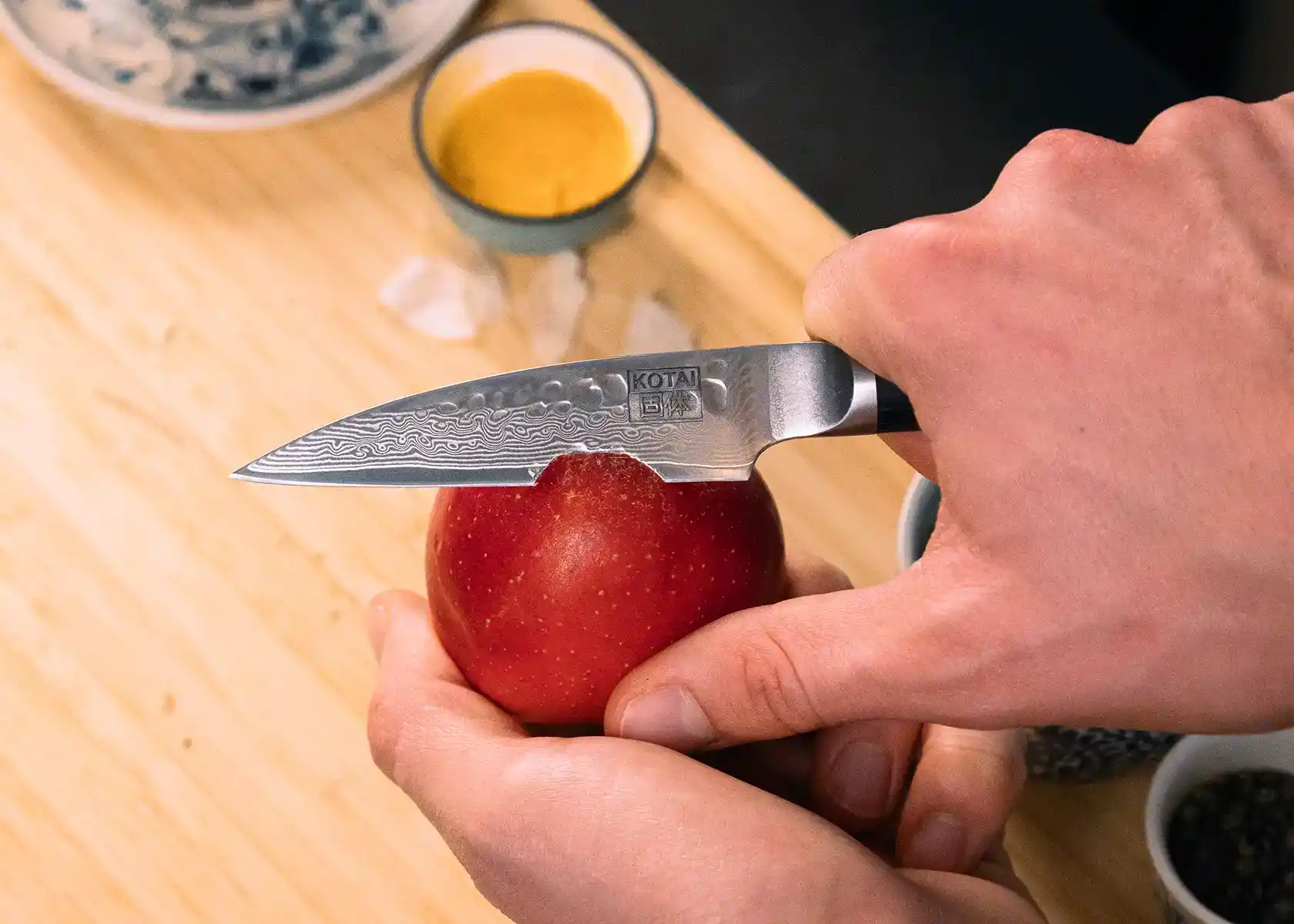
The Practical Starting Point
For most home kitchens, begin with a plain-edge spear-point paring knife around 3 to 3.5 inches long. Choose it for secure control, thin geometry, easy maintenance, and sharpening access rather than decoration or premium materials.
What a Paring Knife Does
A paring knife is a short kitchen knife designed for precise work around small ingredients and tight spaces. Most blades are approximately 2.5 to 4 inches long.
Common tasks include peeling, trimming, coring, hulling, segmenting citrus, removing blemishes, scoring, shaping garnishes, and other detailed preparation. Its advantage is control—not reach, force, or heavy chopping.
Choosing the Blade Profile
| Profile | Best Uses | Tradeoffs |
|---|---|---|
| Spear point | Peeling, trimming, coring, hulling, small slicing, and general detail work | The pointed tip requires controlled handling. |
| Bird’s beak | Curved peeling, tourné cuts, decorative shaping, and work around rounded produce | Specialized profile and more difficult to sharpen on a flat stone. |
| Sheep’s foot or flat cut | Small board cuts, push cutting, and users who prefer a less aggressive tip | Offers less piercing ability than a spear point. |
| Serrated or wavy edge | Small foods with firm skins and soft interiors, such as tomatoes or citrus | Less versatile for smooth precision cuts and more difficult to sharpen accurately. |
Handle Comfort and Control
Because the blade works close to the fingers, handle fit matters more than decorative construction.
Secure Grip
The handle should remain stable without requiring a hard squeeze, even when hands are slightly damp.
Enough Handle Length
A short blade does not require a cramped handle. Larger hands may need a fuller shape for proper control.
Smooth Transitions
Avoid sharp corners, raised rivets, rough seams, or abrupt edges near the heel, bolster, scales, and butt.
Natural Balance
Choose a knife that feels connected and controlled rather than chasing one ideal balance point.
Blade Geometry, Flexibility, and Tip Design
A paring knife should be thin enough to move through small produce without wedging. Excessive thickness can make peeling and curved cuts feel clumsy even when the edge itself is sharp.
Most general-purpose paring knives should have limited flexibility. A small amount of give can help around curves, but too much flex reduces precision.
A fine tip improves coring, scoring, and blemish removal but requires careful use. A moderate point provides a practical balance between control and durability. The knife should never be twisted, pried, or forced against pits, lids, bones, or frozen food.
Steel and Construction
Simple construction often serves a paring knife better than expensive specifications.
Practical Stainless Steel
Best for Most CooksPros
Resists staining from acidic fruit and wet produce, remains easy to maintain, and is widely available.
Cons
Performance still depends on heat treatment, geometry, and sharpening.
Best For
Everyday home use and cooks who want simple care.
Premium or Very Hard Steel
Optional UpgradePros
May hold a fine edge longer.
Cons
Can cost more and may be less forgiving of twisting, impacts, pits, and poor technique.
Best For
Careful users who understand the steel and want its specific advantages.
Stamped Construction
Often Excellent ValuePros
Usually thin, light, affordable, and well suited to precision work.
Cons
Quality varies among models.
Best For
Buyers who value cutting performance over weight or traditional forged appearance.
Forged Construction
Heavier Traditional BuildPros
May offer additional weight, finish, and handle options.
Cons
Does not automatically improve performance and may include a bulky bolster.
Best For
Buyers who prefer the feel and finish of a specific forged model.
Keep the Heel Accessible
A full bolster that extends to the cutting edge can interfere with board contact and make the heel difficult to sharpen. As the blade wears, the bolster may extend below the edge and create a raised heel.
Look for an open heel, partial bolster, or sloped transition that leaves the full cutting edge accessible. The rear corner should also be smooth enough that it does not irritate or cut the fingers during close-control grips.
Paring Knife, Utility Knife, or Petty Knife?
A traditional paring knife emphasizes precision in tight spaces and often works well for in-hand preparation.
A utility knife is usually about 4.5 to 6 inches long and provides additional reach for small board work.
A Japanese petty knife is also commonly 4.5 to 6 inches long, often with a thin blade and pointed tip. It can bridge the gap between a paring knife and chef’s knife more effectively than a traditional short paring knife.
These tools overlap, but they are not interchangeable. Choose according to whether you need compact control or additional slicing length.
Price and the Number of Knives Needed
Excellent paring knives are available at modest prices because the blade is small and the required tasks are straightforward. A comfortable, well-ground production knife can perform exceptionally well without premium steel or decorative finishing.
One standard spear-point paring knife handles most household needs. Add a bird’s-beak, sheep’s-foot, or serrated version only when a repeated task justifies the specialized shape.
What to Inspect Before Buying
Blade Straightness
Sight along the spine for bends, twists, waves, or uneven alignment.
Handle Fit
Check for cracks, gaps, raised rivets, looseness, and uncomfortable seams.
Heel Access
Confirm that the full edge can contact a board and remain reachable during sharpening.
Tip Condition
Inspect for bending, bluntness, overgrinding, weakness, or visible damage.
Spine and Heel Comfort
Sharp corners can irritate the fingers during close-control work.
Edge Geometry
Look for chips, severe bevel unevenness, excessive thickness, and poorly finished transitions.
Safe Use, Cleaning, and Storage
Some traditional paring work is performed while holding the ingredient in the opposite hand. Work slowly, use controlled pressure, keep the cutting path away from the palm and fingers, and use a cutting board whenever practical.
Wash the knife by hand with mild soap, rinse it, and dry it immediately—especially after acidic fruit. Never leave a small knife hidden in a sink or submerged beneath dishes.
Do not store a paring knife loose in a drawer. Use a correctly sized guard, block slot, magnetic system, or drawer organizer that protects the edge and makes the knife visible.
Sharpening and Specialty Profiles
A plain-edge paring knife is sharpened using the same principles as a larger kitchen knife: maintain consistent bevels, reach the apex, reduce the burr, and finish with controlled light pressure.
Because the blade is short, small angle changes happen quickly. Support the blade, protect the tip, and avoid excessive pressure.
Bird’s-beak and strongly curved profiles may require curved rods, slip stones, narrow abrasives, or professional service to follow the inside curve correctly. Consider how the knife will be sharpened before buying a specialized shape.
Common Paring-Knife Mistakes
Using It as a Pry Tool
Twisting around pits, lids, bones, or frozen food can bend or break the tip.
Cutting Toward the Hand
In-hand work becomes dangerous when the blade path or pressure is uncontrolled.
Leaving It in the Sink
The small blade can disappear beneath water and dishes.
Loose Drawer Storage
Exposes the edge to damage and creates a hidden cut hazard.
Choosing Appearance First
Decorative steel and handles cannot compensate for poor geometry or uncomfortable dimensions.
Buying Too Specialized
A curved or serrated profile may remain unused when a standard spear point would be more practical.
Buying Checklist
Choose approximately 3 to 3.5 inches for general use. Select a spear point unless a specialty task requires another profile. Confirm the handle feels secure without squeezing. Look for a thin blade with controlled flexibility. Choose stainless steel for simpler daily maintenance. Keep the heel open and accessible for sharpening. Avoid a bulky full bolster that extends below the edge. Inspect the tip, spine, handle joints, and bevels. Plan for protected storage. Do not overpay for decoration that does not improve control.
Key Takeaways
Control Comes First
A quality paring knife should feel secure, precise, and natural during small cutting tasks.
Simple Often Works Best
A thin stainless spear-point blade with a comfortable handle usually provides the strongest value.
Plan for Maintenance
Heel access, edge style, cleaning, storage, and sharpening matter as much as factory sharpness.
References
The following sources were used in preparing and supporting this article.
What Is a Paring Knife and What Is It Used For?
Victorinox
victorinox.com
What Are WÜSTHOF Paring Knives Used For?
WÜSTHOF
wusthof.com
Peeling and Paring Knives
ZWILLING
zwilling.com
Which Knife Does What?
Victorinox
victorinox.com