Kitchen Cut First Aid
Control bleeding, recognize emergencies, and know when to seek professional care.
Knife cuts range from minor surface wounds to emergencies involving severe bleeding or deeper injury. This general information is not medical advice. Call 911 for life-threatening bleeding or other emergency signs, and contact a healthcare provider whenever you are uncertain about the injury.
Important Medical Disclaimer
This article provides general educational information only. It is not medical advice and is not a substitute for diagnosis or treatment by a qualified healthcare professional.
Call 911 for life-threatening bleeding, loss of consciousness, difficulty breathing, signs of shock, a severed body part, or another medical emergency. Contact your healthcare provider or seek urgent medical care whenever a cut is deep, gaping, contaminated, numb, difficult to move, or otherwise concerning.
First: Make the Area Safe
Stop cutting immediately and place the knife on a stable surface where no one else can contact the blade.
Move away from food preparation and sit or stand somewhere stable. Do not leave the knife hidden in a sink, towel, or pile of utensils.
If the injury appears severe, call 911 and follow the dispatcher’s instructions rather than attempting to drive yourself.
Control the Bleeding
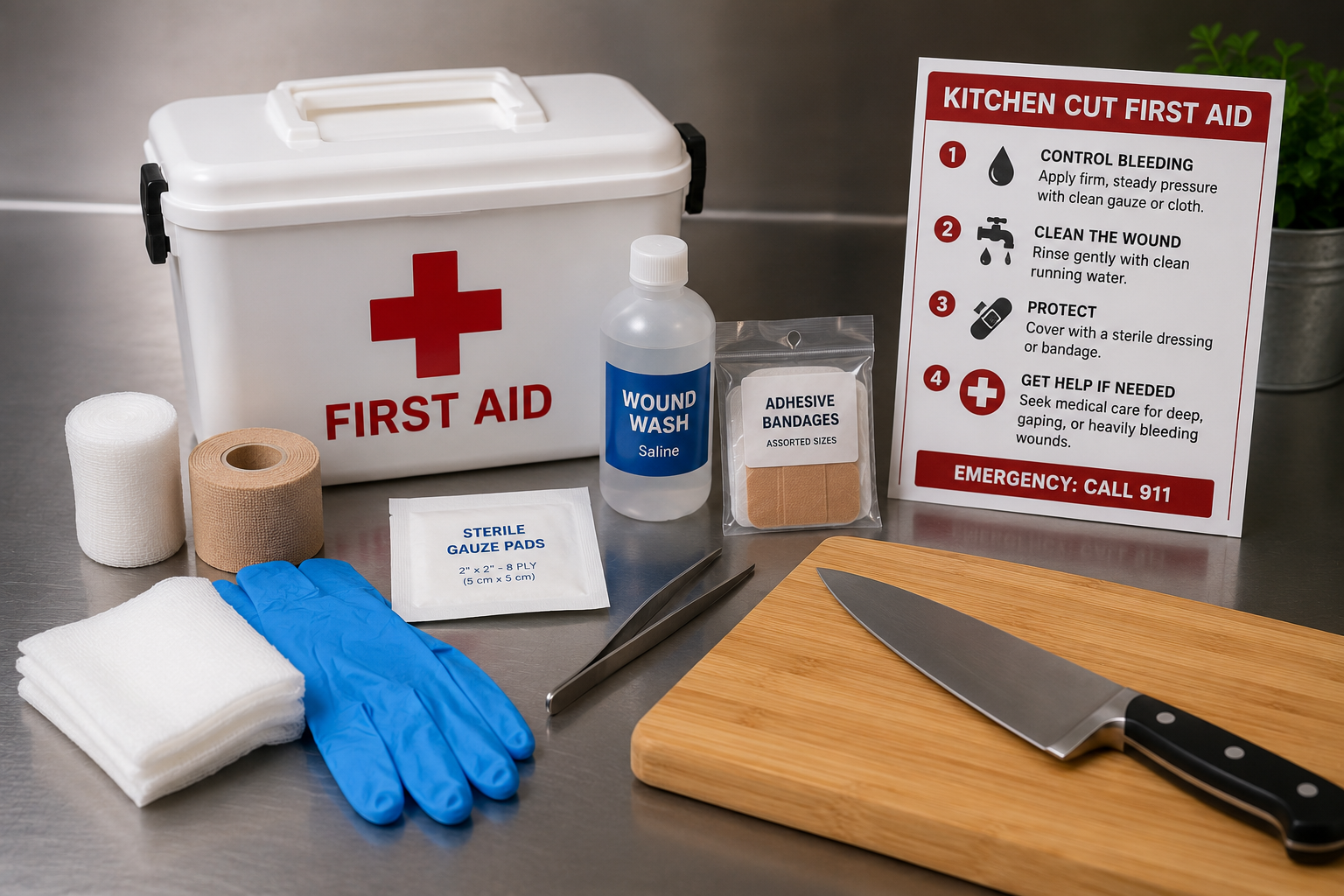
Place clean gauze or a clean folded cloth directly over the wound and apply firm, steady pressure.
Keep the pressure continuous. If blood soaks through, leave the original material in place, add clean material on top if needed, and continue pressing.
Call 911 when bleeding is heavy, flowing continuously, spurting, pooling rapidly, or not controlled by firm direct pressure.
When to Get Medical Help
| What You Notice | Recommended Response |
|---|---|
| Heavy, continuous, or spurting bleeding | Call 911 and continue firm direct pressure. |
| Faintness, confusion, pale or clammy skin, or breathing difficulty | Call 911 for a possible medical emergency. |
| Deep, wide, or gaping wound | Seek prompt professional medical evaluation. |
| Numbness, tingling, weakness, or limited movement | Seek urgent care for possible nerve, tendon, or circulation injury. |
| Visible fat, tendon, bone, or other deeper tissue | Seek urgent medical care. |
| Embedded object or blade fragment | Do not remove it; call 911 and apply pressure around it. |
| Minor shallow cut with bleeding that stops | Clean and cover it, then monitor healing and contact a provider if concerned. |
Caring for an Apparently Minor Cut
After the bleeding has stopped and the cut appears minor, rinse it gently with clean running water. Wash the surrounding skin with mild soap without aggressively scrubbing inside the wound.
Cover it with a clean sterile dressing or adhesive bandage and replace the covering when it becomes wet, dirty, or loose.
Contact a healthcare provider about wounds that are contaminated, difficult to clean, worsening, showing signs of infection, or associated with uncertain tetanus protection. People with conditions or medications that affect bleeding or healing should seek medical guidance.
After the Injury
Do not return to food preparation until the injury has been treated and safely covered.
Discard food that may have contacted blood, keep others away from the knife and affected surfaces, and clean and disinfect the work area according to appropriate food-safety procedures.
Once the situation is under control, clean, dry, inspect, and safely store the knife.
Key Takeaways
Treat every knife cut seriously enough to stop, control the bleeding, and decide whether professional care is needed.
This Is Not Medical Advice
Use this article only as general information. Contact a qualified healthcare provider for individual guidance.
Call 911 for Emergencies
Severe or uncontrolled bleeding, shock symptoms, breathing difficulty, or major trauma require emergency help.
Use Firm Direct Pressure
Apply clean material over the wound and maintain steady pressure while help is arranged.
Seek Care When Unsure
Deep, gaping, contaminated, numb, weak, or difficult-to-move injuries need professional evaluation.
References
The following sources were used in preparing and supporting this article.
Wounds: Symptoms, Types, and First Aid
American Red Cross
redcross.org
Life-Threatening External Bleeding
American Red Cross
redcross.org
Knife Safety and Responsible Knife Ownership
American Knife and Tool Institute
akti.org