How to Choose Your First Chef's Knife
Choose a knife that fits your hand, cutting style, kitchen, and willingness to maintain it.
A first chef's knife should feel comfortable, provide enough knuckle clearance, suit the foods you prepare, and fit the amount of care you are willing to provide. Brand, steel, and price matter less than practical fit.
Begin With How You Cook
Ask what foods you prepare most often and what you dislike about your current knife. A first chef's knife should solve those everyday problems before it satisfies a preference for a brand, steel, appearance, or country of origin.
Why a Chef's Knife Is Usually the Best Starting Point
A chef's knife is broad enough for knuckle clearance, long enough for slicing, and versatile enough for chopping, mincing, and general meal preparation.
For many home cooks, an 8-inch chef's knife is a practical starting point. Shorter knives offer more control in a compact kitchen, while longer knives handle large ingredients more efficiently. Comfort and available cutting-board space matter more than following a standard size.
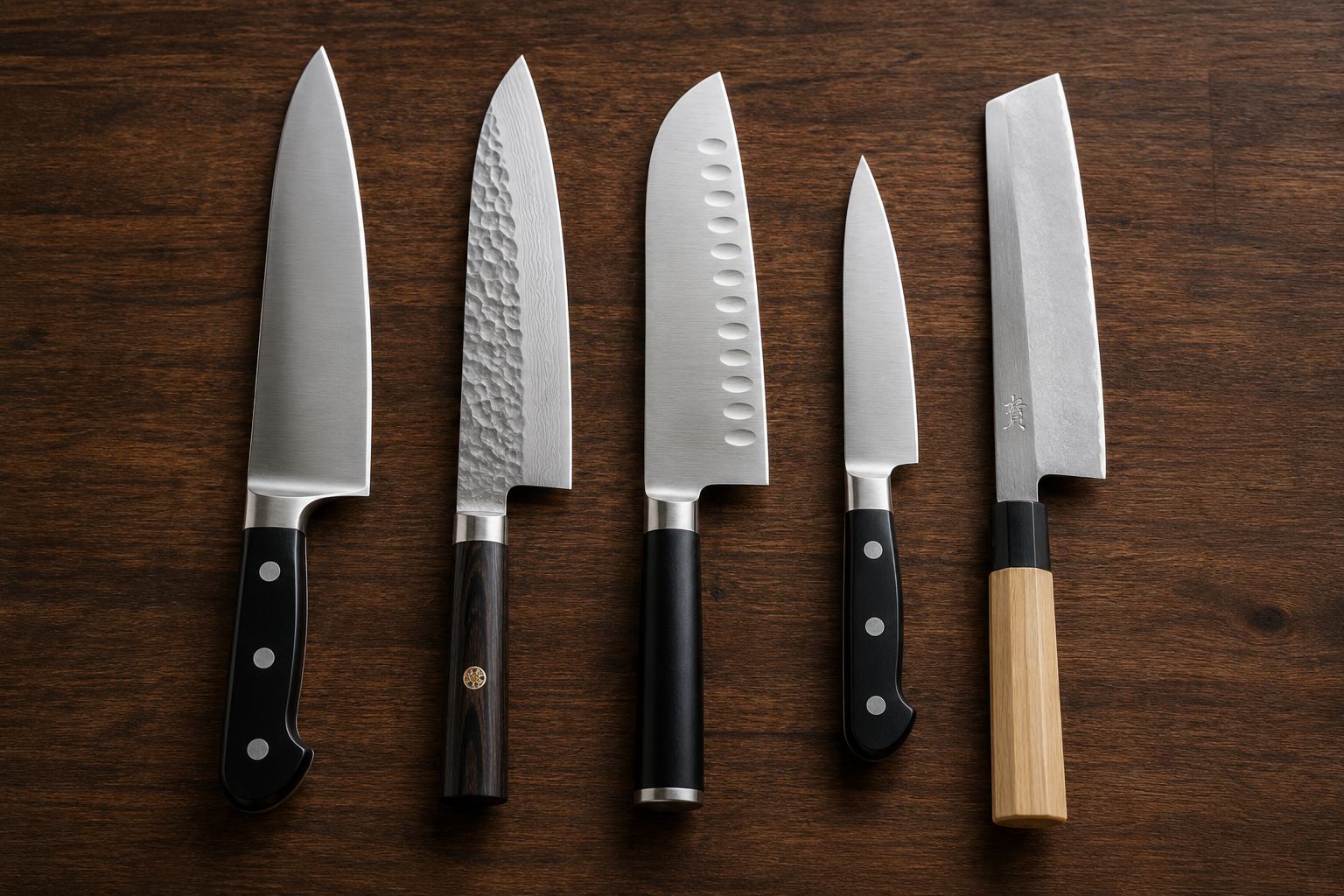
Chef's Knife, Gyuto, or Santoku?
All three can serve as a primary kitchen knife. Choose according to cutting motion, blade shape, and preferred feel.
Western Chef's Knife
Curved and FamiliarPros
Versatile, substantial, and well suited to rocking cuts.
Cons
May feel heavier and less agile than thinner Japanese-style knives.
Best For
Cooks who use a rocking motion and want a familiar all-purpose shape.
Gyuto
Light Multipurpose KnifePros
Often thinner, lighter, and flatter than a traditional Western chef's knife.
Cons
Thin hard edges may require more careful technique and cutting surfaces.
Best For
Cooks who favor slicing, push cuts, and a lighter feel.
Santoku
Compact and FlatPros
Shorter, light, and efficient for vegetables, push cuts, and downward chopping.
Cons
The shorter, flatter profile may be less comfortable for large foods or strong rocking motions.
Best For
Compact kitchens and cooks who prefer a flatter cutting motion.
Comfort Matters More Than Specifications
Whenever possible, hold the knife in a normal pinch grip before buying.
Grip Security
The knife should feel stable without requiring a hard squeeze. Avoid slippery surfaces and sharp handle edges.
Knuckle Clearance
Your fingers should clear the cutting board during normal chopping.
Weight and Balance
Choose a light, neutral, or blade-forward feel according to what remains controlled and comfortable during repeated cuts.
Handle Shape
Western, oval, octagonal, rounded, and angular handles all feel different. The best one remains comfortable during extended preparation.
Blade Profile and Thickness
A curved edge supports rocking cuts. A flatter profile favors push cuts, pull cuts, and straight chopping. A knife that conflicts with your natural cutting motion may feel awkward even when its other specifications look ideal.
Thin blades generally pass through food with less resistance. Thicker blades may feel more durable, but excessive thickness behind the edge can cause wedging. A knife can be sharp at the apex and still cut poorly if the blade geometry is too thick.
Steel and Maintenance
Choose steel according to how carefully you will use, clean, dry, and maintain the knife.
Stainless Steel
Easiest First ChoicePros
Good corrosion resistance and a simpler daily-care routine.
Cons
Performance still varies with heat treatment, hardness, and geometry.
Best For
Most first-time buyers and ordinary home kitchens.
Harder Specialty Steel
Longer Edge RetentionPros
Can support thin edges and remain sharp longer.
Cons
May be less forgiving of twisting, impact, bones, frozen food, and hard cutting surfaces.
Best For
Careful users who understand the added risk and maintenance.
Carbon Steel
Reactive and TraditionalPros
Often easy to sharpen and valued for its cutting feel.
Cons
Requires prompt washing and drying and will develop patina or rust when neglected.
Best For
Buyers who intentionally want its maintenance routine and changing appearance.
Construction Labels Are Not Quality Guarantees
Forged knives are shaped from heated steel, while stamped knives are cut from sheet or coil. Either method can produce an excellent or disappointing knife. Geometry, heat treatment, edge quality, handle comfort, and workmanship matter more than the label.
A full tang can add strength and weight, but many reliable Japanese knives use hidden or partial tangs. What matters is that the handle is secure, comfortable, and free from gaps.
A bolster may improve comfort and balance, but a full bolster that reaches the edge can interfere with sharpening and eventually prevent the heel from contacting the board.
What to Inspect Before Buying
Compare the specific knife rather than relying on brand reputation or marketing language.
Handle Fit
Look for gaps, loose parts, raised edges, or unfinished areas where moisture and food could collect.
Spine and Choil
Sharp corners near a pinch grip can become uncomfortable during long preparation sessions.
Blade Straightness
Sight along the spine for obvious bends, twists, or uneven grinding.
Edge and Heel
The factory edge should be free from visible damage, and the heel should remain accessible for future sharpening.
Budget for the Complete Setup
A practical first knife does not need to be rare or expensive. Higher prices may buy improved materials, finish, geometry, craftsmanship, or appearance, but cutting performance does not rise directly with price.
Reserve part of the budget for an edge-friendly cutting board, safe storage, hand-washing supplies, and future sharpening. These choices affect the knife's useful life as much as the purchase itself.
Common First-Knife Mistakes
Buying the Hardest Steel
Higher hardness can improve edge retention but may increase brittleness and maintenance difficulty.
Choosing Looks Over Comfort
Patterned steel and decorative handles cannot compensate for poor grip, balance, or dimensions.
Buying Too Large
A long knife can feel cumbersome on a small board or in a compact kitchen.
Ignoring Maintenance
Thin, hard, or reactive blades may require more careful use than the buyer wants to provide.
Buying a Full Set First
One dependable chef's knife is often a better first investment than several low-use blades.
Using a Hard Cutting Surface
Glass, stone, ceramic, and similar surfaces can dull even an excellent edge quickly.
First Chef's Knife Checklist
The knife feels comfortable in a pinch grip. The blade provides enough knuckle clearance. The length fits your board and common ingredients. The weight feels controlled rather than tiring. The profile matches your cutting motion. The steel matches your maintenance habits. The heel remains accessible for sharpening. The handle is secure and free from uncomfortable edges. You have safe storage and an edge-friendly cutting board.
Key Takeaways
Comfort Comes First
A secure, natural feel matters more than brand, steel name, price, or appearance.
Choose Versatility
An 8-inch chef's knife or similarly sized gyuto can handle most everyday kitchen work.
Plan for Care
A suitable board, safe storage, proper cleaning, and future sharpening are part of the purchase.
References
The following sources were used in preparing and supporting this article.
Chef's Knives: Selecting the Right Chef Knife
ZWILLING
zwilling.com
Find the Right Chef's Knife for You
ZWILLING
zwilling.com
Knife-Buying Guide
Victorinox
victorinox.com
WÜSTHOF Knives by Series
WÜSTHOF
wusthof.com