Cutting Boards: Wood vs. Bamboo vs. Plastic
The best board protects the knife edge, stays stable, and fits your cleaning and maintenance routine.
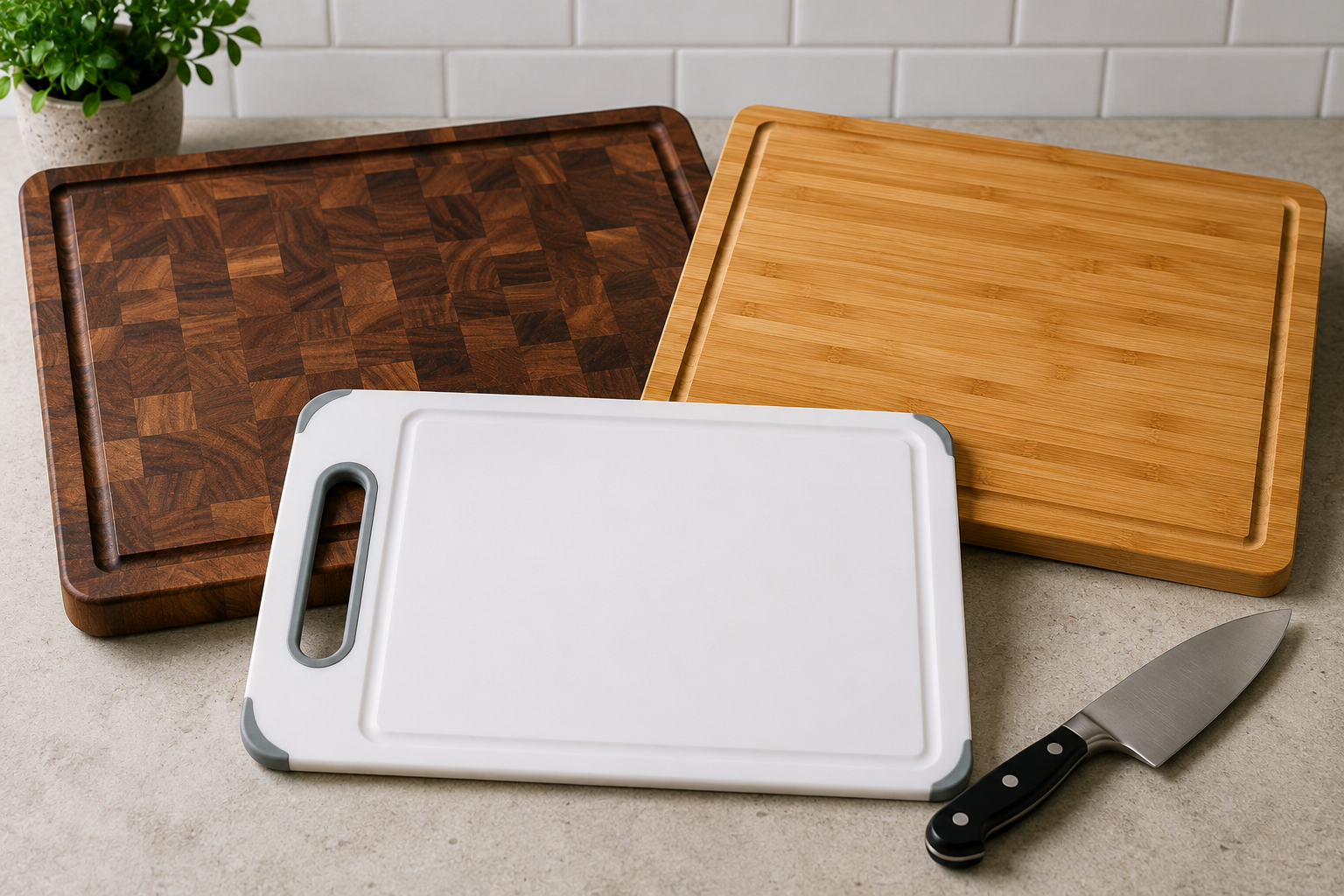
Wood, bamboo, and plastic cutting boards each have strengths and tradeoffs. The right choice depends on edge friendliness, sanitation, stability, maintenance, size, and how the board will be used.
The Simple Rule
The board should be softer than the knife edge, stable under pressure, large enough for the food and knife, and easy to clean and dry.
Why the Cutting Board Matters
Every cutting stroke brings the knife edge into contact with the board. A suitable surface supports controlled cutting while yielding slightly under the apex.
A surface that is too hard can flatten, roll, chip, or prematurely dull the edge. A board that is unstable, deeply scarred, warped, cracked, or difficult to clean can create safety and sanitation problems.
For most kitchens, wood and quality plastic provide the best balance of edge protection, practicality, and maintenance.
Wood, Bamboo, and Plastic at a Glance
| Material | Edge Friendliness | Maintenance | Main Strength | Main Limitation |
|---|---|---|---|---|
| Wood | Very good | Hand wash, dry promptly, condition as needed | Stable, durable, attractive, and often resurfaceable | Heavy and sensitive to soaking, dishwashers, and uneven drying |
| Bamboo | Fair to good | Usually hand wash and dry promptly | Lightweight, affordable, renewable, and resistant to visible scarring | Often harder on edges and dependent on glue quality |
| Plastic | Good when quality and not excessively hard | Easy washing; some models are dishwasher safe | Affordable, lightweight, replaceable, and easy to dedicate by food type | Can scar deeply, warp, slide, and eventually require replacement |
Wood Cutting Boards
Wood provides a stable, resilient surface that is generally gentle on knife edges. Board quality depends on the wood species, grain orientation, thickness, construction, glue quality, finish, and maintenance.
Suitable woods are usually close-grained, moderately hard, stable, and free from strong odors or excessive resin.
Edge-grain boards expose the long side of the wood fibers. They are widely available, practical, and usually less expensive. End-grain boards expose the fiber ends, allowing the edge to move between fibers more readily. They can be exceptionally edge friendly and may hide knife marks well, but they are heavier, more expensive, and more dependent on excellent construction.
For most home kitchens, a quality edge-grain board is a strong practical choice. End grain offers added luxury and edge friendliness but is not required.
Wood Board Strengths and Tradeoffs
Edge Friendly
Wood fibers yield slightly under the edge and reduce harsh impact at the apex.
Stable and Long Lasting
A thick, well-made board can remain secure, be resurfaced, and last for many years.
Hand Care Required
Dishwashers, soaking, standing water, and uneven drying can cause warping, cracking, and glue failure.
Periodic Conditioning
Unfinished wood benefits from food-safe mineral oil or board conditioner when it becomes dry, pale, rough, or absorbs water quickly.
Bamboo Cutting Boards
Bamboo is a grass that is processed into strips and joined under pressure with adhesive. Bamboo boards are lightweight, widely available, renewable, affordable, and resistant to visible knife marks.
Those same qualities come with tradeoffs. Bamboo is often harder than common cutting-board woods, and dense fibers plus adhesive content may increase wear on thin, hard, finely sharpened edges.
Manufacturing quality varies. Lower-quality boards may split, crack, delaminate, or develop rough glue joints after moisture exposure. Bamboo should generally be hand washed, dried promptly, and conditioned according to the manufacturer’s instructions.
Plastic Cutting Boards
Quality polyethylene or similar food-safe plastic can be relatively gentle on knife edges. Plastic boards are affordable, lightweight, easy to replace, and available in many sizes and thicknesses.
They are useful for raw meat, poultry, fish, and general preparation because they can be washed aggressively and some models are dishwasher safe.
Repeated cutting eventually creates grooves. Deep scars can trap food residue, moisture, stains, and odors and become difficult to clean completely. Thin boards may slide, flex, curl, or warp during high-heat dishwasher cycles.
Replace plastic boards when they become deeply grooved, rough, warped, unstable, persistently stained, or difficult to clean.
Food Safety and Cross-Contamination
Any cutting board can become unsafe when it is not cleaned, dried, or replaced appropriately. Sanitation depends on surface condition, cleaning method, drying, food handling, and cross-contamination control.
Wash boards after use with hot water and dish soap, rinse them, and allow them to dry thoroughly. Clean both sides of wood boards to reduce uneven moisture absorption, and do not store them flat while wet.
Many households use a dedicated plastic board for raw meat, poultry, and fish because it can be cleaned aggressively and replaced affordably. A separate board may be reserved for vegetables, bread, fruit, and foods that will not be cooked.
Wood is porous, but porosity alone does not make a properly maintained board unsafe. Plastic is nonporous when new, but deep knife grooves can become difficult to clean.
Size, Thickness, and Stability
A board must fit the cook, knife, counter, sink, and storage space.
Board Size
The surface should comfortably fit the longest everyday knife and leave working space around the food.
Board Thickness
Thicker boards resist flexing and warping but are heavier and harder to wash or store.
Rubber Feet
Feet improve grip and airflow but usually make the board one-sided.
Damp Towel Method
A folded damp towel or nonslip mat beneath the board can reduce movement.
Juice Grooves and Reversible Boards
Juice grooves help contain liquid from roasts, fruit, tomatoes, and other moist foods. They also reduce usable flat cutting space and can be harder to clean.
Rubber feet improve convenience and stability but make the board one-sided. A board without feet can often be flipped, giving the cook two usable surfaces.
Choose these features according to actual use rather than appearance.
Cleaning and Conditioning
Wood and bamboo: Hand wash with dish soap and warm water, rinse, wipe dry, and stand the board so air can reach both sides. Never soak wood or bamboo and do not place laminated boards in the dishwasher unless the manufacturer specifically approves it.
Plastic: Wash with hot water and dish soap. Dishwasher-safe products may be cleaned according to manufacturer instructions. Inspect after washing for warping, roughness, deep grooves, or persistent odors.
Wood conditioning: Apply food-safe mineral oil or a board conditioner made for food-contact wood. Do not substitute cooking oils that may become sticky or rancid. Condition according to the board’s condition rather than a rigid schedule.
When to Repair or Replace a Board
Surface wear may be repairable, but structural or sanitation problems often justify replacement.
Deep Cracks
Cracks can trap moisture and residue and may continue to spread.
Loose Glue Joints
Separation between pieces weakens the board and creates sanitation problems.
Severe Warping
A rocking board is unstable and unsafe during cutting.
Persistent Mold or Odor
Contamination that cannot be removed may require replacement.
Deep Plastic Grooves
Heavy scarring can become difficult to clean effectively.
Surface Wear Only
A structurally sound solid-wood board may be sanded or professionally resurfaced, then cleaned, dried, and reconditioned.
Other Cutting-Board Materials
Rubber boards: Soft synthetic and rubber boards can provide excellent grip, sanitation, stability, edge friendliness, and in some cases resurfacing. They are often heavier, more expensive, and less decorative than plastic.
Composite boards: Compressed paper, resin, wood fiber, and blended materials can be thin, durable, dishwasher safe, and resistant to warping. Their hardness varies, and some are less friendly to knife edges than quality wood or plastic.
Flexible mats: Thin mats are inexpensive and convenient for transferring ingredients or separating food categories, but they may curl, slide, flex, and provide limited support.
Check manufacturer guidance because composite, rubber, and synthetic products vary widely in hardness, cleaning method, and resurfacing options.
Surfaces to Avoid for Knife Use
Use hard surfaces for serving or pastry work, then transfer food to a knife-friendly board before cutting.
Glass
Extremely hard, slippery, noisy, and damaging to knife edges.
Marble and Granite
Useful for pastry work but too hard for routine cutting.
Ceramic
Decorative and easy to clean, but highly unforgiving to sharp edges.
Metal
Hard metal surfaces can roll, flatten, or chip the apex.
A Practical Two-Board Setup
For many home kitchens, one quality wood board and one dishwasher-safe plastic board provide a practical balance.
Use the wood board for vegetables, fruit, bread, and general preparation. Use the plastic board for raw meat, poultry, and fish or any task where aggressive sanitation and affordable replacement are useful.
A medium-size wood or quality plastic board is usually the best starting point for a beginner. The final choice depends on maintenance preference, budget, storage space, sink size, board weight, and sanitation routine.
Buying Checklist
Choose wood, quality plastic, rubber, or another knife-friendly material.
Avoid glass, ceramic, granite, marble, and metal cutting surfaces.
Confirm the board is large enough for your everyday knife and food.
Choose enough thickness to prevent flexing and instability.
Make sure the board fits your sink and storage space.
Look for smooth joints, flat construction, and secure feet when included.
Decide whether you need a juice groove or prefer a fully flat, reversible surface.
Understand the cleaning and maintenance requirements before buying.
Use a damp towel or nonslip mat if the board moves.
Replace boards that become cracked, deeply scarred, warped, moldy, loose, or difficult to clean.
Key Takeaways
Protect the edge with the surface beneath it.
Wood and Quality Plastic Are Strong General Choices
Both can protect knife edges and work safely when cleaned, dried, and maintained properly.
Bamboo Has Tradeoffs
It is light, renewable, and affordable, but often harder on knife edges than wood or quality plastic.
Stability and Size Matter
The board should remain flat and still while providing enough working space for the knife and food.
Maintenance Determines Safety
Clean, dry, inspect, condition, resurface, or replace the board according to its material and condition.
References
The following sources were used in preparing and supporting this article.
Cutting Boards
USDA Food Safety and Inspection Service
fsis.usda.gov
Selecting and Serving Produce Safely
U.S. Food and Drug Administration
fda.gov
Food Safety 101
University of Minnesota Extension
extension.umn.edu