Beyond the Edge: A Beginner's Guide to Blade Geometry
Sharpness is only part of how a knife cuts.
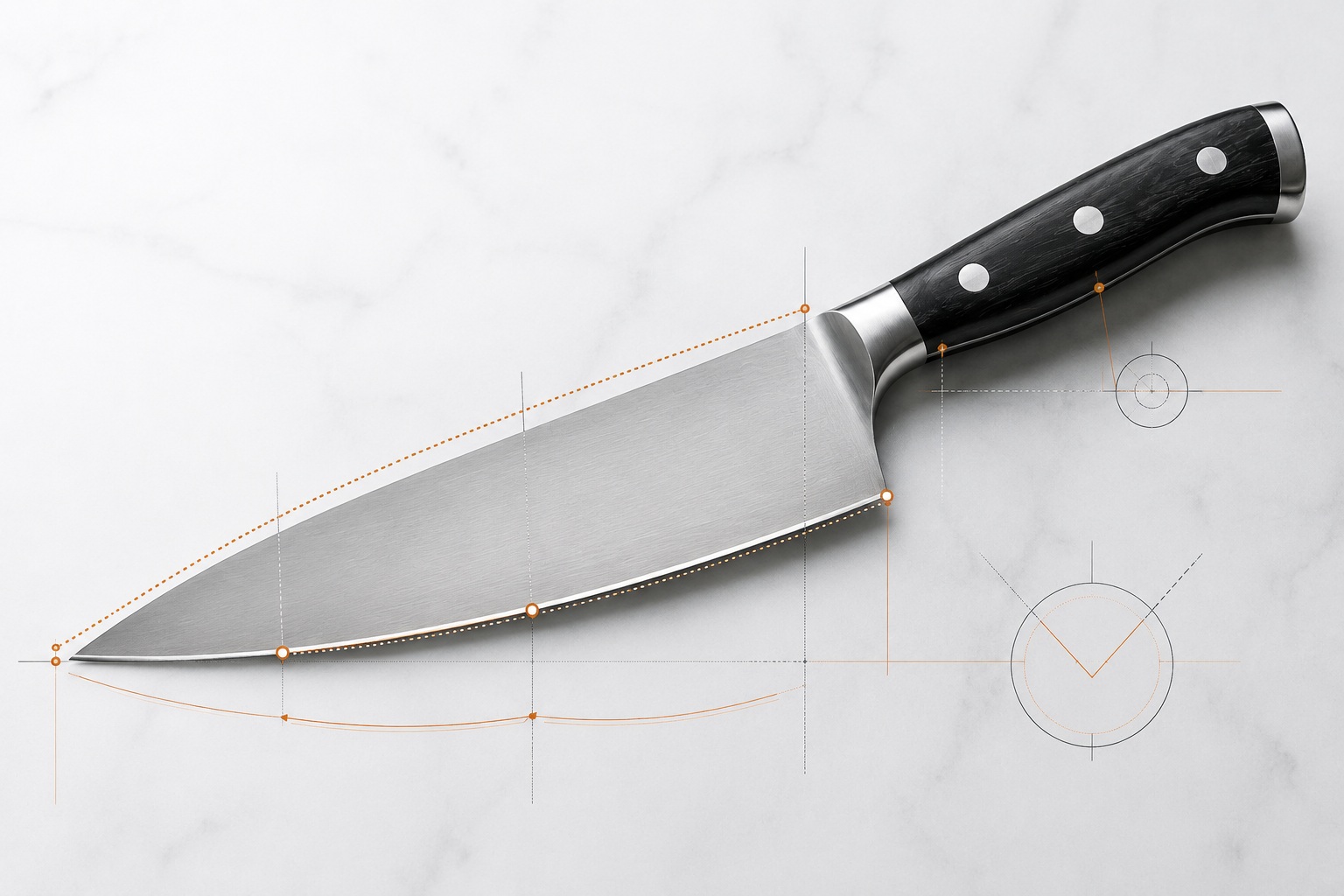
Blade geometry describes the shape of the knife from spine to edge, tip to heel, and face to face. It affects how easily a knife moves through food, how strong the edge is, and how the knife should be sharpened.
What is blade geometry?
Blade geometry is the overall shape of the knife. It includes the blade profile, spine thickness, grind, edge angle, taper, and how thin the blade is behind the cutting edge.
Two knives can have the same sharpness level but cut very differently because their geometry is different. One may glide through food, while the other wedges, sticks, or requires extra force.
Why geometry can matter more than sharpness
Sharpness describes the cutting edge itself. Geometry describes the blade behind that edge. A knife may have a sharp edge but still feel frustrating if the blade is thick or poorly shaped.
This is why some knives feel great right after sharpening but still struggle with dense foods. The edge may be sharp, but the blade may be too thick behind the edge.
Spine thickness
The spine is the top of the blade. A thicker spine can make a knife feel stronger and heavier, but it can also create more resistance as the blade passes through food.
A thinner spine often helps with slicing performance, but it may not be ideal for heavy-duty work. The right thickness depends on the knife's purpose.
Distal taper
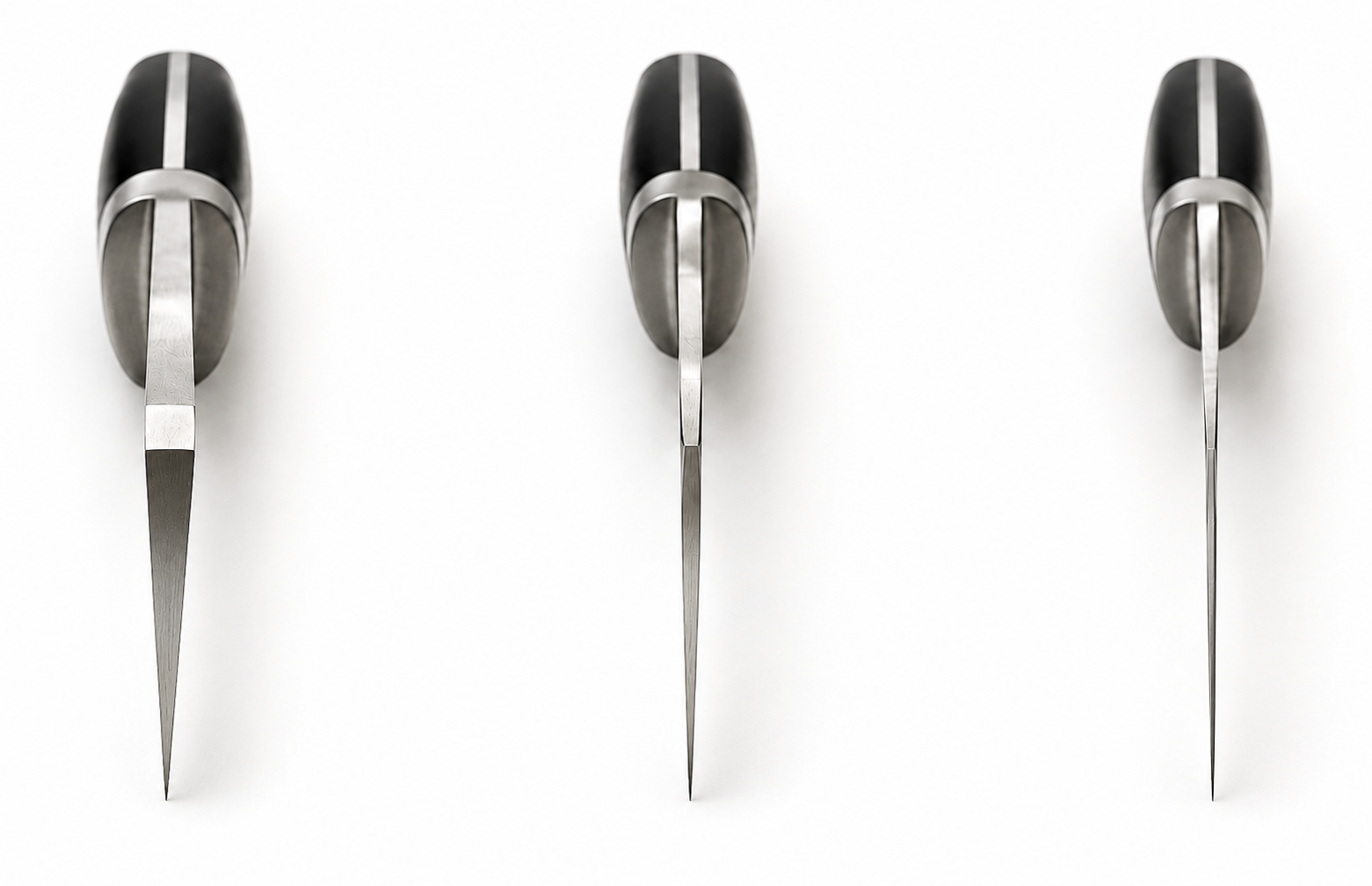
Distal taper means the blade gradually gets thinner from the handle toward the tip. Good taper can make the tip feel more precise and help the knife feel balanced.
A knife with little or no taper may feel strong, but it may also feel clunky during fine tip work.
Edge angle
Edge angle is the angle of the sharpened bevel. Lower angles can feel sharper and slice more easily, while wider angles are usually more durable.
A thin Japanese-style kitchen knife might support a finer edge. A heavy utility knife or cleaver may need a wider, stronger angle.
Thin behind the edge
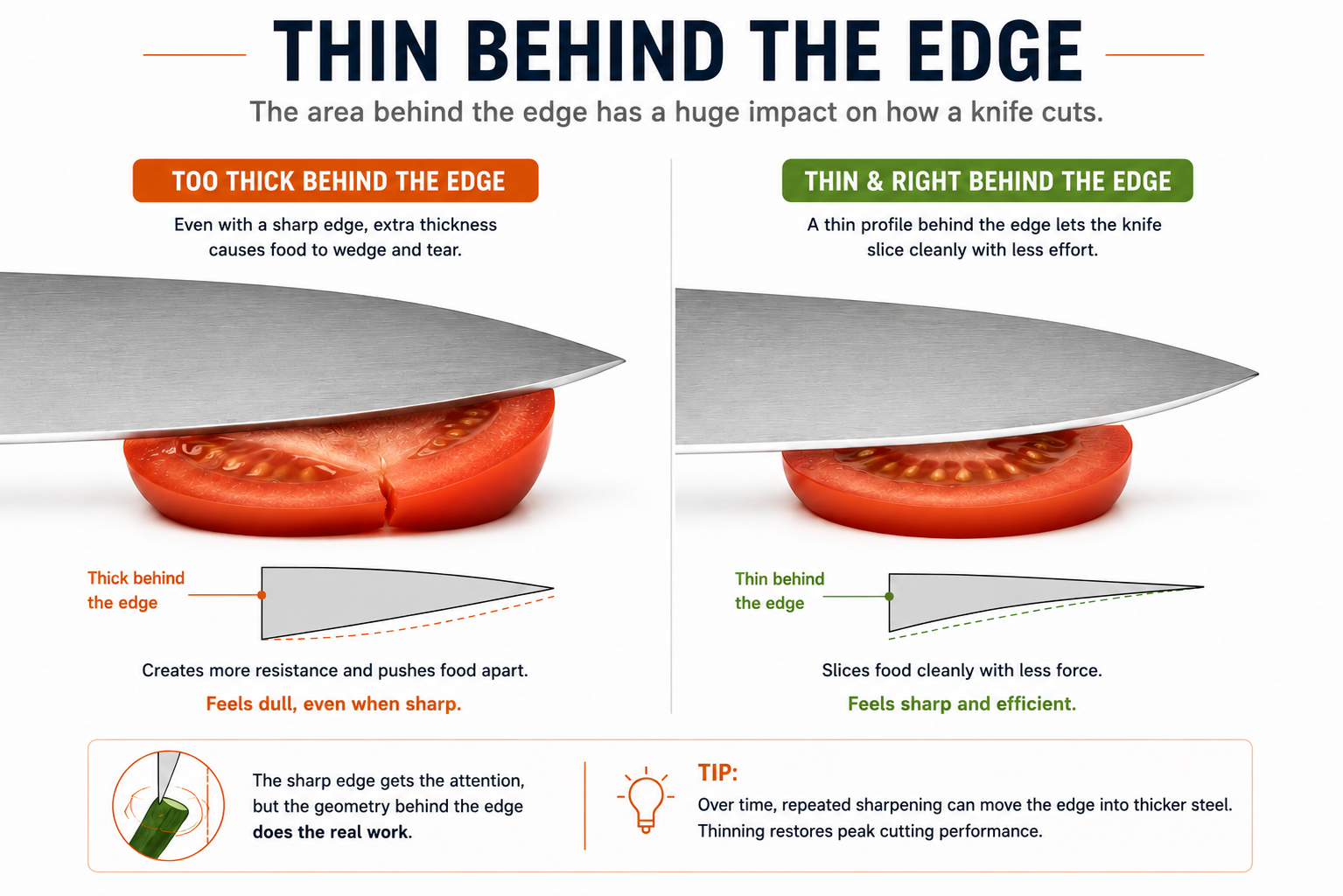
This is one of the most important parts of knife performance. A knife can have a sharp edge but still cut poorly if there is too much steel directly behind that edge.
When a blade is thin behind the edge, it separates food with less force. When it is thick behind the edge, it tends to wedge and split food rather than glide through it.
Food release
Food release describes how easily slices fall away from the blade. Some blade shapes stick to wet foods, while others help push food away from the blade face.
Granton-style dimples, convex faces, blade height, and surface finish can all affect food release, but no design solves every cutting task perfectly.
Geometry changes during sharpening
Every sharpening removes a small amount of steel. Over many sharpenings, the edge can move upward into thicker blade stock. When that happens, the knife may feel sharp but cut less efficiently.
This is when a knife may need thinning, not just sharpening. Thinning removes material above the edge to restore better cutting geometry.
Common geometry misconceptions
Sharper Always Cuts Better
Not always. A sharp but thick knife can still wedge and feel difficult to use.
Lower Angles Are Always Better
A lower angle may slice well, but it may not hold up if the knife is used hard.
Steel Solves Everything
Good steel helps, but blade geometry often has a bigger effect on daily cutting feel.
Key Takeaways
Geometry Drives Performance
A knife can be sharp but still cut poorly if the blade is too thick or poorly shaped behind the edge.
Shape Matters
Blade profile, spine thickness, taper, grind, and edge angle all affect how a knife moves through food.
Sharpening Changes Geometry
Over time, repeated sharpening can move the edge into thicker steel, which may require thinning.
References
The following sources were used in preparing and supporting this article.
KS-123 Knife Angle Setter
Tormek
tormek.com
Knife Sharpening Basics
Korin
korin.com
How to Sharpen Any Knife: Back to Basics
Work Sharp
worksharptools.com