The Science of Sharp: Why Your Knife Needs a Micro-Bevel
A tiny change at the edge can make a noticeable difference in durability.
A micro-bevel is a very small secondary bevel added at the cutting edge. It can strengthen a thin edge, improve durability, and make maintenance easier without removing much steel.
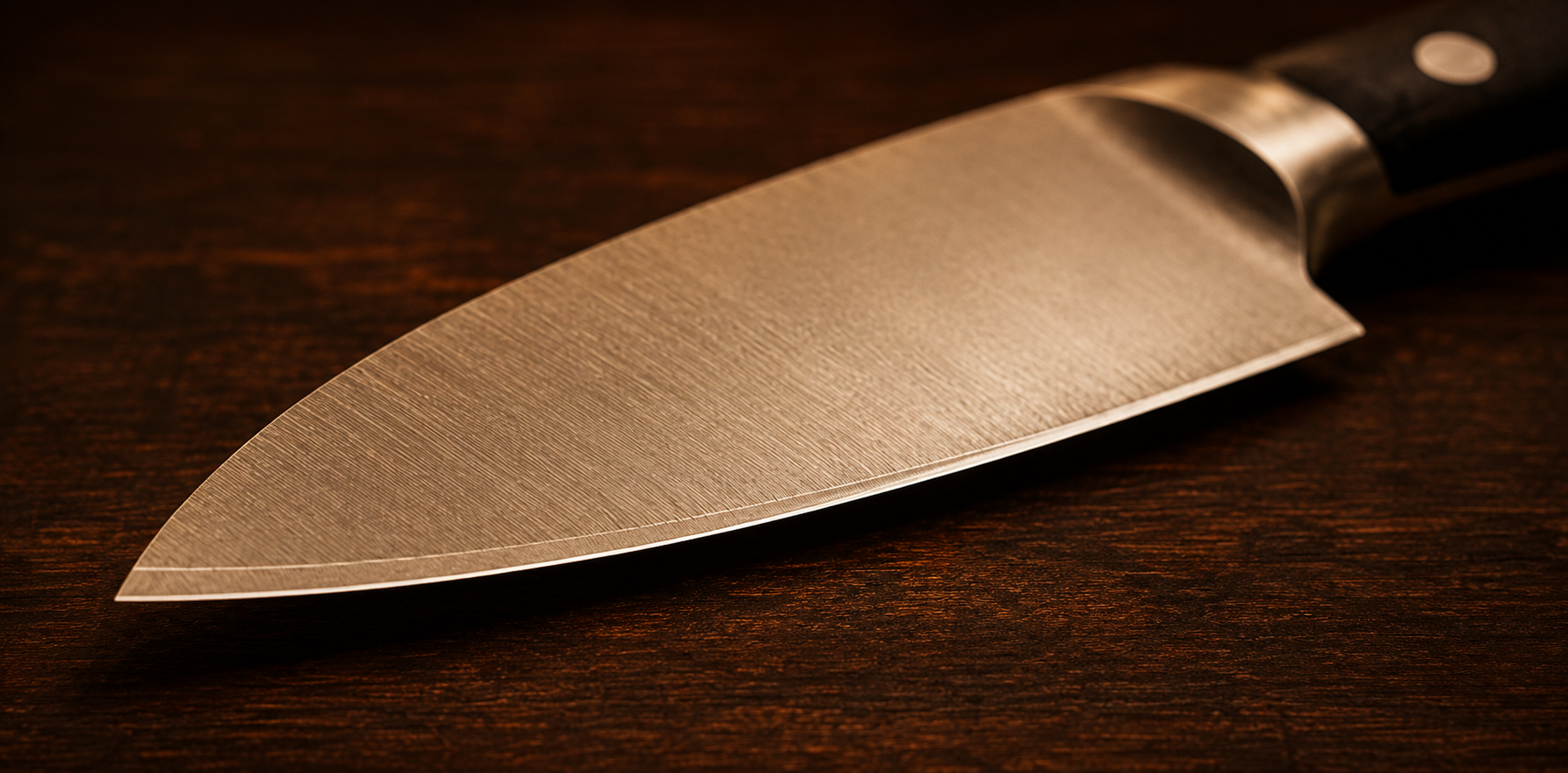
What is a micro-bevel?
A micro-bevel is a narrow secondary bevel placed directly at the apex of the edge. It is usually sharpened at a slightly wider angle than the main bevel.
Because it is so small, it removes very little steel and may be difficult to see without magnification.
Simple version: The main bevel creates cutting performance. The micro-bevel adds a little extra support at the edge.
Main bevel vs. micro-bevel
| Feature | Main Bevel | Micro-Bevel |
|---|---|---|
| Location | Extends from the blade face toward the edge. | Sits directly at the cutting apex. |
| Size | Usually visible and relatively wide. | Very narrow and sometimes difficult to see. |
| Purpose | Creates the primary cutting geometry. | Adds strength and stability to the edge. |
| Angle | Lower angle. | Slightly wider angle. |
| Steel removal | More steel is affected during sharpening. | Very little steel is removed. |
Why Use a Micro-Bevel?
A micro-bevel adds a very narrow secondary bevel at a slightly wider angle than the main bevel. This leaves more steel directly behind the apex, helping the edge resist rolling, chipping, and other damage during use.
Because the micro-bevel is so small, it usually adds durability without noticeably reducing cutting performance. The knife can retain the efficient geometry of the main bevel while gaining extra support at the cutting edge.
A micro-bevel is especially useful when a thin edge performs well but proves too delicate for the knife’s steel, cutting surface, or intended work.
Maintenance and Limitations
A micro-bevel is easy to maintain because only the narrow edge bevel usually needs light refinement. Over time, however, repeated sharpening can make it wider. When that happens, the main bevel may need to be restored before a new micro-bevel is added.
Not every knife benefits from this geometry. A durable edge that already performs well may not need extra support, and traditional single-bevel knives often require sharpening methods specific to their original design.
A micro-bevel should remain small and purposeful. If it becomes wide enough to noticeably change cutting performance, it is no longer functioning as a true micro-bevel.
How a Micro-Bevel Is Created
A micro-bevel is created by raising the sharpening angle slightly—usually only a few degrees above the main bevel—and making a small number of very light passes.
The bevel should remain narrow and close to the apex. Heavy pressure or too many strokes can make it grow into a full secondary bevel and reduce the benefit of the thinner main geometry.
Finish with light alternating strokes to remove the burr and leave a clean, supported cutting edge.
| Feature | Micro-Bevel | Convex Edge |
|---|---|---|
| Shape | Small, distinct secondary bevel. | Smooth curved transition to the edge. |
| Maintenance | Can be touched up at a defined angle. | Often maintained with flexible abrasives or controlled rocking motion. |
| Main advantage | Simple way to reinforce a thin edge. | Strong support with smooth cutting transition. |
Common micro-bevel mistakes
Making It Too Wide
A large secondary bevel can increase cutting resistance and alter the original geometry.
Using Too Much Pressure
Heavy pressure can enlarge the bevel and create a new burr.
Choosing Too Wide an Angle
Excessive angle changes can make the edge durable but unnecessarily blunt.
Applying It to Every Knife
Micro-bevels should be used when they solve a real edge-stability problem.
Key Takeaways
A Micro-Bevel Strengthens the Edge
A micro-bevel is simply one possible edge-finishing technique. It is chosen by the sharpener when the knife, steel, and intended use make it appropriate.
It Is Not Right for Every Knife
Some knives benefit from a micro-bevel, while others perform best with their original geometry preserved.
Angle and Size Matter
A micro-bevel should be small, controlled, and matched to the steel, blade geometry, and intended use.
References
The following sources were used in preparing and supporting this article.
KS-123 Knife Angle Setter
Tormek
tormek.com
Knife Sharpening Basics
Korin
korin.com
How to Sharpen Any Knife: Back to Basics
Work Sharp
worksharptools.com