How We Choose Between Wet Grinding and Belt Sanding
Most knives go directly to controlled wet sharpening. Belt sanding is reserved for very dull, damaged, or heavily worn edges.
Most knives at Gibson County Knife Sharpening go directly to controlled wet sharpening. Belt sanding is used only when an edge needs significant repair, reshaping, or faster steel removal. Knives that begin on the belt are then completed through the wet-sharpening process.
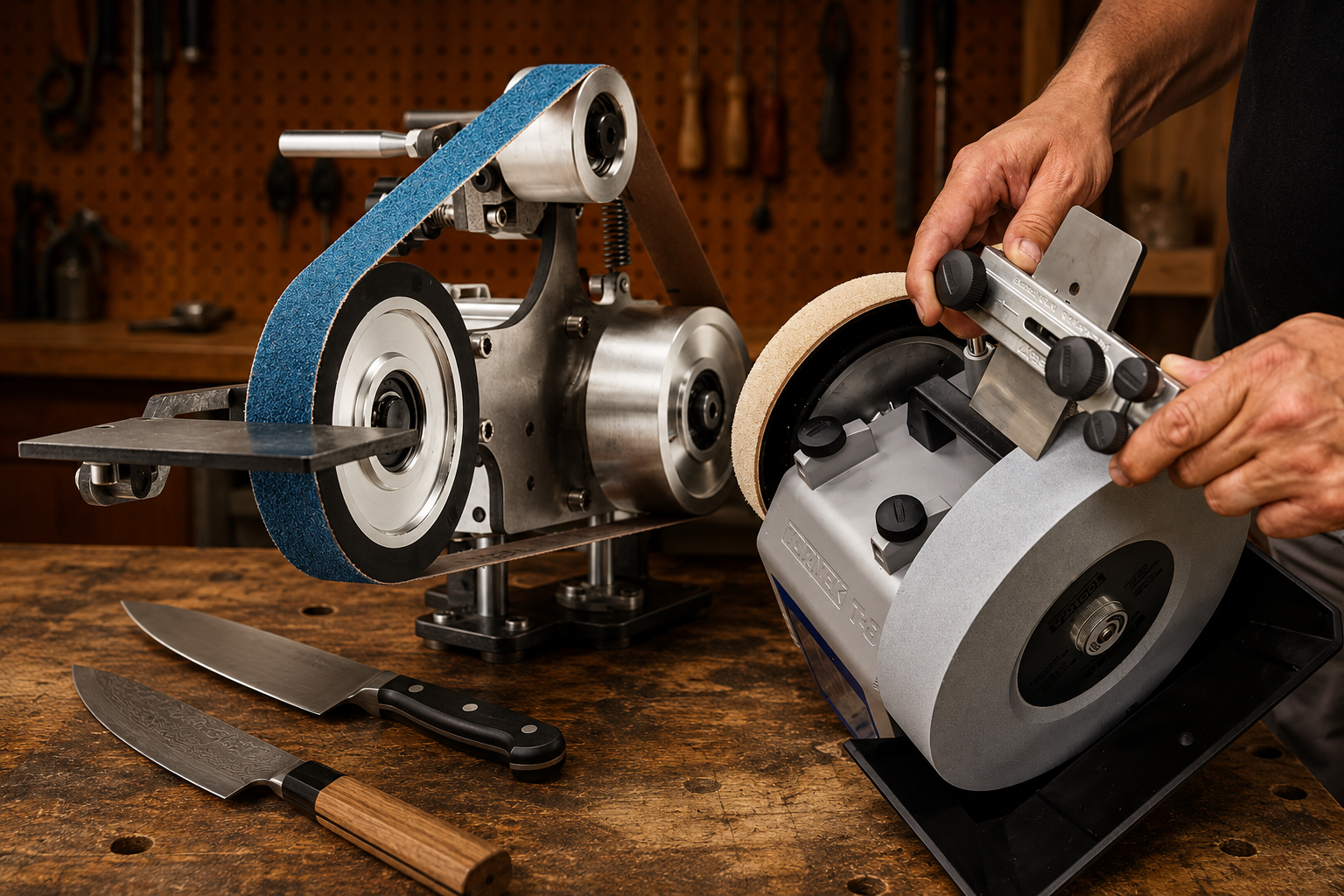
How GCKS Chooses a Starting Method
Most knives go directly to controlled wet sharpening. This provides steady angle control, continuous cooling, and appropriate steel removal for normal dullness and routine edge restoration.
Belt sanding is reserved for knives that are very dull, damaged, chipped, or heavily worn and need faster material removal before refinement.
Any knife that begins on the belt is then completed through the wet-sharpening process.
Wet Sharpening vs. Belt Sanding
Both methods have a place. The choice depends on how much steel must be removed and the condition of the edge.
Wet Sharpening
Controlled RefinementPros
Provides cooling, repeatable angle control, and measured steel removal.
Cons
Slower when major damage or extensive reshaping is required.
Best For
Most routine sharpening and final edge refinement.
Belt Sanding
Fast Material RemovalPros
Removes steel efficiently for chips, severe dullness, and major edge correction.
Cons
Requires careful control to avoid excess removal, heat, or geometry changes.
Best For
Initial repair or reshaping before wet sharpening.
The GCKS Sharpening Path
A normally dull knife goes directly to wet sharpening, where the edge is rebuilt and refined under controlled, cooled conditions.
A very dull, chipped, or damaged knife may begin with limited belt work to remove damage or restore the basic edge shape efficiently.
After that initial correction, the knife moves to wet sharpening for final geometry, refinement, burr removal, and finishing.
Why This Process Works
The method is chosen to match the knife's condition while minimizing unnecessary steel removal.
Most Knives Start Wet
Routine sharpening usually begins directly on the wet system for control, cooling, and repeatable geometry.
Belts Are for Major Correction
Belt sanding is reserved for severe dullness, chips, damage, or reshaping that would take too long by slower methods.
Wet Sharpening Finishes the Edge
Knives that begin on the belt move to wet sharpening for final geometry, refinement, and burr removal.
The Goal Is Controlled Steel Removal
The process removes only the material needed to restore a clean, durable edge.
Key Takeaways
GCKS uses the method that fits the knife’s condition rather than forcing every edge through the same process.
Most Knives Go Directly to Wet Sharpening
Normal dullness is handled with controlled, cooled wet sharpening.
Belt Sanding Is Reserved for Damage
Very dull, chipped, or heavily worn edges may need faster material removal first.
Belt Work Is Only the First Stage
Any knife that starts on the belt is finished through the wet-sharpening process.
Steel Removal Is Kept Controlled
Only the material needed to restore the edge is removed.
The Knife Determines the Process
Edge condition, damage, geometry, and intended use guide the sharpening path.
References
The following sources were used in preparing and supporting this article.
The Tormek Way of Sharpening
Tormek
tormek.com
HB-10 Tormek Handbook
Tormek
tormek.com
Knife Sharpening Options: A Quick Overview
Work Sharp
worksharptools.com