Is a Dull Knife Safer Than a Sharp Knife?
A sharp knife can cause a serious injury, but a dull knife often requires more force, slips more easily, and is harder to control.
A properly sharpened knife usually begins cuts more predictably and requires less force than a dull one. Safe technique, stable food, a secure cutting board, deliberate movement, and respect for the edge remain essential.
The Practical Answer
A sharp knife is not harmless, but a properly sharpened knife is usually more predictable and requires less force than a dull one.
Why Dull Knives Can Be Harder to Control
A sharp edge bites into the surface of food quickly and usually continues through the cut with controlled pressure.
A dull edge may slide across tomato skin, onion, citrus peel, squash, peppers, or meat instead of entering cleanly.
When the knife does not cut as expected, the user often pushes harder, changes direction, saws aggressively, or twists the blade. If it suddenly slips or breaks through, that extra force can carry it toward the guiding hand or another part of the work area.
Sharp and Dull Knives Create Different Risks
Neither condition makes careless handling safe.
Properly Sharpened Knife
Better ControlPros
Bites into food more readily, needs less force, and follows the intended cutting path more predictably.
Cons
Can cut skin quickly and deeply when mishandled.
Best For
Deliberate cutting with stable food, a secure board, and safe hand position.
Dull Knife
More ForcePros
May feel less sharp when touched, which can create false confidence.
Cons
May skid, crush food, require excess pressure, and move unpredictably.
Best For
Should be maintained or sharpened rather than forced through food.
What Extra Force Can Cause
Slipping
The edge may slide across smooth or tough food instead of beginning the cut.
Sudden Breakthrough
The blade may move farther than expected when the food finally gives way.
Twisting
A wedged blade may be forced sideways, increasing injury risk and damaging the edge.
Fatigue
Repeated forceful cutting can tire the hand and reduce control during longer preparation.
Treat Every Knife as Sharp
Never test an edge with a finger, leave a knife hidden in a sink or beneath a towel, try to catch a falling knife, or point the blade toward another person.
Food and Cutting-Board Stability Matter
A sharp knife cannot compensate for an unstable setup.
• Use a cutting board that does not slide.
• Place a damp towel or nonslip mat beneath the board when needed.
• Create a flat surface on round or rolling food before making additional cuts.
• Dry wet produce when practical.
• Keep scraps, utensils, and clutter away from the cutting area.
• Choose a knife suited to the food’s size and firmness.
Protect the Guiding Hand
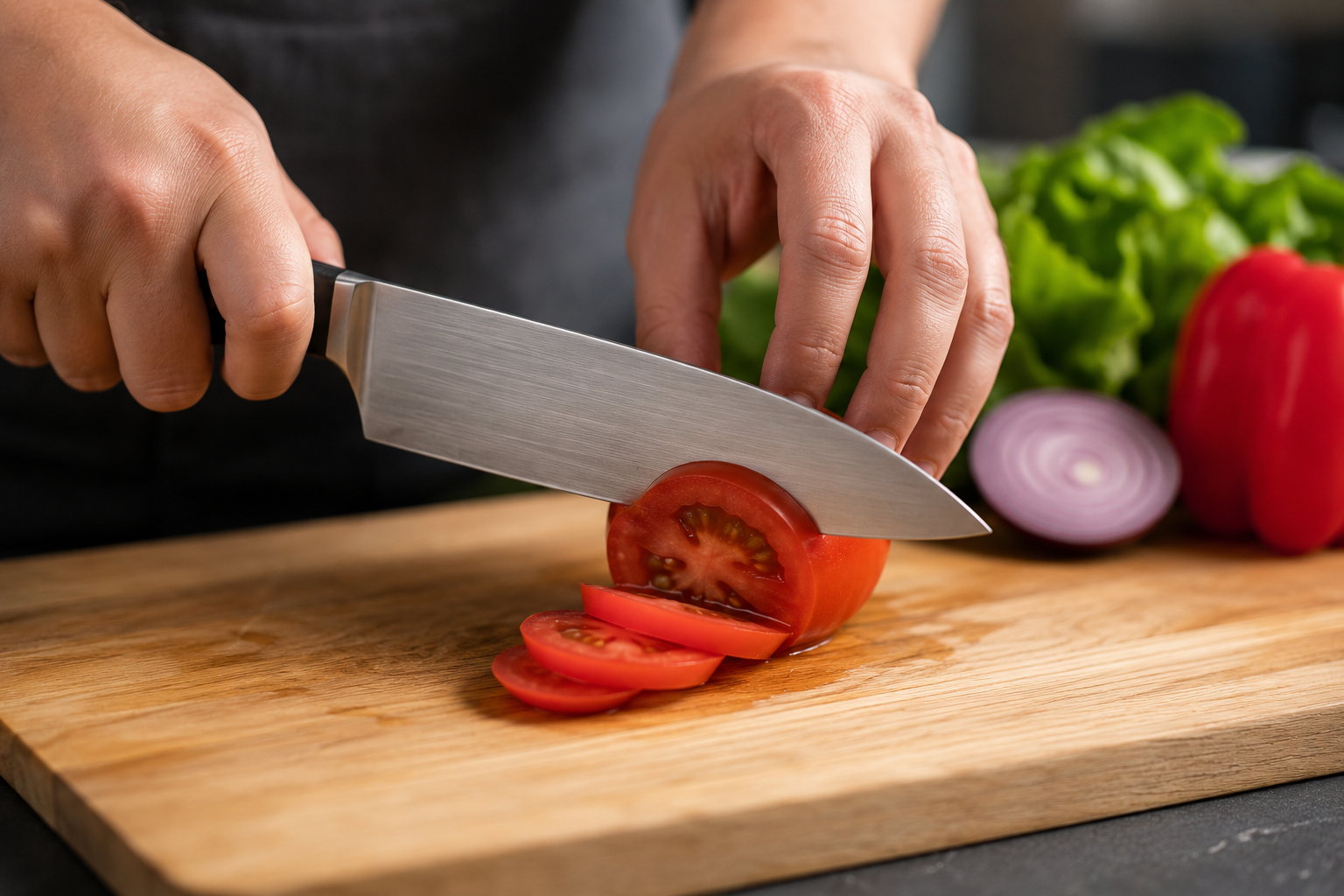
A claw-style guiding grip can help keep fingertips away from the cutting path.
Curl the fingertips inward, keep the thumb behind them, and let the knuckles remain nearer the side of the blade.
Move the guiding hand backward gradually as the knife advances. Speed should come only after safe, controlled movement is consistent.
Signs a Knife Needs Attention
• It slides across tomato or pepper skin.
• It crushes herbs instead of slicing cleanly.
• It tears meat or fish.
• It requires noticeably more downward pressure.
• It wedges in food it previously cut easily.
• It leaves ragged or crushed surfaces.
• Performance varies from one part of the edge to another.
A mildly rolled edge may respond to appropriate honing. A worn, rounded, chipped, or damaged edge needs sharpening or repair.
Safe Knife-Handling Habits
Cut Away From the Body
Keep the expected blade path away from hands, arms, and the torso.
Never Catch a Falling Knife
Step back and allow it to fall rather than reaching toward the blade.
Keep Knives Visible
Do not hide knives beneath towels, scraps, food, or cloudy dishwater.
Stop When Distracted
Place the knife securely down before turning attention elsewhere.
Store the Edge Safely
Use a suitable block, guard, rack, sleeve, or other protected storage system.
Use the Right Tool
Do not use a thin kitchen knife for frozen food, bones, prying, scraping, or opening packages.
What to Do After a Cut
Stop cutting and place the knife safely away from the work area. Apply steady, firm direct pressure with clean gauze or cloth.
Call emergency services for life-threatening bleeding. Seek prompt medical care for deep or gaping wounds, loss of feeling or movement, suspected tendon or joint injury, embedded material, or bleeding that does not stop with firm pressure.
Clean and protect minor wounds appropriately because kitchen cuts may be contaminated by food, raw meat, dirty surfaces, or the knife.
Key Takeaways
Dull Does Not Mean Safe
A dull knife may skid, require more force, and move unpredictably.
Sharp Knives Still Require Respect
A properly sharpened knife offers better control but can cause a serious injury.
Technique and Setup Matter
Stable food, a secure board, safe hand position, and deliberate movement reduce risk.
References
The following sources were used in preparing and supporting this article.
Food Services: Kitchen Equipment
Occupational Safety and Health Administration
osha.gov
Young Worker Safety in Restaurants: Food Preparation
Occupational Safety and Health Administration
osha.gov
Wounds: Symptoms, Types, and First Aid
American Red Cross
redcross.org
Life-Threatening External Bleeding
American Red Cross
redcross.org