Barber and Salon Shears
Professional hair shears depend on precise edge geometry, blade contact, tension, alignment, lubrication, and careful maintenance.
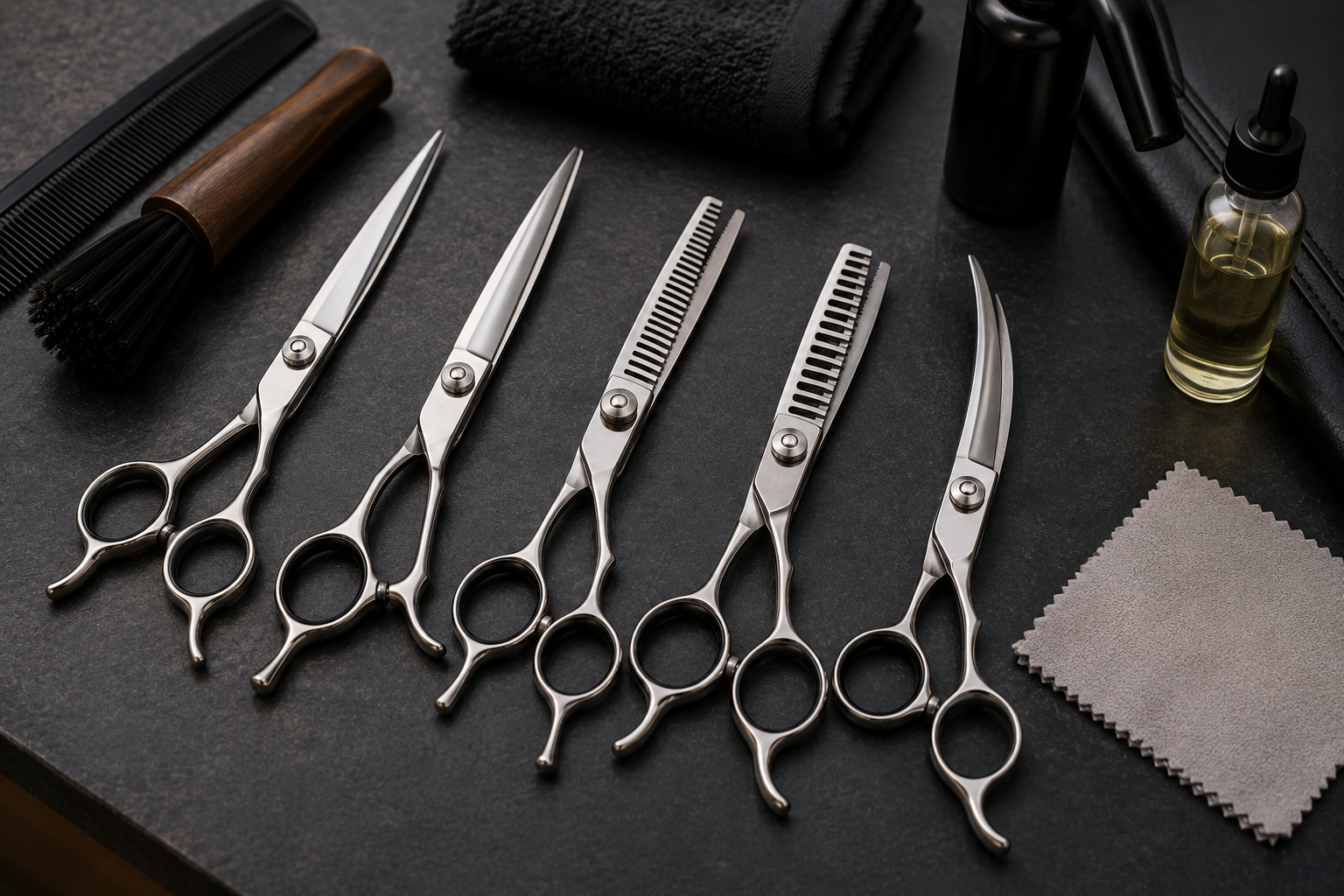
Professional hair shears are precision cutting instruments. Convex or beveled edges, ride lines, hollow-ground interiors, tension systems, and matched blades all influence cutting performance.
The Practical Point
Sharpening professional hair shears means restoring an entire cutting system—not simply grinding an edge onto two blades.
Professional Shears Are Precision Tools
Salon and barber shears may resemble ordinary scissors, but their geometry and tolerances are more precise.
The blades must meet correctly from the pivot through the tips while moving smoothly and maintaining controlled contact along the cutting line.
A shear can have sharp edges and still perform poorly when the tension is incorrect, the blades are misaligned, the inside surfaces are damaged, or the tips no longer meet properly.
Common Shear Designs
Convex Edge
Uses a smooth curved outside profile that supports a very fine edge and fluid cutting action.
Beveled Edge
Uses a more visible sharpening angle and may offer added durability for some cutting styles.
Semi-Convex Edge
Combines characteristics of convex and beveled geometry depending on the manufacturer.
Preserve the Original Geometry
Converting a convex shear into a flat bevel permanently changes how it cuts. Professional service should preserve the original design whenever practical.
The Inside Surface Matters
The inside face of a professional shear is not simply a flat surface that can be ground freely.
It may include a hollow-ground area and a narrow polished contact surface commonly called the ride line.
These features help the blades contact one another correctly during closing. Aggressive work on the inside face can widen the ride line, create drag, alter blade pressure, and prevent the blades from meeting properly.
Parts of the Cutting System
Ride Line
The narrow polished contact area along the inside of the blade.
Hollow Interior
Reduces unnecessary blade contact and supports smoother movement.
Pivot and Tension System
Controls how firmly the blades contact one another as the shears close.
Blade Set
The curve and alignment that help the blades maintain contact from pivot to tip.
Tips
Must meet correctly without crossing, separating, or snagging.
Bumper and Hardware
Help control closing position, comfort, alignment, and movement.
Signs Shears Need Attention
• Hair folds or pushes instead of cutting cleanly.
• Hair slides toward the tips before being cut.
• The blades catch or snag at one point.
• Cutting is stronger near the pivot than near the tips.
• More hand pressure is required.
• The action feels rough, tight, gritty, or inconsistent.
• The blades make unusual scraping or clicking sounds.
• Visible nicks, chips, flat spots, or crossed tips appear.
• The tension screw repeatedly loosens.
Not every cutting problem means the edges are dull. Tension, alignment, cleanliness, lubrication, hardware, and blade damage can produce similar symptoms.
How Tension Affects Cutting
Tension controls how firmly the blades contact one another.
Too Loose
Insufficient ContactPros
May feel easy to open and close.
Cons
The blades may separate, allowing hair to fold, push, or slide.
Best For
Requires careful adjustment rather than continued use.
Too Tight
Excessive FrictionPros
May temporarily force the blades together.
Cons
Can cause fatigue, drag, hardware wear, and damage to contact surfaces.
Best For
Requires careful adjustment rather than additional force.
Properly Adjusted
Controlled ContactPros
Allows smooth movement while maintaining enough blade contact for a clean cut.
Cons
The correct setting varies with shear design and manufacturer guidance.
Best For
Normal cutting with stable action and comfortable hand pressure.
Sharpening Requires Specialized Knowledge
Professional salon shears should not be treated like household scissors or kitchen knives.
Ordinary pull-through sharpeners, files, bench grinders, and general knife equipment may change the edge geometry, shorten the tips, widen the ride line, alter blade balance, or leave a finish that catches hair.
The sharpening process must account for the original edge design, blade set, inside surfaces, alignment, tension, and final testing.
Thinning and Texturizing Shears
Thinning, texturizing, and chunking shears use one or more toothed blades.
The teeth may contain small cutting surfaces, grooves, or channels designed to work with the opposing blade.
Incorrect grinding can alter how much hair is removed, cause pulling, change blade timing, damage individual teeth, or prevent the blades from closing properly.
These shears must be evaluated as specialized tools rather than treated like ordinary straight cutting shears.
Cleaning and Lubrication
Hair fragments, product residue, disinfectant, moisture, and skin oils can collect around the blades, pivot, bumper, finger rings, and tension system.
A practical care routine includes:
• Remove loose hair with a soft cloth or brush.
• Clean and disinfect according to salon requirements and product instructions.
• Dry the shears completely, including between the blades and around the pivot.
• Apply a small amount of suitable shear oil near the pivot.
• Open and close the shears several times.
• Wipe away excess oil and loosened debris.
Use products intended for precision shears. Heavy oils and general penetrating fluids may be unsuitable.
Disinfectants Can Affect the Tool
Salon sanitation is essential, but chemical exposure can remove lubrication, stain metal, affect finishes, or contribute to corrosion when products are used incorrectly.
Follow the disinfectant manufacturer’s instructions for dilution, contact time, rinsing, and drying.
The shear manufacturer’s care recommendations should also be followed, especially for coated finishes, specialty hardware, bearings, and tension systems.
Prevent Common Damage
Avoid Drops
A fall can nick edges, bend tips, damage the pivot, alter alignment, or crack finger rings.
Cut Hair Only
Paper, cardboard, fabric, foil, plastic, wire, and packaging can damage fine cutting edges.
Use Protective Storage
Keep each shear in an individual dry slot or case with secure tip protection.
Do Not Force Damaged Shears
Repeated opening and closing after a drop may enlarge nicks or worsen alignment problems.
Check Hardware
Loose screws, missing bumpers, damaged washers, and worn bearings affect cutting action.
Keep a Backup
A second serviceable shear helps prevent continued use of a tool that needs evaluation.
Service Frequency Depends on Use
There is no single sharpening interval for every stylist or barber.
Frequency depends on cutting volume, hair condition, shear steel, edge geometry, cleaning, lubrication, tension, accidental damage, and cutting technique.
Performance is a better guide than a rigid calendar.
Clean, lubricated, properly adjusted shears that continue to fold, push, snag, or cut inconsistently should be professionally evaluated.
Testing Must Reflect Salon Use
Ordinary paper does not fully demonstrate how professional shears will perform on hair.
A shear may cut paper while still pushing, folding, or catching hair.
A useful evaluation checks:
• Smooth opening and closing.
• Consistent cutting from pivot to tip.
• Correct meeting of the tips.
• Stable tension during repeated operation.
• No excessive catching, grinding, or scraping.
• Proper performance of thinning or texturizing teeth.
When Manufacturer Service May Be Appropriate
Factory or manufacturer-authorized service may be worth considering when the shears have:
• Proprietary tension hardware, bearings, washers, or replacement parts.
• Unusual or highly specialized geometry.
• Structural bends, cracks, or pivot damage.
• Warranty concerns.
• Previous sharpening damage.
• Broken or significantly altered texturizing teeth.
• Deep corrosion on cutting or contact surfaces.
Severe damage may make replacement more practical than restoration.
Key Takeaways
Shears Are a Cutting System
Edges, ride lines, blade set, tension, alignment, hardware, and tips must work together.
Care Affects Performance
Cleaning, drying, lubrication, tension, storage, and careful handling help preserve the tool.
Sharpening Is Specialized
Professional shears require methods that preserve the original geometry and full cutting action.
References
The following sources were used in preparing and supporting this article.
Shear Care and Sharpening
Kamisori Shears
kamisorishears.com
Shear Tension for Working Barbers and Stylists
Hattori Hanzo Shears
hanzo.com
How to Choose Professional Shears
Hattori Hanzo Shears
hanzo.com
Revolver 4.0 Thinning Shears
Kamisori Shears
kamisorishears.com