Why Kitchen Knives Should Be Hand-Washed
Dishwashers expose knives to impact, harsh detergent, heat, and prolonged moisture.
A dishwasher may seem convenient, but repeated exposure can dull the edge, damage the finish, weaken handles, and encourage corrosion. Gentle hand washing and immediate drying take little time and help a kitchen knife last longer.
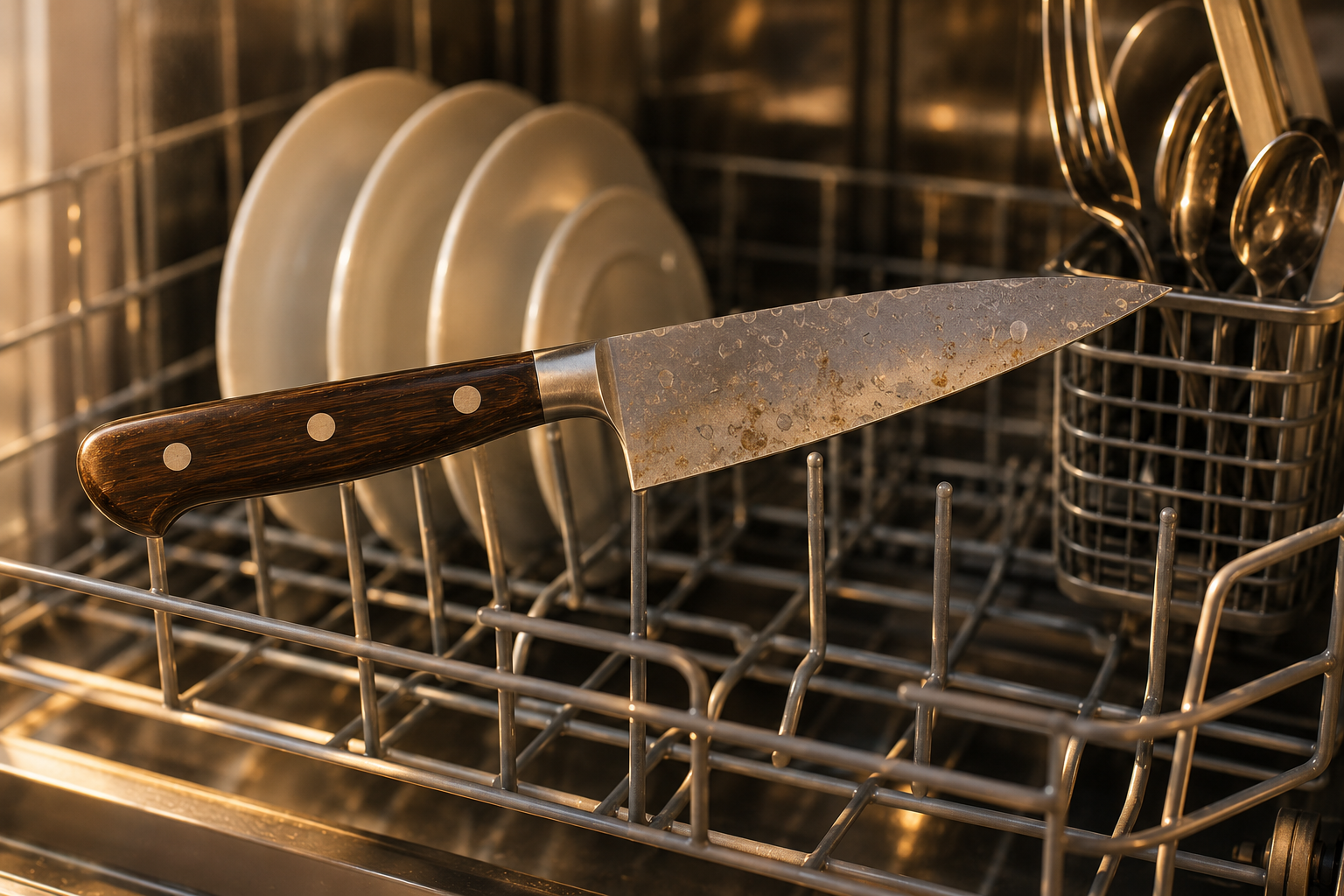
Why Dishwashers Are Hard on Knives
A dishwasher combines several risks in one cycle. The edge may strike racks, dishes, or utensils while strong detergent, high heat, and prolonged moisture affect the blade and handle.
Damage is often gradual rather than dramatic. A knife may leave the dishwasher looking clean while its edge has developed small flat spots, chips, corrosion, or premature dullness.
Even knives labeled dishwasher safe usually last longer when washed by hand.
The Four Main Sources of Damage
Dishwasher damage comes from more than water alone.
Impact
The edge or tip can strike racks, dishes, utensils, or another knife during the cycle.
Harsh Detergent
Strong cleaners can stain steel, dull finishes, remove protective oils, and accelerate corrosion.
High Heat
Repeated heating and cooling can dry, warp, crack, or loosen some handle materials and adhesives.
Prolonged Moisture
Water can remain around the heel, bolster, rivets, tang, and handle seams where corrosion may begin.
What Can Be Damaged?
| Knife Area | Possible Dishwasher Damage |
|---|---|
| Cutting edge and tip | Rolling, chipping, flattening, bending, corrosion, and premature dulling |
| Blade face and finish | Scratches, staining, water spots, discoloration, pitting, and faded markings |
| Handle | Swelling, drying, cracking, warping, fading, or loosening |
| Rivets, seams, and tang | Trapped moisture, hidden corrosion, gaps, and weakened joints |
The Safer Hand-Washing Routine
Wash the knife soon after use with warm water, mild dish soap, and a soft sponge or cloth. Keep the edge facing away from your hand and never leave a knife hidden in a sink or beneath soapy water.
Rinse thoroughly, dry the blade and handle immediately, and return the knife to safe storage.
If a knife accidentally goes through the dishwasher, inspect the edge, tip, blade, and handle for chips, rust, gaps, swelling, or looseness before using it again.
Key Takeaways
Hand washing is the simplest way to protect the entire knife.
Dishwashers Damage More Than the Edge
Heat, detergent, moisture, and impact can affect the blade, finish, handle, and joints.
Stainless Is Not Rust-Proof
Stainless steel resists corrosion, but repeated dishwasher exposure can still cause stains or pitting.
Dishwasher Safe Is Not Ideal
The label may indicate material tolerance, not maximum edge life or long-term appearance.
Wash and Dry Immediately
Warm water, mild soap, immediate drying, and safe storage help the knife remain sharp and sound.
References
The following sources were used in preparing and supporting this article.
How to Clean Your WÜSTHOF Knives
WÜSTHOF
wusthof.com
How to Keep Your Shun Knives in Top Condition
Shun Cutlery
shun.kaiusa.com
How to Clean and Care for Your Knife
ZWILLING
zwilling.com