Full Tang vs. Partial Tang: Does It Matter for Performance?
Handle construction matters, but it is only one part of a good knife.
The tang is the portion of steel that extends from the blade into the handle. It affects strength, balance, weight, and how the knife feels in the hand.
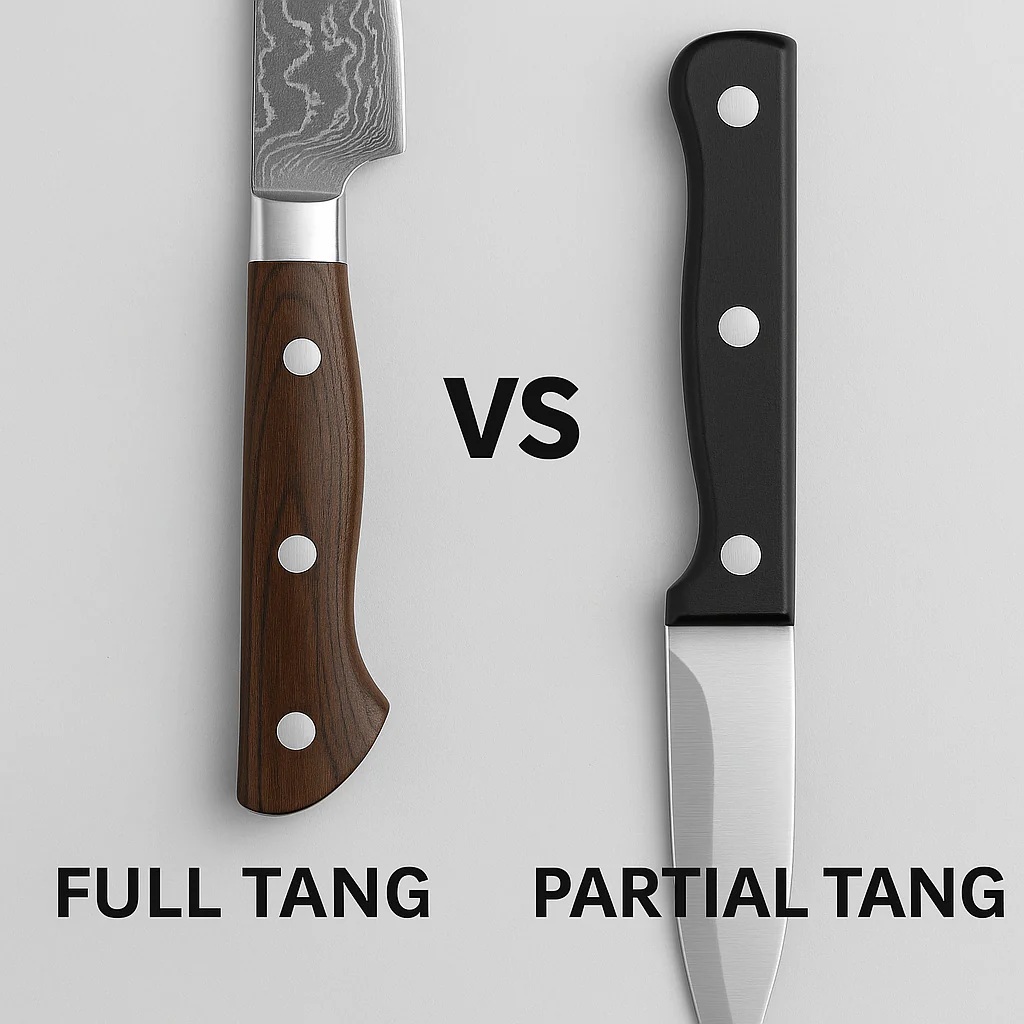
What is a tang?
The tang is the extension of the blade steel inside the handle. On some knives, you can see the steel running through the entire handle. On others, the tang is hidden inside the handle material.
Tang construction can affect strength and balance, but it does not automatically determine whether a knife is good or bad.
What is a full tang?
A full tang usually means the steel extends the full length and width of the handle. Handle scales are attached to both sides of the tang with rivets, pins, or screws.
Full tang construction is common on many Western-style kitchen knives, outdoor knives, and heavy-duty blades because it provides strength and a substantial feel.
What is a partial tang?
A partial tang means the steel extends only partway into the handle or is narrower than the handle itself. Hidden tangs, stick tangs, and rat-tail tangs are all variations.
Partial tang does not automatically mean weak. Many traditional Japanese kitchen knives use hidden tang construction and perform beautifully when properly made.
Quick comparison
| Feature | Full Tang | Partial / Hidden Tang |
|---|---|---|
| Strength | Very strong and durable. | Can be strong when well designed. |
| Weight | Often heavier. | Often lighter. |
| Balance | May feel handle-heavy or balanced near the bolster. | May feel blade-forward or lighter in hand. |
| Common On | Western chef knives, outdoor knives, heavy-duty knives. | Japanese wa-handle knives, lighter kitchen knives. |
| Main Concern | Fit, finish, rivets, corrosion around handle seams. | Handle fit, adhesive quality, looseness, moisture intrusion. |
Does full tang mean better?
Not always. Full tang construction is strong, but strength is only useful if the rest of the knife is also well made. A full tang knife with poor steel, bad heat treatment, or thick blade geometry may still cut poorly.
A lighter hidden tang knife with excellent blade geometry can outperform a heavy full tang knife for many kitchen tasks.
When full tang matters most
Full tang construction is most important when a knife may experience twisting, impact, or heavy force. Outdoor knives, hunting knives, butcher knives, and cleavers may benefit from the added strength.
For normal kitchen slicing, chopping, and prep work, handle comfort and blade geometry often matter more than whether the tang is full or partial.
How tang design affects sharpening
Tang construction usually does not directly affect the edge, but it can affect how safely and comfortably a knife is handled during sharpening.
Loose handles, cracked scales, exposed gaps, or corrosion around the tang should be addressed before or during service. A knife with a loose handle may be unsafe even if the blade itself can still be sharpened.
What to look for instead of the label
Handle Fit
Look for tight seams, no movement, no gaps, and no sharp edges where the handle meets the steel.
Balance
A knife should feel controlled and comfortable for the way you cut.
Blade Performance
The blade still has to cut well. Geometry, steel, and sharpening matter more than marketing terms.
Which should you choose?
Choose full tang if you want a sturdy, substantial knife and like the feel of classic Western construction. Choose hidden or partial tang if you prefer lighter handling, traditional Japanese handles, or a more blade-forward feel.
For most kitchen users, either can be excellent. The best choice is the knife that feels good, cuts well, and is built well enough for its intended use.
Key Takeaways
Tang Affects Strength and Balance
The tang is the part of the blade steel that extends into the handle, and it can influence durability, weight, and feel.
Full Tang Is Not Always Required
A full tang is strong and reassuring, but many excellent kitchen knives use hidden, partial, or rat-tail tang designs.
Construction Quality Matters Most
Handle fit, materials, blade geometry, steel, and heat treatment matter more than the tang label alone.
References
The following sources were used in preparing and supporting this article.
Japanese Chef Knife Catalog and Sharpening Guide
Korin
korin.com
Knife Steels Rated by a Metallurgist
Knife Steel Nerds
knifesteelnerds.com
Six Tips to Sharpen and Maintain Your Knives
Work Sharp
worksharptools.com