Sharp Enough to Shave? What That Test Really Means
Shaving arm hair can demonstrate a keen, refined edge, but it measures only one part of knife performance. This article explains what the test can reveal, what it cannot, and why geometry, edge finish, durability, and intended use matter more in everyday cutting.
Many people judge a knife by one dramatic question: can it shave arm hair? A knife that shaves cleanly has a keen, refined apex, but that does not automatically mean it will cut food efficiently, resist damage, or remain sharp during everyday use.
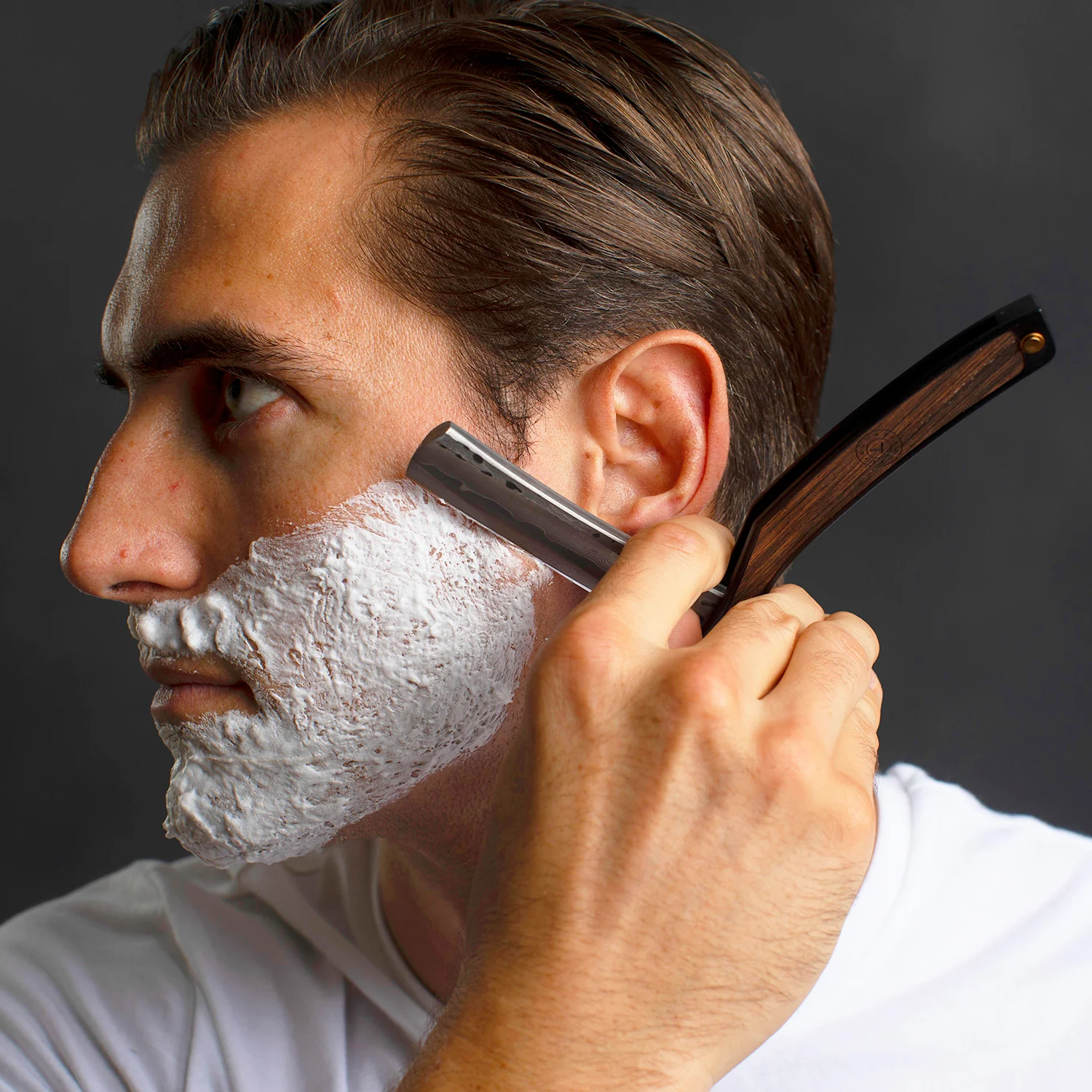
What the Shaving Test Actually Shows
A knife that cleanly shaves arm hair has a very thin, refined apex. The test can reveal whether the edge is keen enough to sever fine hair with little pressure.
However, it does not measure the complete performance of the knife. A shaving-sharp edge may still wedge in food, lack useful bite, chip easily, or lose sharpness quickly.
Treat shaving as one sharpness check—not as proof that the knife is properly sharpened for everyday use.
Shaving Sharp vs. Working Sharp
A knife can pass a hair-shaving test and still be poorly suited to its actual job.
Shaving Sharp
Refined ApexPros
Cleanly severs fine hair with very little pressure.
Cons
Does not show how well the blade moves through food or how durable the edge will be.
Best For
Checking apex refinement after sharpening.
Working Sharp
Practical PerformancePros
Cuts the intended material cleanly, safely, and with good control.
Cons
May not shave hair as dramatically as a highly polished edge.
Best For
Everyday kitchen, outdoor, and utility use.
What Real-World Sharpness Depends On
A useful edge depends on more than whether it can shave hair.
Apex Quality
The two bevels must meet cleanly without flat spots, heavy burr remnants, or damaged sections.
Blade Geometry
A thin blade usually moves through food more easily than a thick blade, even when both edges are equally keen.
Edge Finish
A polished edge favors smooth push cuts, while a toothier finish may grip skins, crusts, and fibrous foods more effectively.
Edge Stability
The apex must be strong enough to resist rolling, chipping, and rapid dulling during normal use.
Intended Use
The best edge is the one that cuts the material it was sharpened for with control and reasonable durability.
Use Tests That Match the Knife’s Job
The best sharpness test is one that resembles the knife’s intended use. A kitchen knife should start cuts easily, slice food cleanly, and require little pressure. An outdoor or utility knife should cut its working materials without slipping, tearing, or losing stability.
Paper and hair tests can help reveal apex condition, but they should not replace practical cutting tests. A knife may pass both and still perform poorly because of thick blade geometry, an unsuitable edge finish, or weak edge stability.
Judge the finished edge by how safely and efficiently it performs the work it was sharpened to do.
What Common Sharpness Tests Reveal
| Test | What It Can Show | What It Cannot Prove |
|---|---|---|
| Arm hair | A keen, refined apex | Food performance, durability, or overall blade geometry |
| Paper | Edge continuity and obvious dull spots | How the knife will behave in dense or slippery foods |
| Tomato skin | Useful bite and the ability to start a cut cleanly | Edge durability during heavier work |
| Onion or pepper | Control, low cutting resistance, and practical kitchen performance | Long-term edge retention |
| Working material | Whether the knife performs its intended task | How the edge will behave in every other use |
Why an Edge Can Shave but Still Perform Poorly
A knife may shave hair yet still disappoint in normal use. A remaining burr can create temporary sharpness, while thick geometry behind the edge can make the blade wedge or require extra pressure.
An overly polished finish may also reduce the bite needed for tomatoes, peppers, crusts, and fibrous foods. A very thin apex may feel impressive at first but fail quickly if the steel or intended use cannot support it.
The goal is not the most dramatic sharpness test. It is a clean, stable edge matched to the knife’s actual work.
Key Takeaways
A shaving test can be useful, but practical sharpness depends on the entire edge and blade.
Shaving Is Only One Test
Cutting arm hair shows that the apex is keen, but it does not prove the knife will perform well in normal use.
Geometry Affects Cutting
A thick blade can still wedge and require extra pressure even when the edge itself is very sharp.
Finish Should Match the Task
A polished edge favors smooth push cuts, while a toothier edge may work better on skins and fibrous foods.
Durability Still Matters
An extremely thin or weak apex may pass a sharpness test but lose performance quickly during use.
Test the Intended Work
The best final check is whether the knife cuts its normal materials cleanly, safely, and with good control.
References
The following sources were used in preparing and supporting this article.
PT50 Series Edge Sharpness Testers and the BESS
Edge On Up
edgeonup.com
Knife Sharpening: How to Sharpen Your Knives
Tormek
tormek.com
Knife Sharpening Basics
Korin
korin.com
How to Sharpen Any Knife: Back to Basics
Work Sharp
worksharptools.com