What Is Tempering? The Secret to a Resilient Blade
Hardening gives steel strength. Tempering helps make that strength usable.
Tempering is a controlled heating step used after hardening. It reduces brittleness, relieves internal stress, and helps create a blade that can hold an edge without becoming too fragile for real kitchen use.
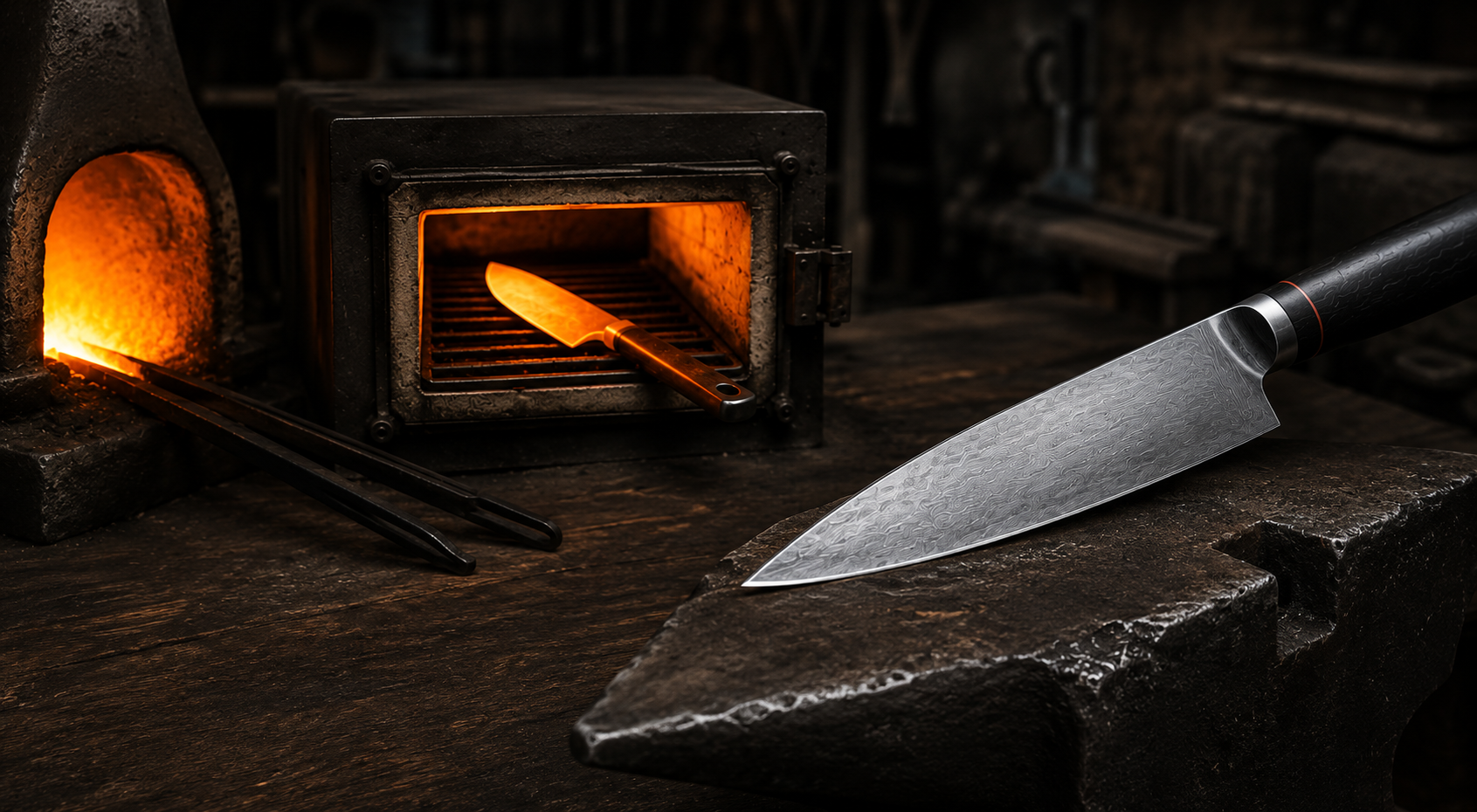
What is tempering?
Tempering is part of the heat-treatment process used to control the final properties of steel. After a blade is hardened, it is heated again to a lower temperature for a controlled period.
This second heating step slightly reduces maximum hardness, but it makes the steel more stable, less brittle, and better able to tolerate normal use.
Simple version: Hardening makes steel hard. Tempering makes that hardness practical.
Why hardening alone is not enough
When steel is hardened, it can become extremely hard but also highly stressed. In that condition, the blade may hold a sharp edge but be more likely to crack, chip, or fail under impact.
Tempering helps reduce those internal stresses. It gives the blade a better balance between edge retention and toughness.
The basic heat-treatment sequence
| Stage | What Happens | Why It Matters |
|---|---|---|
| Heating | The steel is raised to a critical temperature. | Prepares the internal structure for hardening. |
| Quenching | The steel is cooled quickly in oil, air, water, or another controlled medium. | Creates a very hard structure inside the steel. |
| Tempering | The hardened blade is reheated to a lower temperature. | Reduces brittleness and relieves stress. |
| Cooling and finishing | The blade is cooled and prepared for grinding, polishing, and sharpening. | Stabilizes the blade for final use. |
What quenching does
Quenching changes the internal structure of the steel very quickly. The result is much harder than untreated steel, which allows the blade to hold a useful cutting edge.
The tradeoff is that freshly hardened steel may be too brittle. That is why tempering is necessary.
What tempering changes
Reduces Brittleness
Tempering lowers the risk of sudden cracking or chipping.
Relieves Internal Stress
Heat treatment can leave stress inside the blade. Tempering helps reduce it.
Improves Toughness
The blade becomes more able to tolerate impact and normal kitchen use.
Controls Final Hardness
The maker can adjust the final hardness to match the steel and intended use.
Why tempering temperature matters
The temperature used during tempering changes the final balance of hardness and toughness. Lower tempering temperatures generally preserve more hardness. Higher temperatures generally improve toughness while reducing hardness further.
The correct temperature depends on the steel, blade design, intended hardness, and how the knife will be used.
Can steel be tempered more than once?
Yes. Many blades are tempered more than once. Repeated tempering cycles can help improve stability and reduce retained stress inside the steel.
Some steels benefit from two or even three tempering cycles, depending on the alloy and the heat-treatment process.
What happens if a blade is under-tempered?
An under-tempered blade may remain too brittle. It may hold a sharp edge, but it can chip or crack more easily when stressed.
This can be especially noticeable on thin edges, high-hardness steels, or knives used on hard cutting surfaces.
Possible result: Excellent sharpness, but poor reliability during normal use.
What happens if a blade is over-tempered?
If the tempering process reduces hardness too far, the blade may become softer than intended. The edge may roll, wear quickly, or need sharpening more often.
The blade may be very tough, but edge retention can suffer.
Possible result: A forgiving blade that loses sharpness too quickly.
Why two knives made from the same steel can behave differently
Steel name alone does not determine performance. The heat treatment can make a major difference. Two knives made from the same alloy may have different hardness, toughness, edge retention, and sharpening behavior.
One maker may prioritize a harder, thinner edge. Another may choose a tougher, more forgiving result from the same steel.
Tempering and Rockwell hardness
Tempering affects the final Rockwell hardness, usually expressed as HRC. A blade may be extremely hard immediately after quenching, then finish at a lower, more usable hardness after tempering.
The final HRC number is only one part of the picture. Toughness, geometry, carbide structure, and intended use still matter.
Tempering in different knife styles
| Knife Type | Typical Priority | Tempering Goal |
|---|---|---|
| Thin Japanese slicer | High hardness and fine edge stability | Retain hardness while reducing brittleness enough for careful use. |
| German-style chef knife | Balanced durability and easy maintenance | Create a tougher, more forgiving working edge. |
| Meat cleaver | Impact resistance | Favor toughness over maximum hardness. |
| Boning knife | Flexibility and toughness | Reduce brittleness and support controlled flex. |
| Outdoor knife | Durability under stress | Balance edge retention with impact and bending resistance. |
How tempering affects sharpening
Heat treatment influences how steel responds to abrasives. A well-tempered blade usually sharpens consistently and supports the edge geometry it was designed to hold.
Poorly treated steel may form unstable burrs, chip during sharpening, or fail to hold the finished edge well.
Can a finished knife be re-tempered?
Technically, heat treatment can sometimes be redone, but it is not a routine repair. Re-tempering or re-hardening a finished knife may damage the handle, finish, grind, or blade shape.
It is usually only practical during a full restoration or custom rebuilding process. For most ordinary kitchen knives, replacement is more realistic than redoing the heat treatment.
Why careful sharpening matters: The edge is thin, so it can heat much faster than the rest of the blade.
Can sharpening damage the temper?
Yes, if too much heat is allowed to build at the edge. Overheating can soften the steel and damage the heat treatment in a very small but important area.
Controlled speed, appropriate abrasives, light pressure, and cooling are important when powered sharpening equipment is used.
Common misconceptions
Harder Always Means Better
Maximum hardness can reduce toughness and make a blade less forgiving.
Tempering Makes Steel Soft
Tempering reduces excessive brittleness while preserving useful hardness.
Steel Type Determines Everything
Heat treatment can matter as much as the name of the alloy.
Why tempering matters to the knife owner
You may never see the tempering process, but you feel the result every time you use the knife. It affects whether the edge holds up, whether the blade chips, how easily it sharpens, and how reliable it feels in the kitchen.
Good tempering is one of the reasons a well-made knife can feel predictable and dependable for many years.
Key Takeaways
Tempering Reduces Brittleness
After hardening, tempering helps relieve internal stress and makes the blade less likely to crack or chip.
Heat Treatment Shapes Performance
Two knives made from the same steel can perform very differently if their heat treatment is different.
The Goal Is Balance
Good tempering balances hardness, toughness, edge retention, and durability for the knife's intended use.
References
The following sources were used in preparing and supporting this article.
Knife Steels Rated by a Metallurgist
Knife Steel Nerds
knifesteelnerds.com
Testing the Edge Retention of 48 Knife Steels
Knife Steel Nerds
knifesteelnerds.com
What Is Edge Stability?
Knife Steel Nerds
knifesteelnerds.com