Beyond the Burr: Professional Edge Polishing
Polishing refines an already-sharpened edge by reducing scratches, removing burr remnants, and matching the finish to how the knife will be used.
Polishing is the final refinement stage after sharpening. It can smooth the bevel, remove burr remnants, and improve cutting performance, but a mirror finish is not always the best choice. This article explains when polishing helps, which surfaces and compounds to use, and how to avoid over-polishing the edge.
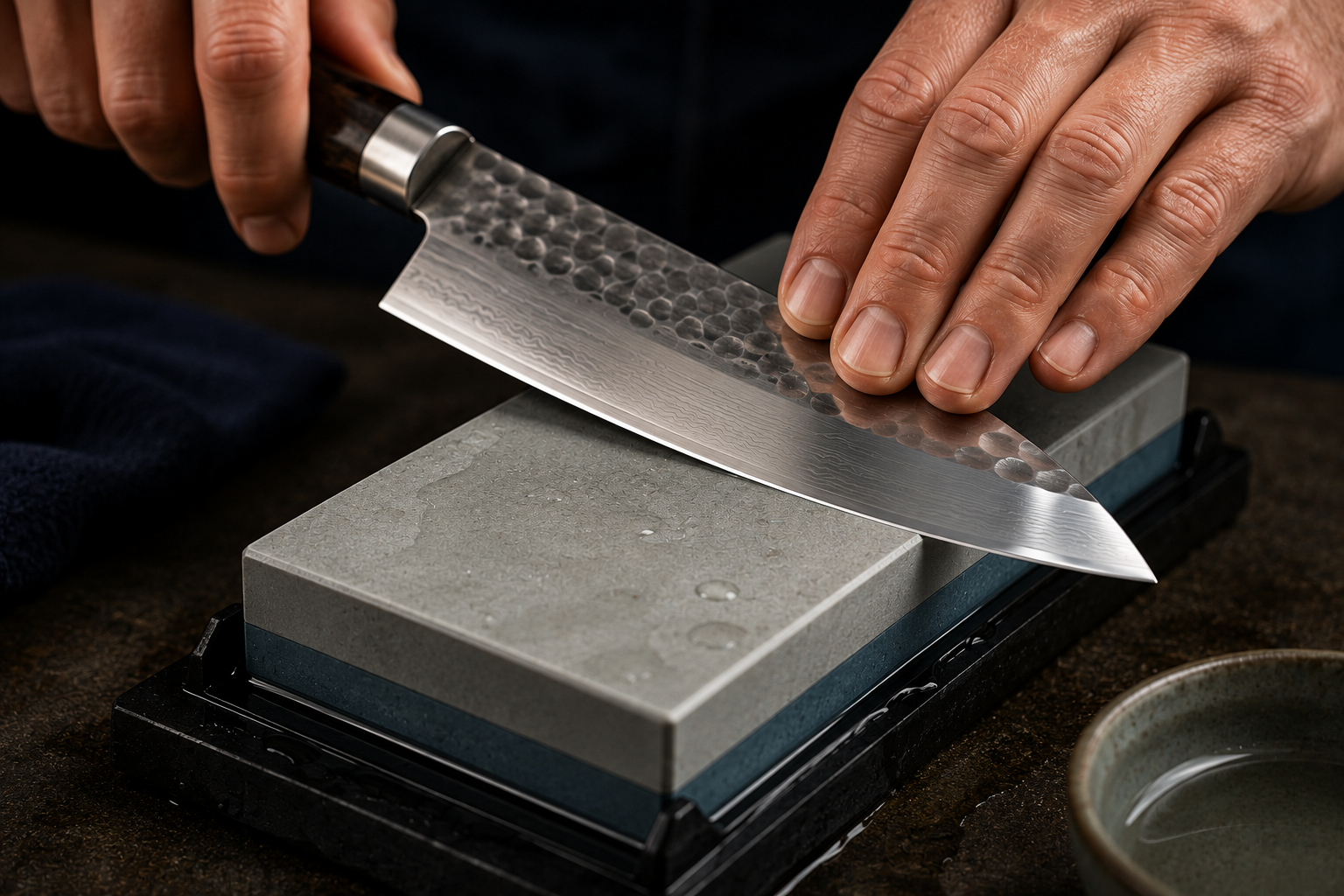
What Edge Polishing Actually Does
Polishing is the final refinement stage after the edge has already been sharpened. It uses finer abrasives to reduce the scratches left by sharpening, clean up burr remnants, and smooth the bevel near the apex.
A polished edge is not automatically sharper or better. The finish should match how the knife will be used. A highly polished edge may work well for push-cutting and precise slicing, while a slightly toothier finish can perform better on foods with skins, crusts, or fibrous surfaces.
The goal is not simply to make the bevel shiny. The goal is to leave a clean, stable edge with the right balance of smoothness and bite.
Polished Edge vs. Toothy Edge
The best finish depends on what the knife needs to cut. Neither edge style is universally better.
Polished Edge
Smooth FinishPros
Cleaner push cuts, reduced friction, and a refined bevel.
Cons
May have less bite on skins, crusts, and fibrous foods.
Best For
Slicing, push cutting, and fine kitchen work.
Toothy Edge
More BitePros
Grabs slick or fibrous surfaces and starts cuts easily.
Cons
Can feel rougher during push cuts and may not produce as smooth a finish.
Best For
Tomatoes, crusty foods, rope, and general utility cutting.
Sharpen First, Then Remove the Burr
Polishing cannot correct an edge that was never fully sharpened. Before moving to finer abrasives, the bevels should meet cleanly at the apex, with no flat spots or unfinished sections along the blade.
As the edge is completed, use light alternating strokes and gradually reduce pressure to weaken and remove the burr. Stropping can help clear small remaining fragments, but it should not be used to compensate for an uneven or incomplete edge.
The goal is a clean, stable apex before any effort is spent creating a brighter or more refined bevel.
Choosing a Polishing Surface
Different surfaces behave differently at the edge. Choose the surface based on the amount of refinement and control you need.
Leather Strop
Conforms slightly to the bevel and works well for final burr removal and light refinement. Too much pressure can round the apex.
Felt Wheel
Polishes quickly and can produce a bright finish, but speed and pressure must be controlled to avoid overheating or rounding the edge.
Wood or Firm Strop
Provides a flatter, more controlled surface with less give than leather. Useful when maintaining crisp bevel geometry is important.
Choosing a Polishing Compound
| Compound Range | General Effect | Typical Use |
|---|---|---|
| 6–4 micron | Removes finer sharpening scratches quickly | Early polishing after sharpening |
| 3–2 micron | Refines the bevel and improves edge smoothness | General-purpose finishing |
| 1 micron | Produces a highly refined edge and brighter polish | Final stropping or polishing |
| Below 1 micron | Creates an extremely fine finish | Specialized polishing where maximum refinement is desired |
How Far Should You Polish?
Stop when the edge is clean, stable, and suited to the knife’s intended use. More polishing is not always an improvement.
A general-purpose kitchen knife often benefits from some remaining tooth at the apex, especially for tomatoes, peppers, crusty foods, and other surfaces that need bite. A more refined finish may be useful for push cutting, fine slicing, or presentation work.
Continuing through progressively finer compounds can improve the appearance of the bevel, but it may also reduce useful bite and add time without improving practical cutting performance.
Key Takeaways
Polishing refines an edge that has already been sharpened; it does not replace proper apex formation.
A polished edge is not always better than a toothier edge. The finish should match how the knife will be used.
Remove the burr with light, controlled strokes before moving to finer compounds.
Choose the polishing surface carefully. Softer materials can round the apex if too much pressure is used.
Stop when the edge is clean, stable, and performing as intended. A mirror finish is optional, not the goal.
References
The following sources were used in preparing and supporting this article.
PT50 Series Edge Sharpness Testers and the BESS
Edge On Up
edgeonup.com
How to Raise a Burr on a Knife
Work Sharp
worksharptools.com
I've Raised a Burr, What's Next?
Work Sharp
worksharptools.com
What Is Stropping?
Work Sharp
worksharptools.com