Extending the Life of a Budget Knife
An affordable knife can remain useful for years when it is comfortable, structurally sound, used appropriately, cleaned promptly, stored safely, and sharpened before severe dullness develops.
A lower purchase price does not make a kitchen knife disposable. Cutting surfaces, cleaning, storage, appropriate use, and timely sharpening often affect useful life more than price alone.
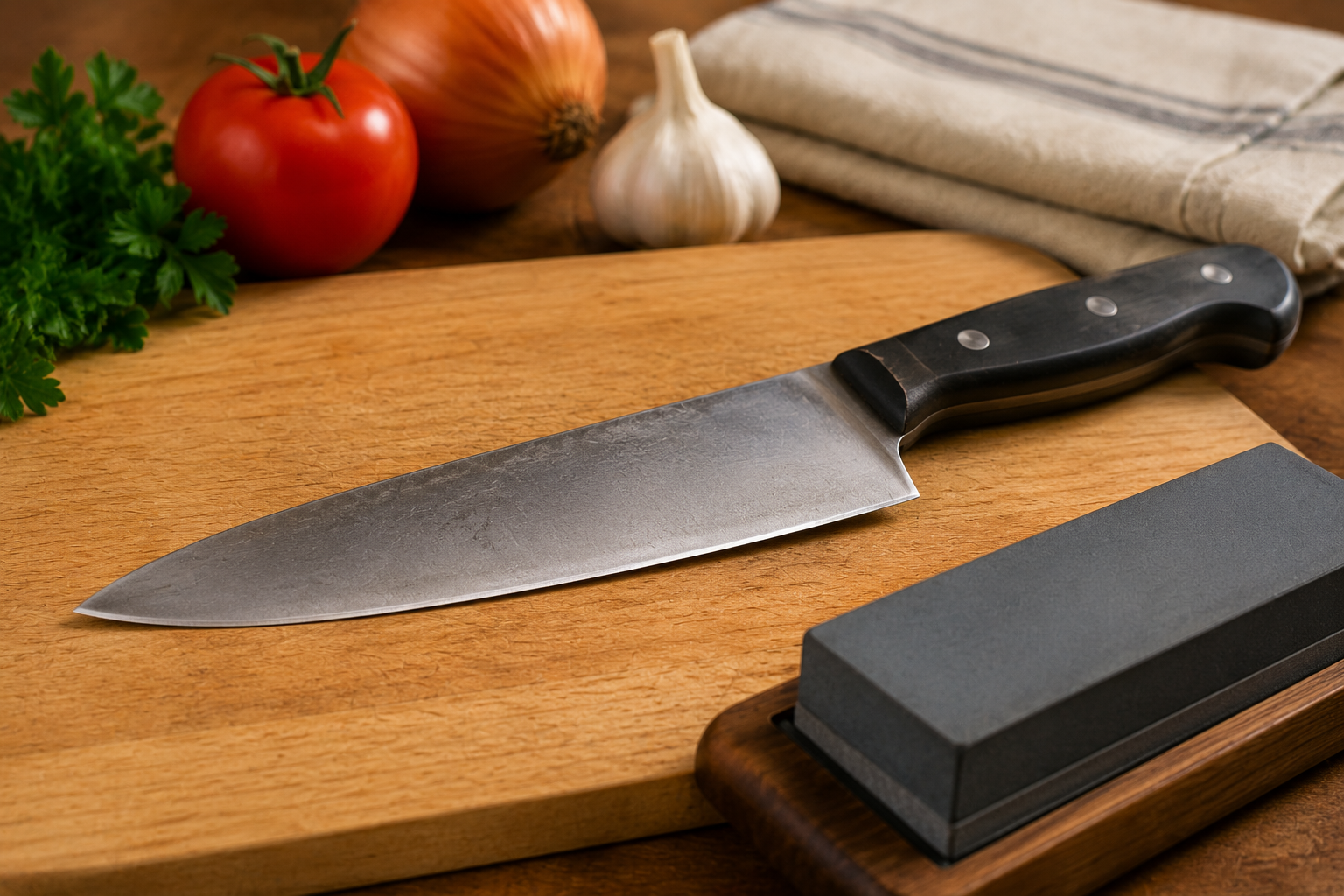
Budget Does Not Mean Disposable
A lower-cost knife can still be worth maintaining. When it is comfortable, structurally sound, and regularly used, sharpening may provide better value than replacing it.
Price Is Only One Part of a Knife’s Useful Life
Many affordable kitchen knives use serviceable stainless steel, durable synthetic handles, and straightforward construction.
They may not offer the edge retention, thin geometry, finish, or refinement of a premium knife, but they can still perform everyday kitchen work effectively.
How a knife is used, washed, stored, and sharpened often matters as much as its original price.
Common Budget-Knife Characteristics
| Feature | Common Characteristic | Practical Effect |
|---|---|---|
| Blade steel | Often moderate-hardness stainless steel | May need sharpening sooner but can be straightforward to maintain. |
| Blade geometry | Sometimes thicker behind the edge | May require more force in dense foods even when sharp. |
| Handle | Frequently molded plastic or rubber | Often durable and easy to maintain when securely attached. |
| Factory edge | May be coarse or uneven | Careful sharpening may noticeably improve consistency. |
| Finish | Less cosmetic refinement | Simpler appearance does not prevent useful performance. |
Use a Knife-Friendly Cutting Surface
Cutting surfaces strongly affect edge life regardless of what the knife cost.
Wood and quality plastic boards are generally more forgiving than glass, stone, ceramic, metal, or bare countertops.
Hard surfaces can flatten, roll, or chip the edge quickly. A better cutting board may reduce how often the knife needs sharpening.
USDA recommends washing cutting boards with hot, soapy water after each use, rinsing them, and allowing them to dry.
Wash by Hand and Dry Promptly
Victorinox and ZWILLING both recommend hand washing to protect kitchen knives.
• Use lukewarm or warm water, mild dish soap, and a soft cloth or sponge.
• Clean the knife soon after cutting acidic or salty foods.
• Never leave it hidden or soaking in a sink.
• Dry the blade and handle immediately.
• Pay attention to seams, rivets, bolsters, and handle joints.
Dishwasher detergents, heat, moisture, and contact with other utensils can accelerate wear even when a manufacturer labels a particular knife dishwasher-safe.
Protect the Edge During Storage
Loose storage with metal utensils can damage the edge and create a hidden hazard.
Affordable storage can still work well:
• A fitted blade guard.
• An in-drawer knife organizer.
• A clean knife block with correctly sized slots.
• A securely installed magnetic rack.
Whatever method is used, keep the knife clean, dry, separated from other utensils, and positioned so the edge does not scrape hard surfaces.
Use the Knife as a Cutting Tool
Most broken tips and severe edge damage come from prying, twisting, drops, frozen food, bones, metal contact, or using the knife for work it was not designed to perform.
Avoid Habits That Shorten Knife Life
• Do not pry or twist with the blade.
• Do not use the tip as a screwdriver or package-opening tool.
• Do not cut wire, cans, or metal.
• Do not force an unsuitable knife through bones or frozen food.
• Do not scrape the cutting edge sideways across the board.
• Use the spine or a bench scraper to move chopped food.
• Stop when a task requires unusual force and choose a more appropriate tool.
Sharpen When Performance Declines
Do not wait until the knife is extremely dull.
Signs that sharpening may be needed include:
• Slipping on tomato, pepper, or onion skin.
• Requiring more pressure for ordinary cuts.
• Crushing herbs or soft food.
• Tearing protein instead of slicing cleanly.
• Cutting well in one section but poorly in another.
OSHA notes that dull knives tend to slip and recommends keeping cutlery sharpened and in good condition.
Sharpening should be based on actual performance rather than a rigid calendar interval.
Sharpening Improves the Edge, Not the Entire Knife
Sharpening can improve edge consistency and cutting performance, but it cannot turn thick blade geometry, an uncomfortable handle, or weak construction into a completely different knife.
Sharpen or Replace?
The original purchase price should not be the only consideration.
Sharpen or Repair
Still UsefulPros
The handle is secure, the blade is structurally sound, the knife is comfortable, and the required work is reasonable.
Cons
The knife may still retain limitations in geometry, steel, fit, or finish.
Best For
A frequently used knife with ordinary dullness, small repairable chips, or an inconsistent factory edge.
Replace or Retire
Unsafe or ImpracticalPros
Replacement may restore safe construction, useful blade height, and dependable handling.
Cons
A familiar knife is lost and a suitable replacement must be selected.
Best For
Cracked blades, unstable handles, severe corrosion, major bends, very little blade height, or repairs that cannot produce a safe useful result.
Key Takeaways
Affordable Knives Can Last
A lower purchase price does not automatically make a knife disposable.
Daily Habits Matter
Cutting surfaces, washing, storage, and appropriate use strongly affect useful life.
Maintain While It Is Safe
Sharpening makes sense while the blade, handle, geometry, and overall condition remain practical.
References
The following sources were used in preparing and supporting this article.
Knife Care Tips
Victorinox
victorinox.com
How to Clean and Care for Your Knife
ZWILLING
zwilling.com
Cutting Boards
USDA Food Safety and Inspection Service
fsis.usda.gov
Food Services: Kitchen Equipment
Occupational Safety and Health Administration
osha.gov