How Often Should Restaurant Knives Be Sharpened?
There is no single schedule for every restaurant knife. Workload, food, cutting surfaces, technique, storage, steel, geometry, and actual performance determine when service is needed.
Restaurant knives should be inspected regularly and sharpened according to real cutting performance rather than one fixed calendar interval. High-use knives usually need attention sooner, while specialty and backup knives may last longer.
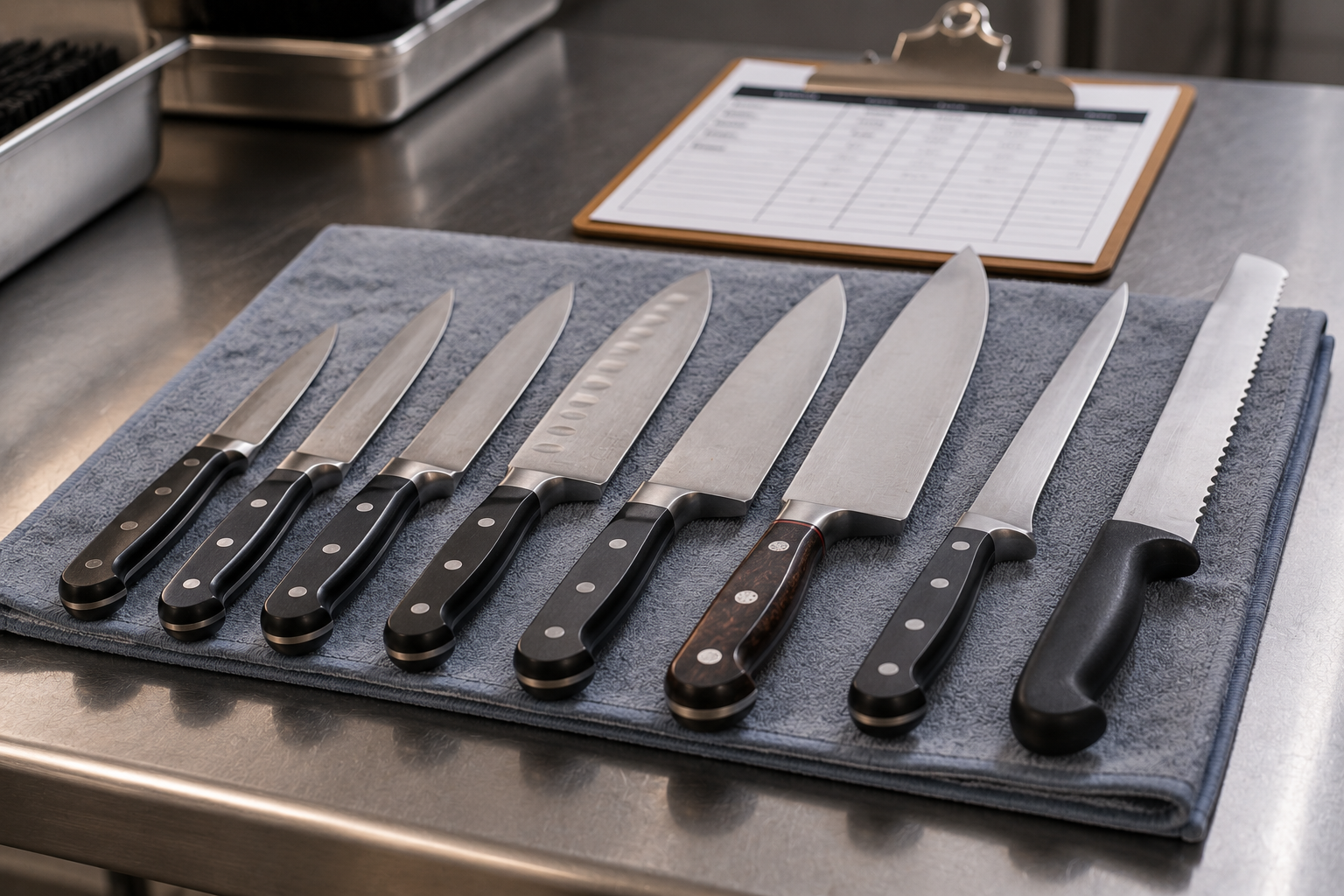
The Practical Approach
Inspect restaurant knives regularly, maintain them before they become severely dull, and schedule sharpening according to actual cutting performance rather than one fixed date.
There Is No Universal Restaurant Schedule
A chef’s knife used for hours of daily prep wears differently from a slicer used briefly during service or a backup knife kept in storage.
Workload, food, cutting boards, technique, steel, edge geometry, sharpening quality, cleaning, and storage all affect the interval.
A calendar can provide reminders, but it should not override the condition of the individual knife.
Maintenance and Sharpening Are Different
Commercial kitchens may use several levels of edge care.
Inspection and Light Maintenance
FrequentPros
Finds dullness, mild rolls, chips, corrosion, loose handles, and storage damage early.
Cons
Cannot rebuild an edge that is worn, rounded, chipped, or heavily damaged.
Best For
Routine checks and appropriate light honing when the knife and edge respond well.
Full Sharpening
As NeededPros
Restores a worn apex, removes damaged steel, corrects edge inconsistency, and returns useful cutting performance.
Cons
Removes steel and should not be performed unnecessarily simply because a date arrived.
Best For
Knives that no longer cut cleanly, no longer respond to maintenance, or show actual edge damage.
Workload Categories
Heavy Daily Prep
Chef’s and prep knives used continuously usually need the closest monitoring and shortest intervals.
Moderate Line Use
Knives used during service but not continuously may remain effective longer.
Specialty Use
Slicers, boning knives, and similar tools wear according to their specific tasks and technique.
Backup Knives
Low use does not eliminate the need to check for corrosion, poor storage, or accidental damage.
Signs a Restaurant Knife Needs Sharpening
• It slides across tomato, pepper, or onion skin.
• It crushes herbs instead of slicing cleanly.
• It tears cooked proteins, meat, or fish.
• It requires noticeably more pressure.
• It wedges in food it previously cut easily.
• Performance varies from heel to tip.
• Careful honing or light maintenance no longer helps.
• Chips, flat spots, rolls, or other edge damage are visible.
The knife should be serviced before severe dullness slows production or encourages unsafe force.
Cutting Surfaces Can Change the Schedule
Improving cutting surfaces may extend sharpening intervals more effectively than changing knife brands. Wood, quality rubber, and suitable plastic are generally more edge-friendly than glass, stone, ceramic, metal, and hard composite surfaces.
Technique Changes Edge Life
Do Not Scrape With the Edge
Use the spine or a bench scraper to move food across the board.
Do Not Twist
Twisting a blade while it is embedded in food can roll or chip the apex.
Match the Tool to the Task
Do not use thin kitchen knives for bones, frozen food, prying, packages, or heavy impact.
Use Controlled Pressure
Smooth, deliberate cuts preserve control and reduce unnecessary stress on the edge.
Honing May Extend the Interval
Some softer Western-style knives develop mild rolls during use. Appropriate honing may realign the edge and temporarily restore performance.
Honing does not replace sharpening. A rounded, worn, chipped, or heavily damaged apex must be recreated through controlled steel removal.
Harder and thinner knives may respond better to a fine ceramic rod, light stropping, or professional maintenance than to an aggressive grooved steel.
Track Every Knife Individually
A restaurant should not treat every knife as though it has the same workload or condition.
Useful records include:
• Knife number, owner, department, or station.
• Service and repair dates.
• Approximate workload.
• Chips, broken tips, corrosion, loose handles, and unusual wear.
• Repeated problems linked to a station, task, board, or employee.
Gibson County Knife Sharpening is not a high-volume production shop. Each restaurant knife is evaluated and sharpened individually according to its actual condition and intended use.
Rotate Knives Instead of Running Them Into the Ground
Keeping more than one serviceable knife available allows a dull or damaged blade to be removed without interrupting production.
A rotation system can distribute use, reduce emergency sharpening, and prevent staff from continuing to force knives that no longer cut safely.
A restaurant can send a smaller group for service while the remaining knives stay in use.
Storage and Cleaning Affect the Interval
Knives can lose performance without cutting food when edges strike other utensils, magnetic racks, hard containers, or drawer contents.
• Keep blocks, guards, rolls, racks, and drawers clean and dry.
• Protect each edge from nearby tools.
• Avoid loose drawer storage unless every blade has individual protection.
• Wash knives promptly by hand and dry them immediately.
• Never leave a knife hidden in a sink, dishwater, or wet towel.
• Remove acidic residue, salt, and moisture before storage.
Remove Some Knives From Service Immediately
Do not wait for the normal schedule when a knife has a significant chip, broken or bent tip, severe flat spot, repeated slipping, corrosion or pitting near the edge, a loose or cracked handle, structural damage, or contamination that cannot be cleaned safely.
A Practical Starting Routine
• Inspect active knives before or at the beginning of each shift.
• Remove damaged or unsafe knives immediately.
• Use light honing only when appropriate.
• Check the cutting performance of high-use knives regularly.
• Schedule sharpening before severe dullness develops.
• Rotate knives so production can continue during service.
• Assign a manager, chef, or lead employee to oversee the system.
• Review service records and adjust the schedule according to actual results.
Key Takeaways
Sharpen by Performance
Use inspection and cutting behavior rather than one fixed interval for every knife.
Maintain Before Severe Dullness
Timely maintenance reduces fatigue, slow prep work, unsafe force, and major corrective grinding.
Track and Rotate Individually
Records and rotation keep sharp tools available while each knife receives the service it actually needs.
References
The following sources were used in preparing and supporting this article.
Young Worker Safety in Restaurants: Food Preparation
Occupational Safety and Health Administration
osha.gov
Food Services: Kitchen Equipment
Occupational Safety and Health Administration
osha.gov
Knife Care Tips
Victorinox
victorinox.com
How to Sharpen Your Knives
ZWILLING
zwilling.com