Knife Thinning: When Sharpening Is Not Enough
A knife can be sharp at the edge yet still cut poorly if the blade has become too thick behind it.
Repeated sharpening gradually moves the cutting edge into thicker steel. Thinning removes material behind the edge to improve cutting performance and restore more efficient blade geometry. Gibson County Knife Sharpening does not currently offer thinning; this article is provided for general education.
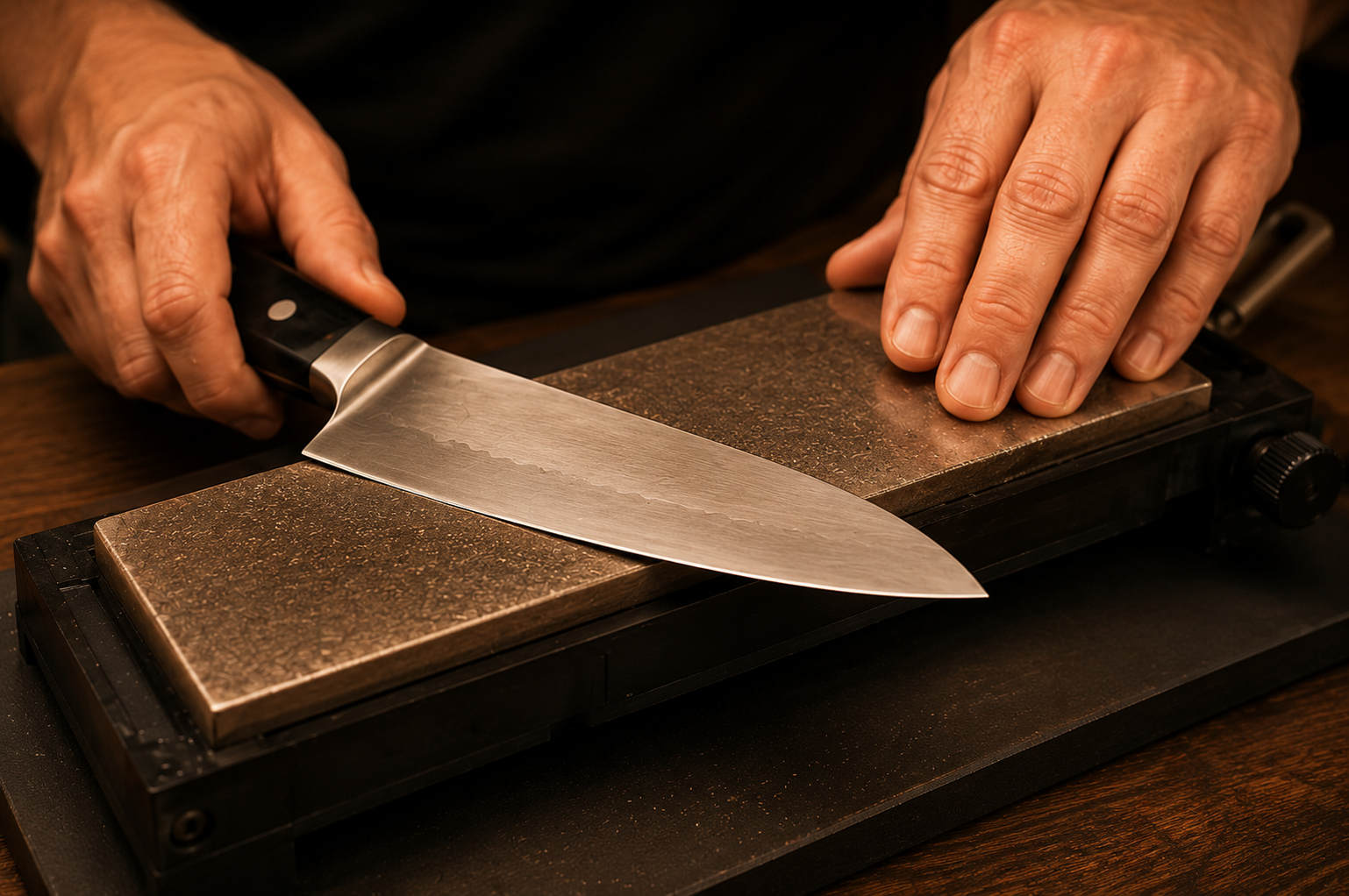
What Is Knife Thinning?
Knife thinning removes steel from the sides of the blade just behind the cutting edge. The goal is to improve how easily the knife moves through food, not simply to make the apex sharper.
As a knife is sharpened repeatedly, the edge gradually moves into thicker steel. The knife may still feel sharp at the very edge but begin to wedge, split food, or require more pressure.
Knife thinning is an advanced geometry service. Gibson County Knife Sharpening does not currently offer thinning, but this article explains why it may be recommended for some knives.
Sharpening vs. Thinning
Sharpening restores the cutting edge. Thinning changes the blade geometry behind that edge.
Sharpening
Restores the ApexPros
Rebuilds the cutting edge and improves sharpness.
Cons
Cannot fully correct a blade that has become too thick behind the edge.
Best For
Routine edge maintenance and dull knives.
Thinning
Restores Blade GeometryPros
Removes steel behind the edge to reduce wedging and cutting resistance.
Cons
Requires more skill, removes more material, and may alter the blade finish.
Best For
Knives that remain thick or resistant even after sharpening.
Signs a Knife May Need Thinning
A sharp edge can still cut poorly when too much steel remains behind it.
Wedges in Dense Food
The blade splits carrots, potatoes, or other dense foods instead of passing through cleanly.
Requires Extra Pressure
The edge feels sharp, but the knife still needs more force than expected during normal cutting.
Feels Thick Behind the Edge
The bevel has grown wide after repeated sharpening, suggesting the edge has moved into thicker steel.
Sharpening No Longer Fixes Performance
The knife becomes sharper at the apex but still does not move through food efficiently.
When Thinning May Not Be Appropriate
Not every knife that feels thick should be thinned. Some blades are intentionally built with heavier geometry for durability, and removing too much steel can weaken them.
Thinning may also be a poor choice for severely damaged, very inexpensive, highly flexible, or unusually heat-treated knives where the cost or risk outweighs the benefit.
Because thinning permanently changes blade geometry, it should be done only when the knife’s condition, construction, and intended use justify it.
Key Takeaways
Thinning is an advanced geometry adjustment, not routine sharpening.
Thinning Works Behind the Edge
It removes steel from the blade behind the apex to reduce wedging and cutting resistance.
A Sharp Knife Can Still Feel Thick
The apex may be keen while the blade geometry still requires too much force through food.
Repeated Sharpening Can Increase Thickness
As the edge moves into thicker steel, the knife may gradually lose cutting efficiency.
Not Every Knife Should Be Thinned
Heavy-use designs, damaged knives, and low-value blades may not justify the risk or cost.
GCKS Does Not Currently Offer Thinning
This page is educational and allows room to add the service later if appropriate.
References
The following sources were used in preparing and supporting this article.
PT50 Series Edge Sharpness Testers and the BESS
Edge On Up
edgeonup.com
KS-123 Knife Angle Setter
Tormek
tormek.com
Knife Sharpening Basics
Korin
korin.com
How to Sharpen Any Knife: Back to Basics
Work Sharp
worksharptools.com