Western vs. Japanese Knives
Two traditions, different strengths.
Modern kitchen knives borrow ideas from both Western and Japanese traditions. Understanding steel, blade geometry, sharpening angles, and intended use helps you choose the right knife and keep it performing well.
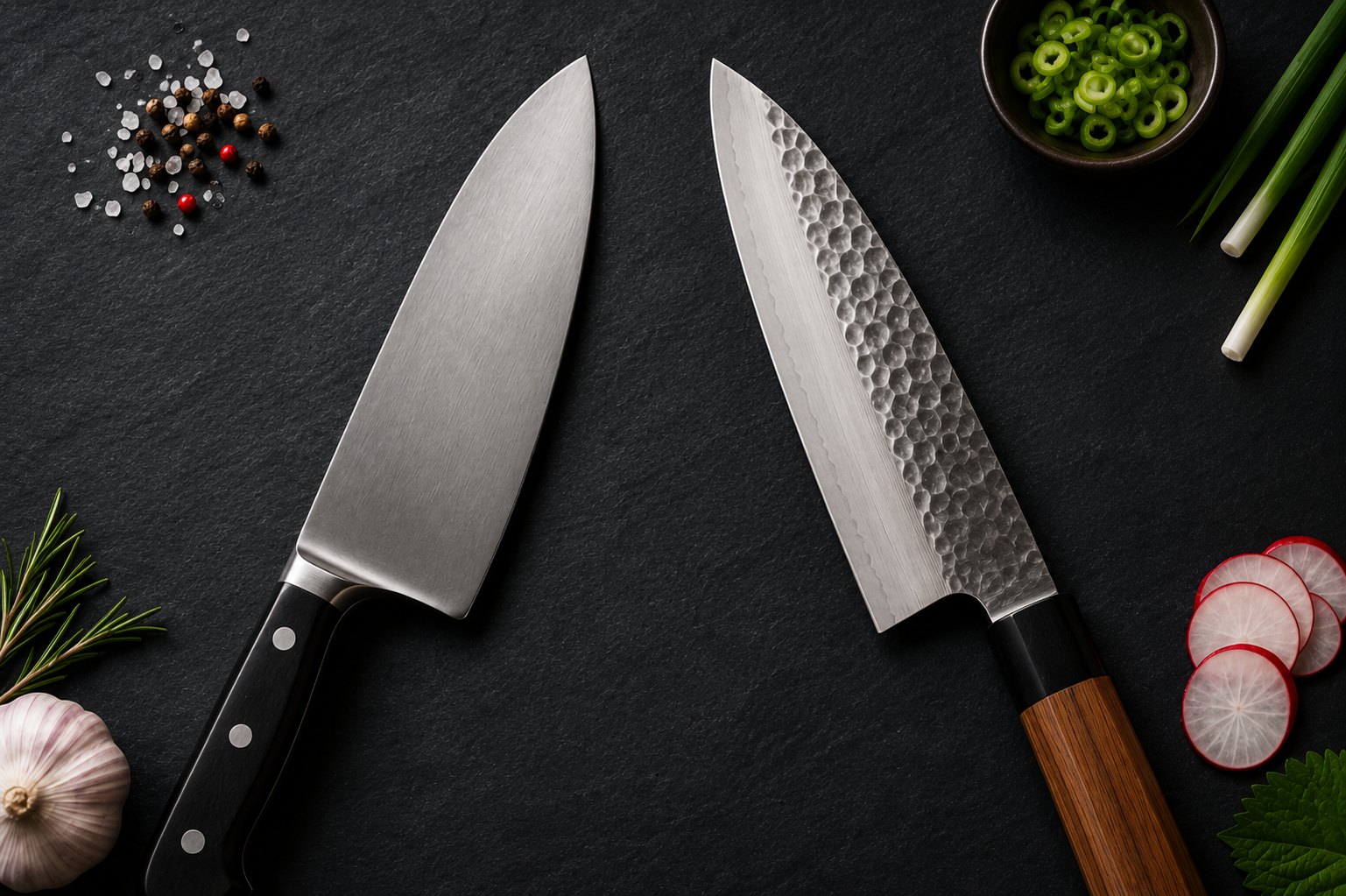
Quick comparison
Neither style is automatically better. Western and Japanese knives are built around different priorities, and many modern knives blend features from both.
| Feature | Western Style | Japanese Style |
|---|---|---|
| Steel | Usually tougher and slightly softer. | Usually harder and capable of a finer edge. |
| Edge Angle | Often around 17–20° per side. | Often around 12–15° per side. |
| Blade Shape | Curved belly for rocking cuts. | Flatter profile for push cuts and slicing. |
| Weight | Generally heavier. | Generally lighter. |
| Maintenance | More forgiving. | Requires a little more care. |
Steel hardness affects performance
One major difference between many Western and Japanese knives is steel hardness. Harder steels can often support thinner, sharper-feeling edges, but they may be less forgiving if twisted, dropped, or used on hard surfaces.
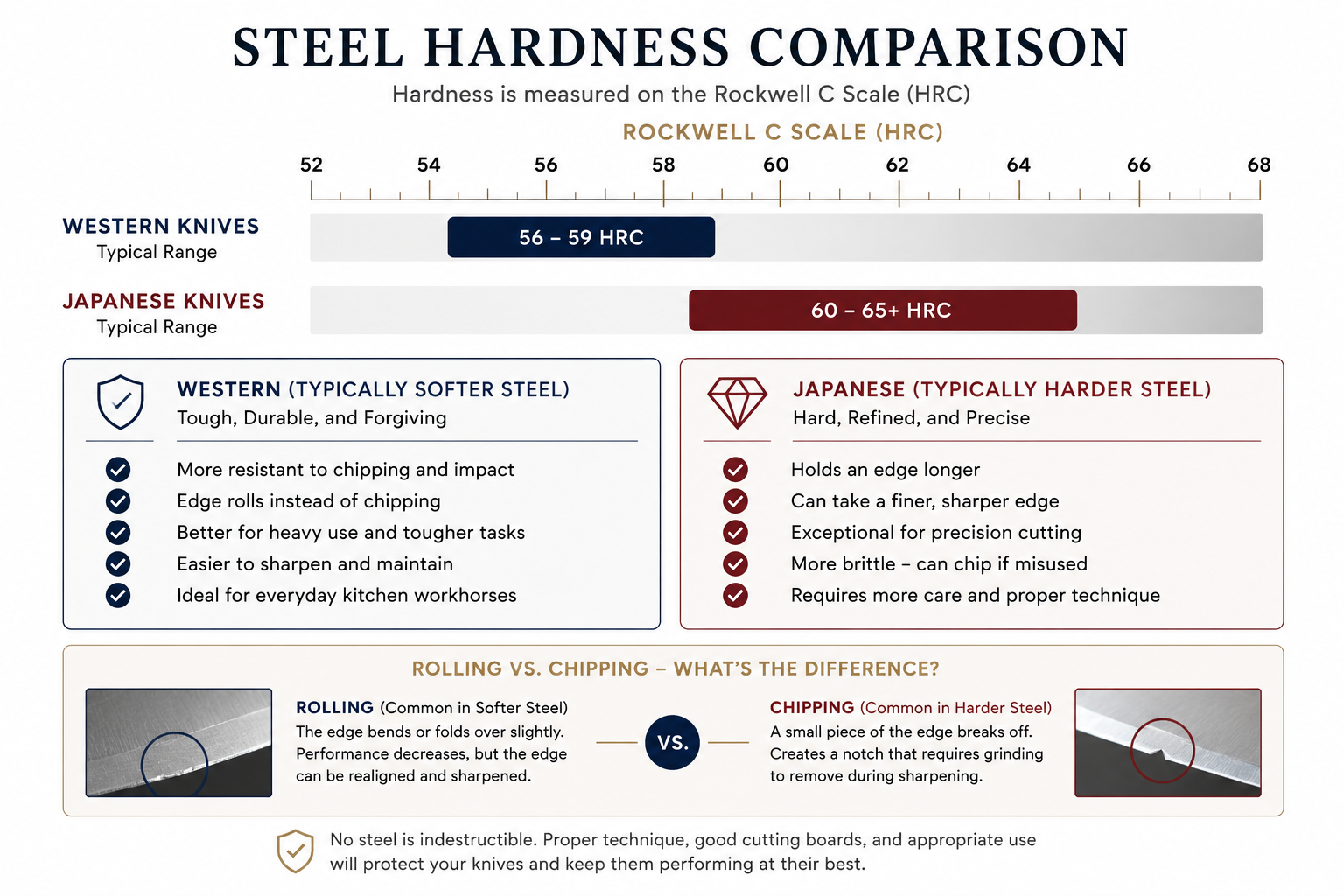
Harder Steel
- Excellent edge retention
- Can support thinner edges
- Often needs less frequent sharpening
- Can chip if abused.
Softer Steel
- Easier to sharpen
- More resistant to chipping
- Often rolls before breaking
- May need sharpening more often.
Blade geometry changes how a knife cuts
Blade profile affects how the knife moves through food. Some knives are shaped for rocking cuts, while others are better suited for push cuts, pull cuts, and clean slicing.
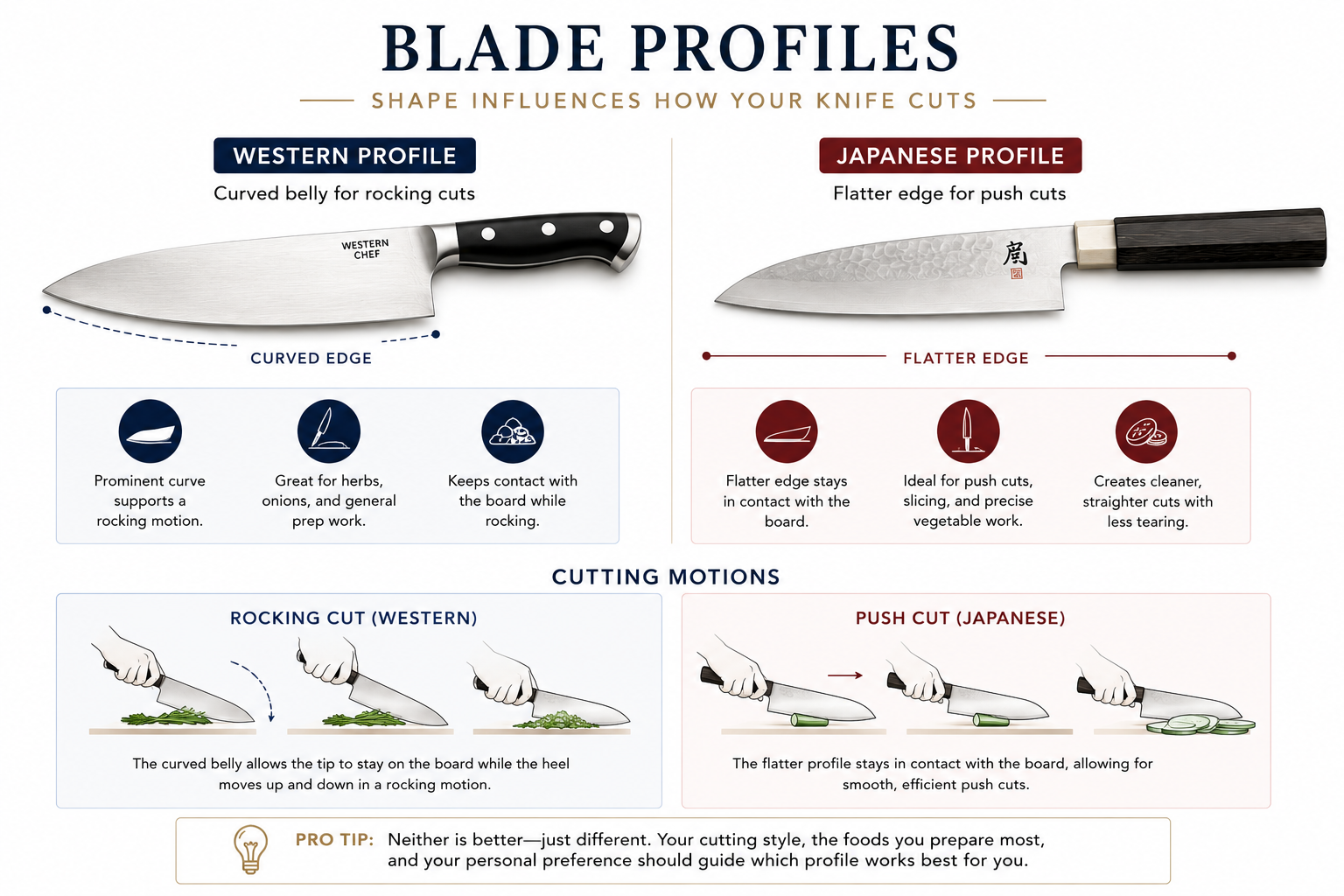
Western Profile
A curved belly naturally supports a rocking motion that many home cooks already use.
Japanese Profile
A flatter edge often excels at push cuts and clean slicing through vegetables and proteins.
Sharpening angles are not one-size-fits-all
Western knives are often sharpened at wider angles than Japanese knives, but the best angle depends on the individual blade. Steel, thickness, existing bevel, condition, and how the knife is used all matter.
A very thin edge may feel extremely sharp, but it may not be the best choice for a heavy-use knife. A slightly wider edge may be more durable and more practical for everyday kitchen work.
Double bevel vs. single bevel
Most kitchen knives sold today are double bevel, meaning both sides of the blade are sharpened. Traditional Japanese single-bevel knives are more specialized and require a different sharpening approach.
Which style is right for you?
Choose Western If...
- You prefer a heavier knife
- You rock the blade while cutting
- You want a more forgiving edge
- You frequently prepare tougher foods.
Choose Japanese If...
- You enjoy precise slicing
- You prepare lots of vegetables
- You appreciate lightweight knives
- You do not mind a little extra care.
Key Takeaways
Different Priorities
Western knives often favor durability and rocking cuts, while Japanese knives often favor precision, thinner edges, and lighter handling.
Steel and Geometry Matter
Hardness, blade thickness, edge angle, and bevel style all affect how a knife cuts and how it should be sharpened.
Sharpen the Knife You Have
The best sharpening approach depends on the individual knife, its condition, and how it will actually be used.
References
The following sources were used in preparing and supporting this article.
Knife Sharpening: How to Sharpen Your Knives
Tormek
tormek.com
Knife Sharpening Basics
Korin
korin.com
How to Sharpen Any Knife: Back to Basics
Work Sharp
worksharptools.com