Kitchen Knife Safety
A stable workspace, proper technique, and focused attention make kitchen knives easier to control.
Kitchen knife safety is mostly about control: use a sharp, suitable knife, secure the cutting board, keep hands dry, avoid distractions, and store the blade safely. This article provides general kitchen-safety information, not medical guidance.
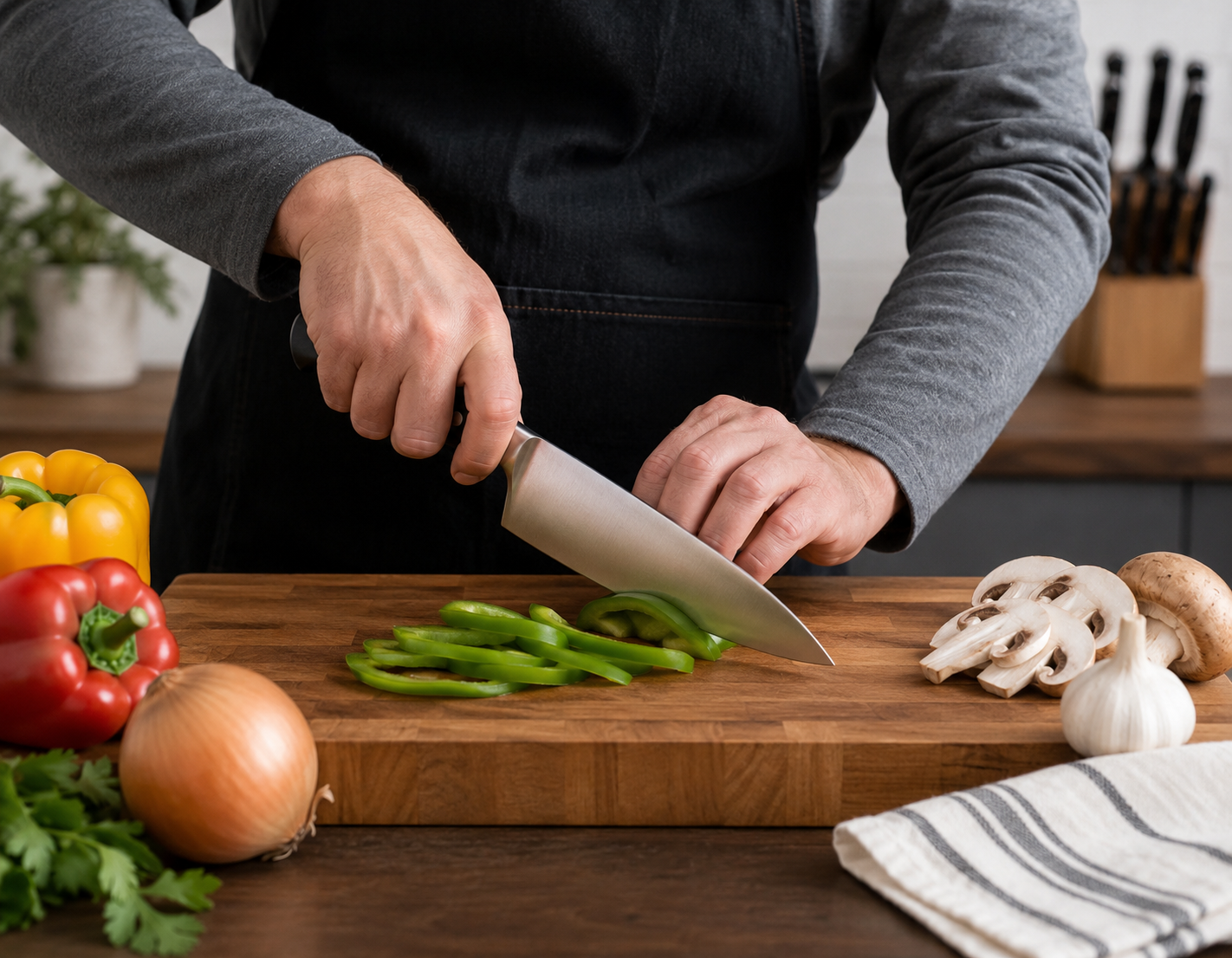
Why a Sharp Knife Can Be Easier to Control
A sharp knife cuts with less pressure. That usually makes the blade easier to guide and reduces the temptation to force it through food.
A dull knife can require extra pressure and may slip when it finally breaks through the surface. Sharpness alone does not make a knife safe, but it supports better control when combined with sound technique and attention.
Prepare the Work Area
A few simple checks make cutting more predictable.
Secure the Board
Use a nonslip mat or damp towel underneath if the cutting board moves.
Clear the Counter
Remove clutter that could interfere with the knife, food, or your hands.
Dry Your Hands
Wet or greasy hands reduce grip and control.
Stay Focused
Stop cutting before looking away, answering someone, or reaching for another item.
Control the Knife and Guiding Hand
Hold the knife with a secure, comfortable grip that gives you control without excessive tension. Many cooks use a pinch grip near the front of the handle, but the best grip is one you can maintain steadily.
Keep the fingertips of the guiding hand curled away from the blade. Move slowly enough to keep the knife path visible and predictable.
Use a knife suited to the task. Do not pry, twist, or force a chef’s knife through bone, frozen food, packaging, or other unsuitable materials.
Common Situations to Handle Carefully
Most problems begin when control is reduced or the knife is used in an unexpected way.
A Falling Knife
Step back and let it fall. Do not try to catch it.
Carrying a Knife
Carry it at your side with the point down and announce yourself when moving behind others.
Washing a Knife
Wash knives one at a time and never leave one hidden in a sink or soapy water.
Loose Storage
Do not leave knives loose in a drawer where the edge and hands can be damaged.
Rushing
Speed should never come before control. Slow down when the task or food is unfamiliar.
Children Nearby
Keep knives secured and provide age-appropriate supervision and instruction.
About Injuries
This page offers general kitchen-safety information and is not medical advice. For a serious injury, uncontrolled bleeding, loss of sensation or movement, or any situation that concerns you, contact emergency services or a healthcare provider.
Key Takeaways
Good knife safety comes from control, preparation, and attention.
Use a Sharp, Suitable Knife
A sharp knife used for the right task generally requires less force and is easier to guide.
Secure the Workspace
Keep the board stable, the counter clear, and your hands clean and dry.
Protect the Guiding Hand
Keep fingertips curled away from the blade and cut at a controlled pace.
Store and Wash Carefully
Keep knives visible during washing and protected when stored.
References
The following sources were used in preparing and supporting this article.
Knife Safety and Responsible Knife Ownership
American Knife and Tool Institute
akti.org
Six Tips to Sharpen and Maintain Your Knives
Work Sharp
worksharptools.com
Safe Food Handling
U.S. Food and Drug Administration
fda.gov