What Damages a Knife Edge?
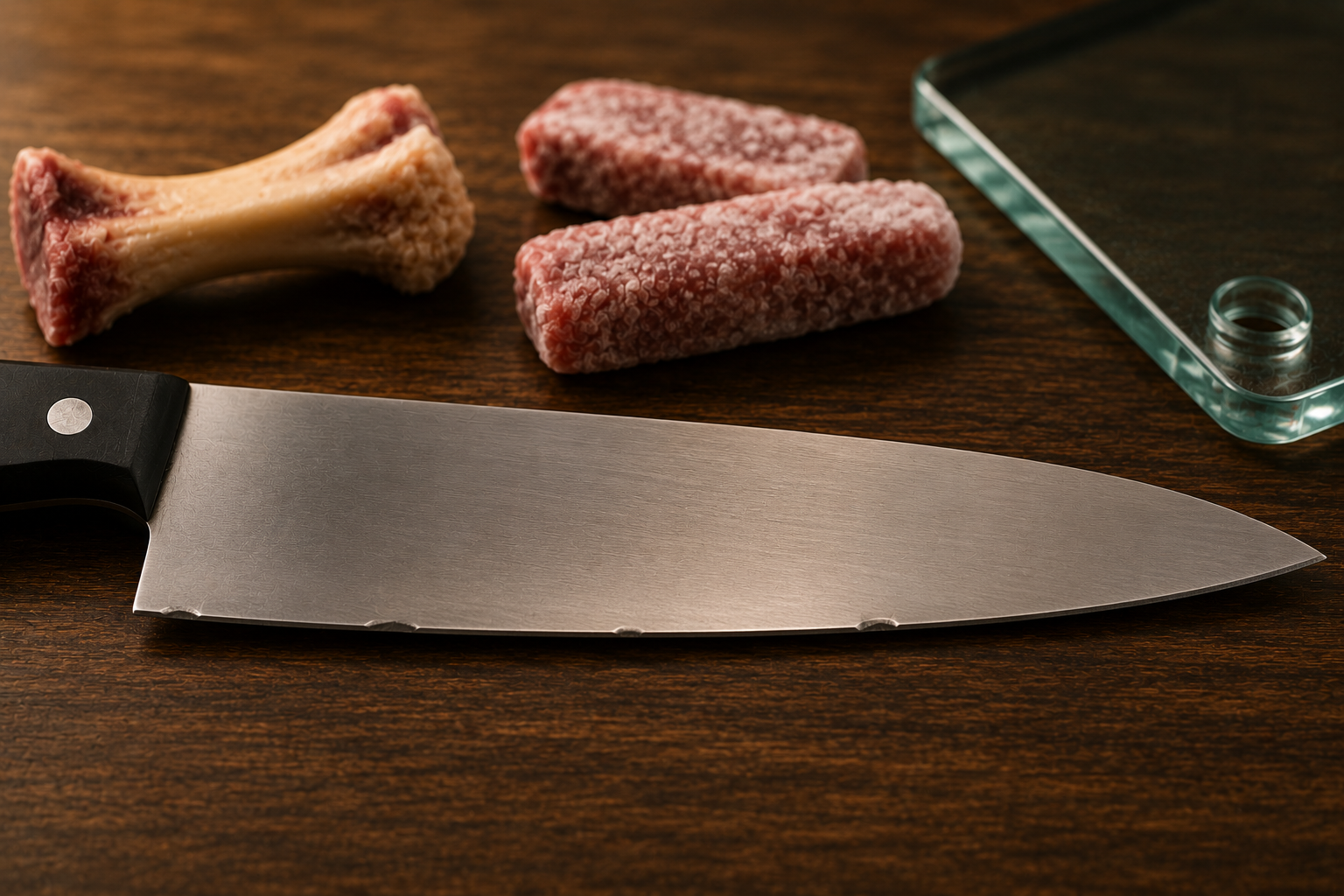
Bone, frozen food, glass, stone, and other hard surfaces can chip, roll, or weaken a kitchen knife edge.
Kitchen knives are designed for controlled cutting on suitable cutting boards. Hard impact, twisting, and contact with bone, frozen food, glass, ceramic, stone, or metal can damage the edge immediately or create weakness that becomes visible later.
What Damages a Knife Edge?
Kitchen knives are designed to slice food on a suitable cutting board. Damage occurs when the edge strikes something very hard, is twisted during a cut, or is forced through material the knife was not designed to handle.
Depending on the steel and edge geometry, this can cause rolling, chipping, flattening, or small cracks along the apex.
A high-quality knife is not immune. Thin, hard edges may cut exceptionally well but can be less tolerant of impact and sideways force.
The Highest-Risk Materials
These materials are especially likely to damage a kitchen knife's edge.
Bone
Striking or twisting against bone can chip the edge, roll the apex, or damage the tip. Use a knife designed for jointing or heavy bone work.
Frozen Food
Frozen meat and other foods behave like hard solids. Forcing a kitchen knife through them can chip the edge or bend the blade.
Glass and Stone Boards
These surfaces are harder than the knife edge and can flatten or chip it with repeated contact.
Metal, Ceramic, and Hard Surfaces
Contact with sinks, plates, pans, countertops, and other hard objects can damage the edge immediately.
Why These Materials Cause Damage
Knife edges are thin. When they strike a hard surface or meet strong sideways force, the apex may bend, flatten, or break.
Softer steel is more likely to roll, while harder steel may chip. Twisting a knife while it is stuck in food can also place stress higher in the blade or near the tip.
The damage may be obvious immediately, or it may first appear as a rough spot, reduced cutting performance, or a section that catches during use.
Safer Ways to Handle Tough Cutting Jobs
Use the right knife for the task. A chef’s knife is meant for controlled slicing and chopping, not cutting through bone, frozen food, wire, packaging, or other hard materials.
Thaw frozen food before cutting, use a suitable boning or heavy-duty knife when appropriate, and cut only on wood or knife-safe synthetic boards.
If the blade becomes stuck, stop and work it free without twisting or prying. Sideways force can damage the edge or tip even when the knife appears strong.
When the Knife Needs Repair
Look for visible chips, flat spots, a rough section of edge, a bent tip, or a sudden loss of cutting performance.
Minor rolling or light damage may be corrected during normal sharpening. Deeper chips, broken tips, or major edge deformation may require repair before the knife can be sharpened normally.
Stop using the knife if the damage makes cutting unpredictable or unsafe.
Key Takeaways
Most knife-edge damage comes from hard impact, twisting, or using the wrong surface or tool.
Avoid Bone and Frozen Food
These materials can chip, roll, or deform a kitchen knife edge.
Use Knife-Safe Cutting Boards
Wood and suitable synthetic boards are much easier on the edge than glass, stone, ceramic, or metal.
Do Not Twist or Pry
Sideways force can damage the edge, bend the tip, or stress the blade.
Match the Knife to the Task
Use a knife designed for tougher work instead of forcing a chef’s knife through unsuitable material.
Repair Damage Before Normal Use
Chips, bent tips, and rough or unstable sections should be corrected before the knife returns to service.
References
The following sources were used in preparing and supporting this article.
On a knife edge: A preliminary investigation of clothing damage using rounded-tip knives
ScienceDirect
sciencedirect.com
Am I Damaging My Knives?
Santoku
us.santokuknives.co.uk
5 Ways to Ruin Your Kitchen Knives
Sharpening Supplies
sharpeningsupplies.com