Cleavers and Bone-In Cuts
Use the right cleaver for the job—and know when a cleaver is the wrong tool.
Cleavers are designed for jobs that would quickly damage an ordinary chef's knife. Whether you're separating chicken joints, cutting through small bones, or breaking down larger cuts of meat, choosing the correct cleaver—and using proper technique—helps protect both your tools and your safety.
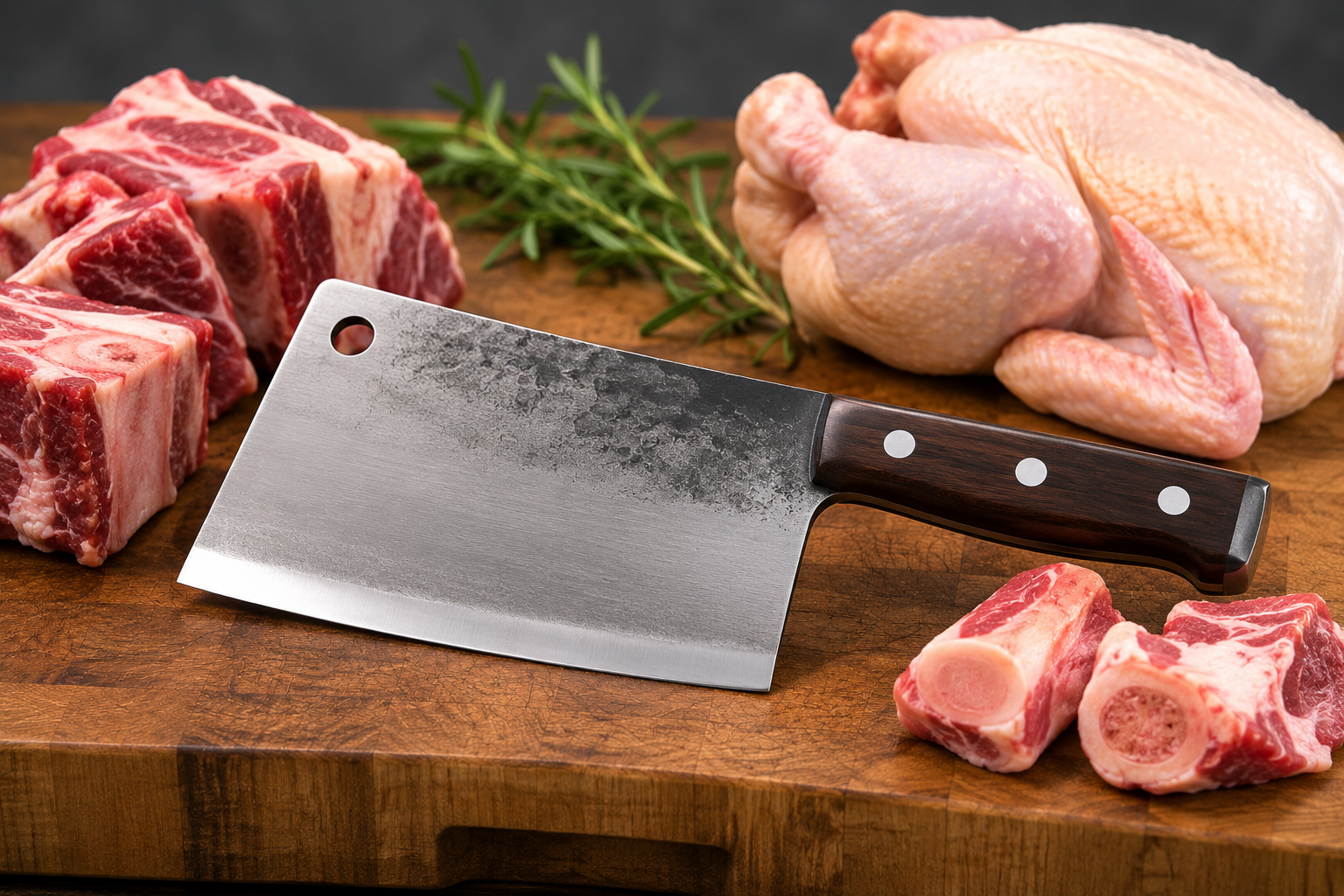
Not all cleavers are the same
One of the biggest misconceptions is that every rectangular knife is designed to chop through bone. In reality, several different styles exist, each intended for different work. Using the wrong one can quickly chip or ruin the edge.
Good rule: If the cut requires precision, use a chef's or boning knife. If the cut requires controlled chopping through bone, reach for a meat cleaver.
Choose the correct tool
A heavy cleaver works because of its weight and durable geometry—not because it has an extremely thin edge. A chef’s knife is often the better choice for ordinary slicing and trimming, while a boning knife is designed for working around joints and connective tissue. Reserve a true meat cleaver for tasks its manufacturer identifies as appropriate.
Aim for joints whenever possible
Poultry joints separate much more easily than solid bone. Learning where joints naturally separate reduces the force required, minimizes wear on the cleaver, and produces cleaner cuts.
Instead of striking directly through thick bone, locate the joint with the tip of the blade, then make one controlled chop.
Large bones require different tools
Even heavy-duty cleavers have limits. Dense marrow bones, very large bones, and frozen material can damage the blade or cause it to deflect unpredictably. A meat saw or properly guarded commercial cutting equipment may be more appropriate for work beyond the cleaver’s intended capacity.
Good Choices
Chicken, turkey, rabbit, duck, and smaller pork bones.
Use Caution
Large pork joints and heavier beef cuts may require specialized equipment.
Do Not Attempt
Frozen bones, very thick marrow bones, or unknown hard materials.
Technique matters more than force
Controlled movement is safer and more effective than excessive force.
• Use a stable wood or heavy plastic cutting board.
• Grip the handle securely.
• Keep fingers well away from the cutting line.
• Use deliberate downward movement rather than an uncontrolled swing.
• Stop when the cleaver is not appropriate for the material.
• If the blade becomes stuck, do not twist or pry it sideways.
Use cut-resistant protection and other safeguards when required by the workplace or task.
Never twist a cleaver
Twisting the blade sideways while it's embedded in bone places tremendous lateral stress on the edge. Chips and cracks often result from twisting rather than from the chop itself.
If the blade becomes stuck, lift it straight out or reposition the workpiece. Do not pry sideways.
Keep the edge durable
Unlike chef's knives, meat cleavers generally use a thicker edge designed to withstand impact. Razor-thin sharpening angles are usually inappropriate because they reduce durability.
Care after use
• Wash and dry immediately.
• Inspect the edge for chips.
• Store where the edge cannot strike other tools.
• Sharpen before significant damage develops.
• Never place heavy cleavers loose in a drawer.
Key Takeaways
Use the Right Cleaver
Chinese vegetable cleavers, meat cleavers, and heavy bone cleavers are designed for different tasks.
Don't Force It
Use controlled chops, aim for joints when possible, and never twist the blade through bone.
Protect Your Edge
Dense frozen bones and heavy marrow bones can damage even quality cleavers.
References
The following sources were used in preparing and supporting this article.
Young Worker Safety in Restaurants: Food Preparation
Occupational Safety and Health Administration
osha.gov
Food Services: Kitchen Equipment
Occupational Safety and Health Administration
osha.gov
WÜSTHOF 7-Inch Chinese Chef’s Knife
WÜSTHOF
wusthof.com
WÜSTHOF Classic 6-Inch Cleaver
WÜSTHOF
wusthof.com