Knife Rolls and Blade Guards
Safe transport starts with covered edges, secure knives, and completely dry storage.
Knife rolls and blade guards protect sharpened edges and reduce accidental contact during storage or transport. Each knife should be clean, completely dry, properly covered, and secured so it cannot slide into neighboring tools.
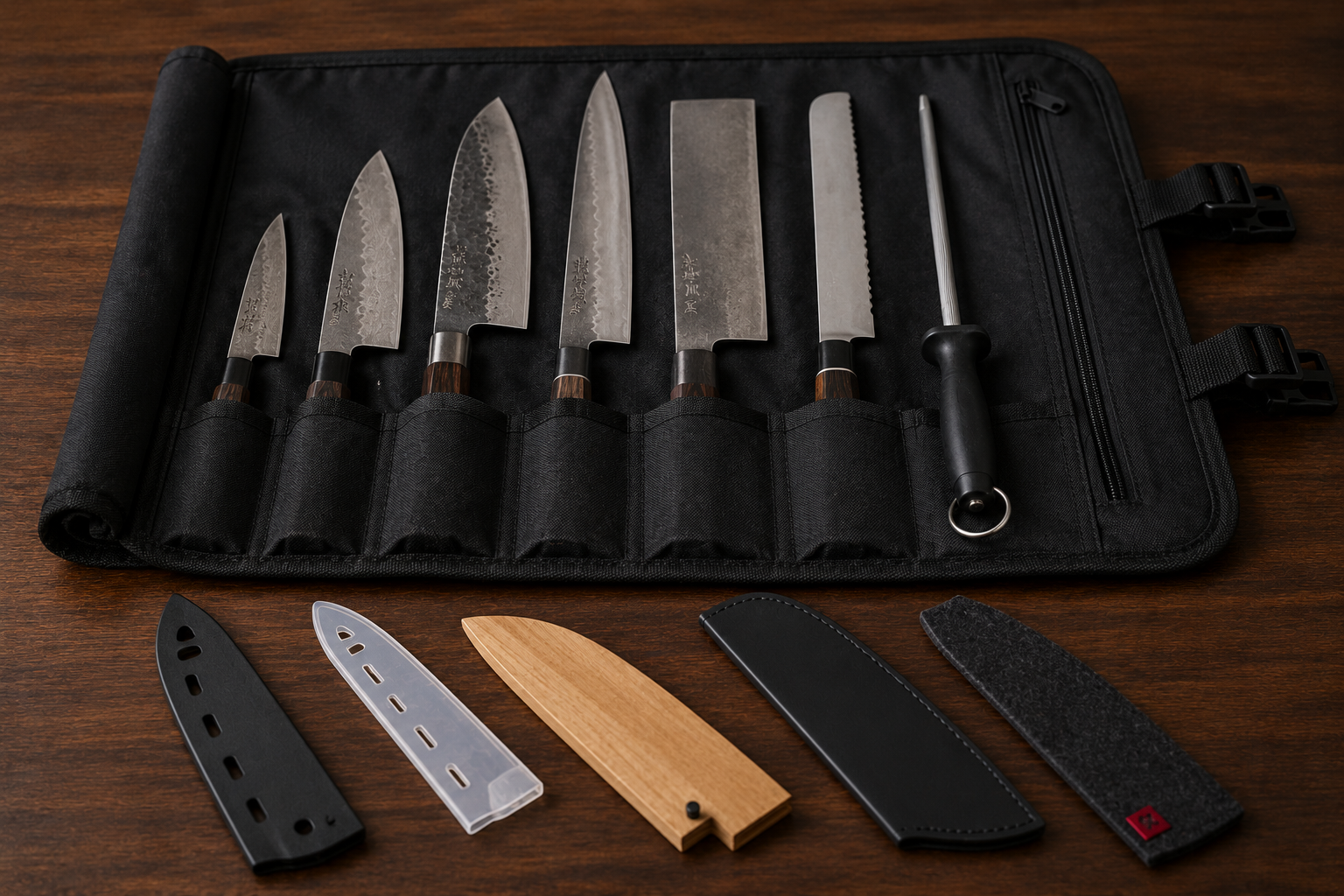
Why Knives Need Protection During Transport
A knife roll organizes and carries tools, but the roll alone may not fully protect every cutting edge. Knives can shift, contact neighboring tools, or push against the fabric during transport.
A properly fitted blade guard covers the edge and tip. The knife should then be secured in a dedicated pocket, strap, or compartment so it cannot move freely.
This protects the knife, the storage system, and anyone handling the roll or bag.
Knife Roll vs. Blade Guard
These tools work best together because they solve different storage problems.
Knife Roll
Organizes and CarriesPros
Keeps several knives and tools together in a portable, secured package.
Cons
Loose or poorly positioned knives may still contact each other or cut the roll.
Best For
Transporting a group of knives between kitchens, classes, events, or sharpening appointments.
Blade Guard
Covers the EdgePros
Protects the cutting edge and tip while reducing accidental contact.
Cons
Must fit correctly and does not prevent the entire knife from moving unless it is also secured.
Best For
Individual edge protection inside drawers, cases, bags, or knife rolls.
Safe Packing Basics
A few checks prevent most storage and transport problems.
Clean and Dry First
Never enclose a knife with food residue or moisture on the blade, handle, guard, or roll.
Match the Guard to the Blade
The guard should cover the full edge and tip without bending the blade or fitting so loosely that it slips off.
Secure Every Knife
Use individual pockets, straps, or compartments so knives cannot slide or strike one another.
Keep the Roll Indoors
Avoid prolonged storage in hot vehicles, damp areas, or other environments that encourage corrosion or material damage.
Inspect the Storage System
Check blade guards for cracks, looseness, trapped debris, or worn interiors that may scratch the blade.
Inspect knife rolls for cut fabric, torn straps, failed closures, persistent moisture, or pockets that no longer hold knives securely.
Replace damaged storage before an edge becomes exposed or a knife can shift unexpectedly.
Key Takeaways
Safe transport depends on edge coverage, secure placement, and moisture control.
Cover the Edge and Tip
Use a correctly sized blade guard whenever a knife is stored in a drawer, bag, case, or roll.
Secure the Entire Knife
A guard protects the blade, but the knife must also be restrained so it cannot move freely.
Store Only When Dry
Trapped moisture can promote corrosion and create odors or damage inside the roll.
Replace Damaged Storage
Torn fabric, loose guards, failed straps, and broken closures should not remain in service.
References
The following sources were used in preparing and supporting this article.
Food Preparation: Knives and Cuts
Occupational Safety and Health Administration
osha.gov
How to Store Your WÜSTHOF Knives
WÜSTHOF
wusthof.com
Blade Guard with Clip
Shun Cutlery
shun.kaiusa.com