Finding the Right Sharpening Approach for Your Restaurant
Gibson County Knife Sharpening does not currently offer formal service contracts. Contact us to discuss your knives, workload, turnaround needs, and a practical service approach.
Restaurant knife maintenance does not need to begin with a formal contract. The right approach may involve occasional service, planned batches, knife rotation, or another practical solution based on the kitchen’s actual workload.
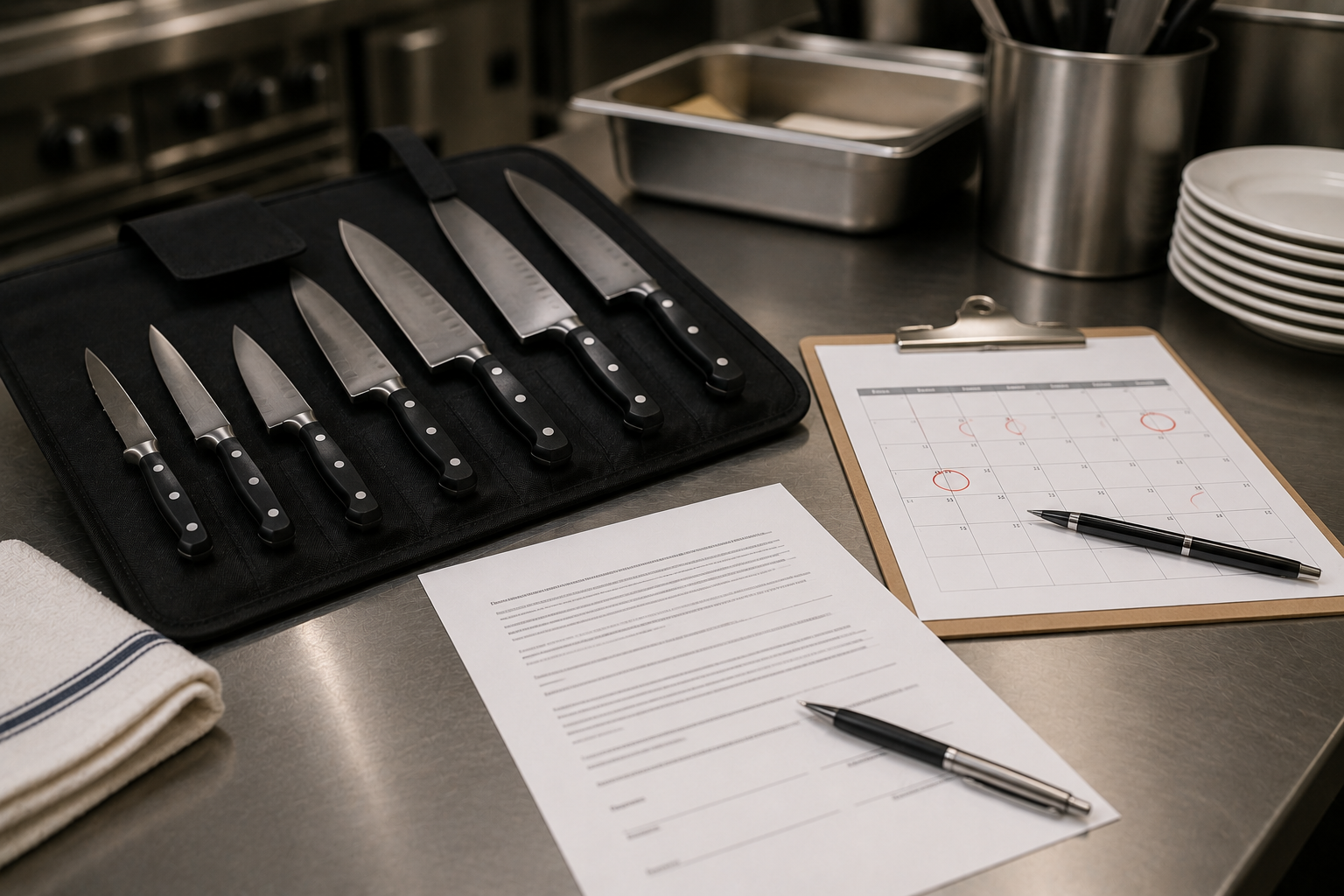
Our Current Approach
Gibson County Knife Sharpening does not currently offer formal sharpening contracts. Restaurants are encouraged to contact us so we can understand the kitchen’s knives, workload, timing, and service needs before presenting practical options.
Start With the Kitchen’s Actual Needs
A restaurant sharpening plan should reflect how the kitchen actually operates.
A small restaurant with a few lightly used knives may need occasional service. A busier operation may benefit from planned batches, a knife rotation, or more regular communication.
The goal is not to force every restaurant into the same schedule. It is to keep useful knives available without unnecessary sharpening.
Information That Helps Us Recommend a Solution
Knife Inventory
How many active, backup, specialty, and damaged knives are in the kitchen?
Workload
Which knives receive heavy daily use, moderate use, seasonal use, or limited specialty use?
Current Problems
Are knives dull, chipped, uneven, rusted, poorly stored, or repeatedly damaged?
Turnaround Needs
How many knives can leave the kitchen without interrupting preparation or service?
Transportation
Can the restaurant safely drop off and retrieve knives, or does another arrangement need discussion?
Internal Maintenance
Who inspects knives, reports damage, manages backups, and performs approved honing?
Common Service Approaches
These are planning approaches rather than formal GCKS contract options.
As-Needed Service
Maximum FlexibilityPros
The restaurant decides when service is needed and which knives to include.
Cons
Service may be delayed when no one is clearly responsible for inspection and scheduling.
Best For
Smaller kitchens, lighter workloads, seasonal operations, or restaurants with strong internal oversight.
Planned Batches
More StructurePros
Knives can be divided into groups so sharp backups remain available while another group is serviced.
Cons
The schedule still needs adjustment when individual knives wear at different rates.
Best For
Restaurants with larger inventories, multiple stations, or predictable high-use periods.
Every Knife Should Be Evaluated Individually
A group of restaurant knives should not automatically receive identical treatment.
One knife may need full sharpening. Another may need only inspection or light maintenance. A third may require chip repair, tip work, corrosion evaluation, or replacement consideration.
Sharpening removes steel, so a knife that remains sharp and undamaged should not be sharpened simply because it was included in a batch.
Possible Outcomes After Inspection
No Service Needed
The knife remains sharp, consistent, safe, and undamaged.
Light Maintenance
The edge has lost some refinement but does not require complete restoration.
Full Sharpening
The apex is worn, rounded, inconsistent, or no longer responds to appropriate honing.
Repair or Replacement Review
Chips, broken tips, bends, corrosion, unsafe handles, or severe wear require additional decisions.
A Knife Rotation Makes Service Easier
Restaurants should avoid sending every active knife for service at the same time.
A practical rotation can include:
• Active knives currently assigned to stations.
• Sharp backup knives ready to replace removed tools.
• Service knives awaiting sharpening, repair, return, or approval.
This keeps production moving and reduces the temptation to continue using a dull or damaged blade.
Repairs Should Be Discussed Separately
Routine sharpening and repair are different kinds of work.
Chips, broken tips, severe profile wear, corrosion, bent blades, and unsafe handles may require additional time or may make replacement more practical.
Major work that changes a knife’s profile or creates a significant additional charge should be discussed and approved before proceeding.
Turnaround and Backup Capacity Matter
A low per-knife price is not useful when too many knives leave the kitchen at once or remain unavailable longer than the operation can tolerate.
Before arranging service, determine:
• How many knives can leave at one time.
• Which stations require immediate backups.
• Whether repairs may extend turnaround.
• How knives will be protected during transport.
• Who will count knives before and after service.
• How urgent needs will be handled.
Judge the Result, Not Only the Invoice
A sharpening service should be judged by cutting performance, edge consistency, durability, communication, turnaround, repair quality, and how carefully the knives are handled—not only by the lowest price.
Questions to Discuss Before Service
• How many knives are active, backup, damaged, or specialty tools?
• Which knives receive the heaviest use?
• What foods and cutting surfaces are involved?
• How are dullness and damage currently reported?
• How many knives can leave the kitchen at once?
• Are serrated knives included?
• Are repairs likely?
• What turnaround does the kitchen require?
• Who is responsible for approving additional work?
• How should knives be transported and returned?
Begin With a Representative Group
A restaurant does not need to commit its entire knife inventory immediately.
Beginning with a representative group from different stations can help evaluate:
• Cutting performance from heel to tip.
• How long the edges remain useful.
• Whether repairs were handled appropriately.
• Whether communication and approvals were clear.
• Whether turnaround worked for the kitchen.
The next service decision can then be based on real results.
Contact Us to Discuss Practical Options
We do not currently offer formal sharpening contracts. Contact Gibson County Knife Sharpening to discuss your restaurant’s knife inventory, workload, current problems, backup capacity, and turnaround needs. We can then present practical service options based on the information provided.
Key Takeaways
No Formal Contracts Currently
GCKS currently works by discussing the restaurant’s needs and presenting practical options.
Plan Around the Kitchen
Knife volume, workload, backups, transportation, and turnaround should shape the approach.
Sharpen by Condition
Each knife should receive only the inspection, maintenance, sharpening, or repair it actually needs.
References
The following sources were used in preparing and supporting this article.
Young Worker Safety in Restaurants: Food Preparation
Occupational Safety and Health Administration
osha.gov
Food Services: Kitchen Equipment
Occupational Safety and Health Administration
osha.gov
FDA Food Code
U.S. Food and Drug Administration
fda.gov