Kitchen Knife Storage
The right storage keeps edges protected, knives dry, and sharp blades safely contained.
A good knife-storage system keeps each edge separated, prevents accidental contact, allows knives to remain clean and dry, and fits the way the kitchen is actually used.
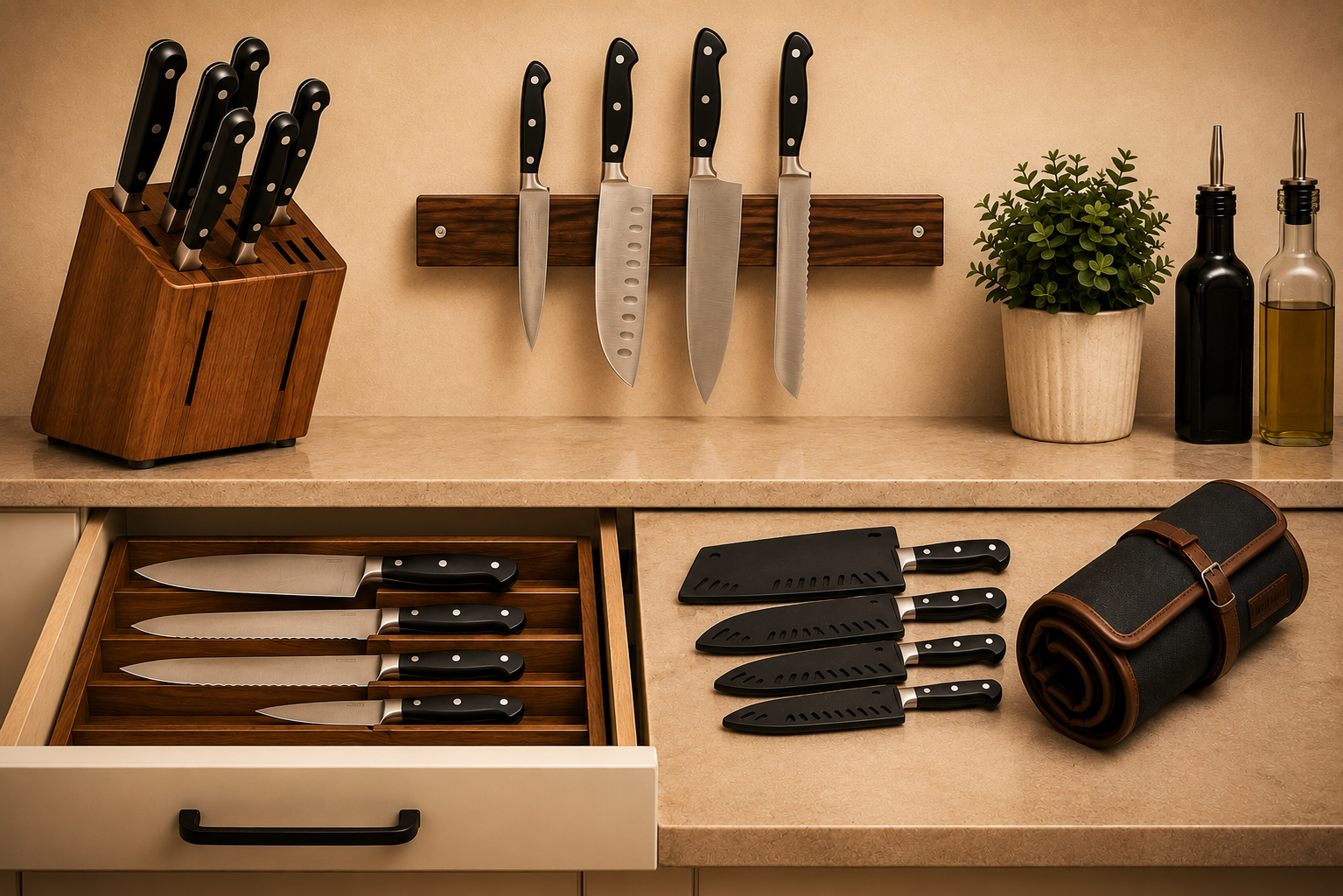
What Good Knife Storage Should Do
Storage affects safety, edge life, cleanliness, and convenience. A knife should not strike other blades, utensils, countertops, or hard drawer surfaces while it is put away.
Good storage also prevents someone from reaching toward an exposed edge, keeps moisture from remaining against the blade, and makes each knife easy to identify and remove.
The best method is not determined by appearance alone. It should protect the edge, control the blade, stay clean and dry, and fit the space and people using the kitchen.
Common Storage Options
| Storage Method | Edge Protection | Main Consideration |
|---|---|---|
| Knife block | Good when the slots fit properly | Slots must remain clean and dry, and the edge should not drag along the opening |
| Magnetic strip | Excellent when used carefully | Must be securely installed and positioned where handles cannot be bumped |
| Drawer insert | Very good | Each knife needs its own stable, protected position |
| Blade guard | Excellent | The guard must fit securely without trapping moisture |
| Knife roll | Excellent for transport | Knives must be clean, dry, covered, and secured before the roll is closed |
| Loose drawer | Poor | The edge strikes utensils and remains exposed to anyone reaching inside |
Choosing a Permanent Storage Method
Blocks, magnetic storage, and drawer inserts can all work well when the knives fit correctly and the system is maintained.
Knife Block
Countertop StoragePros
Organizes several knives, needs no wall installation, and keeps handles easy to identify.
Cons
Slots can collect debris or moisture, and poor-fitting openings may scrape blades or edges.
Best For
Kitchens with available counter space and a collection that fits the block.
Magnetic Strip
Visible and AccessiblePros
Keeps knives separated, allows airflow, saves counter space, and makes each blade easy to identify.
Cons
Requires secure installation and careful placement and removal to prevent impact or scratching.
Best For
Frequently used knives where suitable wall space is available.
Drawer Insert
Protected and Out of SightPros
Keeps counters clear, separates knives from utensils, and works without wall hardware.
Cons
The insert must remain stable and should not force the cutting edge against the slot.
Best For
Kitchens with drawer space or where knives should remain out of view.
Use Each System Carefully
Knife blocks: Insert and remove the knife with the spine resting gently against the slot rather than dragging the cutting edge. Remove the knives periodically and clear crumbs or moisture from the block.
Magnetic strips: Bring the blade face or spine toward the strip first and let it settle gently. To remove the knife, grip the handle and rotate the spine away before lifting the blade free. The strip should be securely mounted away from stoves, sinks, doorways, and areas where the handles may be bumped.
Drawer inserts: Choose an insert that gives each knife a defined location and does not shift when the drawer opens. The blade should be supported without forcing the edge against wood or plastic.
Blade Guards, Knife Rolls, and Transport
A blade guard should cover the full cutting edge and tip, fit the blade height and length, and remain secure during handling. Slide it into place without gripping or pressing against the cutting edge. Replace cracked, split, or loose guards.
Knife rolls keep several knives compact and separated. Clean and dry every knife before packing it, add blade guards when the pockets do not fully cover the edges, and secure the handles so the knives cannot slide.
For transport to sharpening, every cutting edge should be fully covered and each knife should be prevented from shifting inside the bag, roll, or box. A temporary heavy-cardboard sleeve can work when it extends beyond the tip and is secured without placing tape directly on the blade.
Clean and Dry Before Storage
Never put a dirty or damp knife into a block, guard, sheath, drawer insert, or knife roll. Trapped moisture and food residue can cause staining, rust, odors, handle damage, and contamination.
Wash the knife by hand, dry the blade, spine, heel, handle, bolster, and seams, then return it to storage.
Special Storage Considerations
Some knives and households need additional planning.
Carbon Steel
Use dry, ventilated storage and inspect the blade regularly. Long-term storage may benefit from a very thin layer of food-safe mineral oil.
Polished or Damascus Blades
Choose smooth contact surfaces and avoid rough slots, metal clips, and loose contact with other knives.
Thin Japanese Knives
Fine, hard edges benefit from fitted guards, wooden sheaths, smooth magnetic storage, or protected drawer inserts.
Serrated Knives and Cleavers
Use storage sized for the full blade. Cleavers also require a rack, magnet, guard, or insert strong enough for their weight.
Homes With Children
Keep knives outside a child’s reach. A locked drawer or cabinet may be the best choice in some homes.
Limited Mobility or Vision
Give every knife a predictable location where the handle can be reached without touching the edge.
Common Storage Mistakes
Most storage damage comes from moisture, poor fit, exposed edges, or rough handling.
Putting Knives Away Wet
Trapped moisture can cause rust, stains, odors, and handle damage.
Using a Loose Drawer
Edges strike utensils, blade finishes become scratched, and anyone reaching inside may contact the edge.
Dragging the Edge
Pulling the cutting edge through block slots or inserts can gradually dull it.
Snapping Onto a Magnet
Hard impact can scratch the blade or damage a fine edge.
Hiding a Knife
Never leave a knife under a towel, beneath dishes, or submerged in soapy water where the blade cannot be seen.
Ignoring the Storage System
Inspect blocks, magnets, guards, inserts, and rolls for looseness, debris, moisture, cracks, and wear.
Key Takeaways
A sharp knife should always have a secure place to return after use.
Separate the Edge
Keep the cutting edge from striking utensils, hard surfaces, or another blade.
Choose for the Kitchen
Available space, knife sizes, children, mobility, and transport needs should guide the storage method.
Store Clean and Dry
Moisture and residue can damage both the blade and the storage system.
Handle Storage Gently
Avoid dragging edges, snapping blades onto magnets, or forcing knives into poor-fitting guards or slots.
References
The following sources were used in preparing and supporting this article.
Food Preparation: Knives and Cuts
Occupational Safety and Health Administration
osha.gov
How to Clean and Care for Your WÜSTHOF Knives
WÜSTHOF
wusthof.com
Shun Knife Care and Storage FAQ
Shun Cutlery
shun.kaiusa.com