Holiday Knife Preparation
Inspect, sharpen, organize, and safely prepare the knives and work areas needed for holiday cooking.
Holiday meals often involve more ingredients, longer preparation sessions, unfamiliar helpers, and crowded counters. Preparing knives, boards, storage, and work areas ahead of time improves control and reduces last-minute problems.
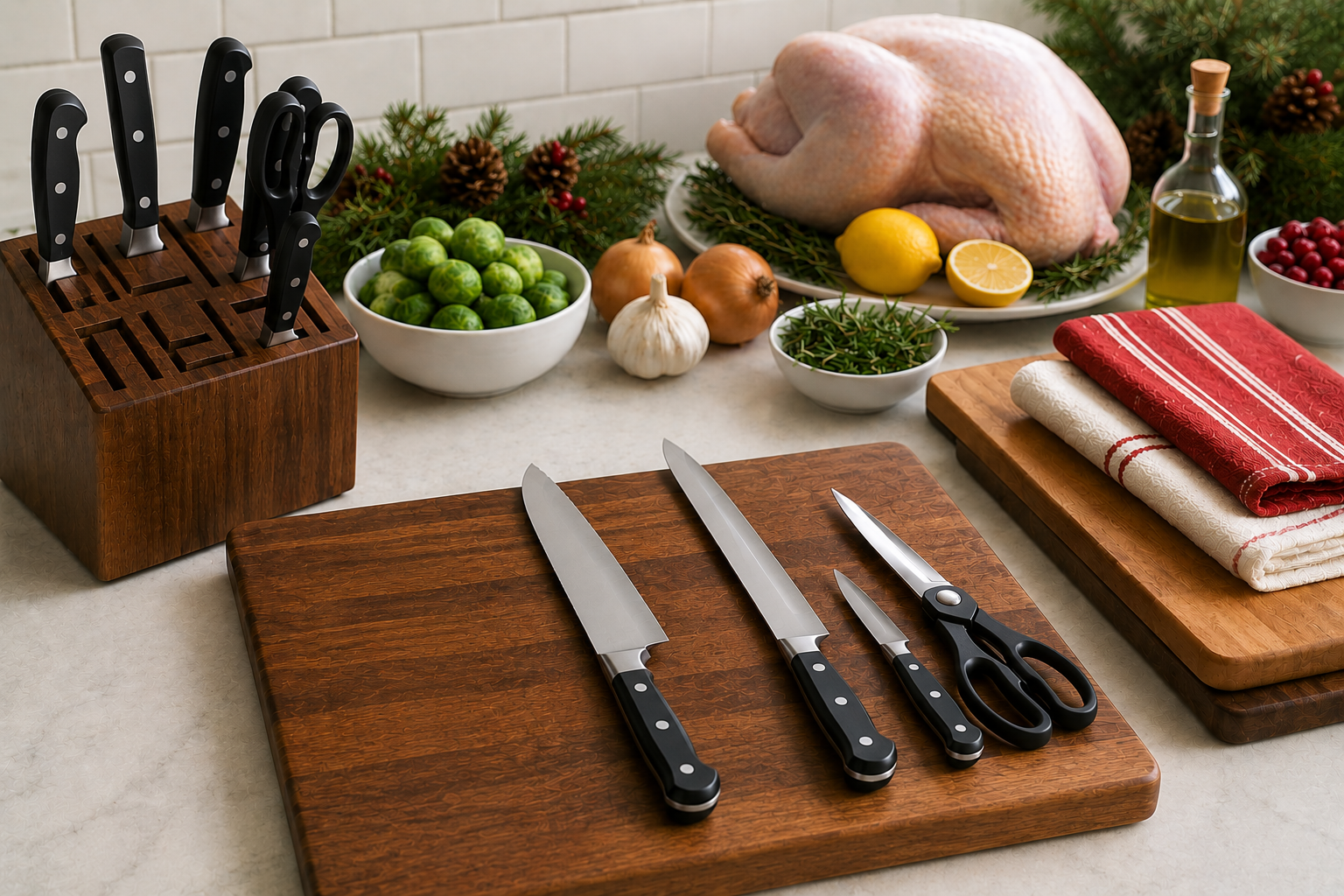
Prepare Before the Kitchen Gets Busy
Inspect the knives, cutting boards, storage, and work areas several days before holiday cooking begins. That leaves time for sharpening, repair, cleaning, replacement, or reorganization without delaying the meal.
Choose the Knives the Menu Actually Requires
Most holiday meals do not require every knife in the block. A small group of clean, dependable tools is usually easier to manage.
Common choices include:
• A chef’s knife for vegetables and general preparation.
• A paring knife for small trimming and detail work.
• A carving or slicing knife for cooked meats.
• A bread knife for crusty bread, cakes, and delicate baked goods.
• Kitchen or poultry shears when their design suits the task.
• A boning knife for controlled work around joints and connective tissue.
Choose each tool for its intended job rather than forcing one knife to do everything.
Inspect the Entire Knife
A sharp edge does not make a knife safe when the handle is loose, the blade is cracked, or the tip is badly damaged.
Use bright light and inspect:
• The edge for chips, rolls, flat spots, and uneven wear.
• The tip for bending, breakage, or rounding.
• The blade for corrosion, pitting, cracks, and dried residue.
• The handle for looseness, gaps, swelling, or cracks.
• Rivets, screws, bolsters, and scales for movement.
Remove structurally damaged or unreliable knives from service.
Test Cutting Performance Safely
Do not test an edge with a fingertip. Use controlled cutting tests appropriate to the knife.
Chef’s Knife
Check whether it begins a clean cut through tomato, pepper, or onion skin without slipping or heavy pressure.
Carving Knife
Confirm that the full edge slices smoothly without catching, tearing, or feeling dull near the tip.
Bread Knife
Make sure the serrations enter crust cleanly without crushing the loaf or requiring excessive sawing.
Kitchen Shears
Check that they cut cleanly from near the pivot through the tips without folding the material.
Honing, Sharpening, and Repair
These are different kinds of maintenance.
Honing or Light Touch-Up
Minor Edge DeclinePros
May restore useful cutting when a compatible edge is mildly rolled or has only begun losing bite.
Cons
Cannot repair chips, broken tips, deep corrosion, or a fully rounded apex.
Best For
An intact knife that improves after a few careful passes.
Sharpening or Repair
Worn or Damaged EdgePros
Creates a fresh apex and can correct appropriate edge or tip damage.
Cons
Requires more work and should be completed early enough for inspection and testing before the holiday.
Best For
Knives that remain dull after appropriate honing or show actual damage.
Prepare Stable, Clean Cutting Boards
A sharp knife is difficult to control on a board that slides, rocks, or is too small.
• Inspect boards for cracks, deep grooves, warping, and trapped residue.
• Use a damp towel or nonslip mat beneath a board when needed.
• Choose a board large enough for the ingredient and knife.
• Avoid cutting on glass, stone, ceramic, metal, or serving plates.
• Wash boards thoroughly after use.
• Use separate boards for raw meat, poultry, or seafood and foods that will not be cooked.
USDA guidance emphasizes separating cutting boards and utensils used for raw proteins from ready-to-eat foods to reduce cross-contamination.
Reduce Crowding and Counter Clutter
Holiday kitchens often include several cooks, extra appliances, serving dishes, packaging, and decorations.
• Clear unnecessary items from cutting areas.
• Keep scraps in a bowl rather than scattered across the board.
• Never cover a knife with a towel, packaging, parchment, or food.
• Keep knife handles away from the counter edge.
• Return knives to a defined visible location between tasks.
• Keep children and pets away from active cutting areas.
• Give inexperienced helpers tasks and tools that match their comfort and ability.
OSHA advises focusing attention on the cutting task and storing knives in designated holders rather than leaving them loose or hidden.
Prepare for Carving
Carving is easier when the cooked meat is stable, the knife is appropriately sharp, and the board provides enough room.
• Allow the meat to rest when appropriate.
• Stabilize round or uneven food before cutting.
• Keep the supporting hand outside the blade path.
• Use long, controlled slices rather than forceful sawing.
• Stop and reposition food when the knife becomes stuck.
• Do not twist or pry with a thin carving blade.
Carving and slicing knives are intended for controlled cuts through cooked meat, not chopping through solid bone or frozen joints.
Do Not Force Kitchen Knives Through Frozen Food
Frozen food can chip an edge, break a tip, trap the blade, or cause it to slip. Thaw food safely to a workable condition or use equipment specifically intended for frozen products.
Inspect Kitchen and Poultry Shears
Before using shears for poultry or other heavy work:
• Remove dried food, grease, rust, and debris from the pivot.
• Confirm that the blades maintain useful contact.
• Inspect handles for looseness or cracking.
• Check springs and locks when present.
• Make sure serrations remain intact.
• Remove the tool from service when the joint or handles are unreliable.
Use shears only for materials within their intended capacity.
Tell Helpers When Knives Have Been Sharpened
People accustomed to dull household knives may apply more pressure than a freshly sharpened edge requires. Let everyone know that the knives are sharp and should be handled deliberately.
Wash Knives Individually
Never leave a knife submerged in dishwater or hidden beneath dishes, pans, utensils, or towels.
• Keep the blade visible throughout cleaning.
• Wash one knife at a time.
• Hold and wipe from the spine side rather than moving fingers toward the edge.
• Rinse and dry immediately.
• Return the knife directly to safe storage.
ZWILLING recommends hand washing with mild dish soap and a non-scratch cloth or sponge to reduce wear from aggressive detergents and contact with other items.
Store Knives Between Cooking Sessions
Holiday preparation may continue over several days. Do not leave knives loose on the counter because they will be used again later.
Safe options include:
• A clean knife block with correctly sized slots.
• A properly installed magnetic rack.
• A fitted blade guard.
• An in-drawer organizer that separates each edge.
Only return clean, completely dry knives to storage.
Keep First-Aid Supplies Accessible
Even careful kitchens can have cuts. Keep clean gauze, dressings, and basic first-aid supplies available.
For life-threatening bleeding, call emergency services and apply firm direct pressure while following current first-aid guidance. Seek medical evaluation for deep, gaping, contaminated, or function-affecting wounds.
The American Red Cross provides current guidance for controlling serious external bleeding.
Holiday Knife Preparation Checklist
• Identify the knives needed for the planned menu.
• Inspect every blade, tip, handle, pivot, and connection.
• Test cutting performance safely.
• Arrange sharpening or repair before the cooking date.
• Clean and organize cutting boards and storage.
• Prepare stable work areas with adequate space.
• Set aside the correct tools for carving, bread, and poultry.
• Tell helpers when knives have been freshly sharpened.
• Keep children, pets, clutter, and distractions away from cutting areas.
• Wash, dry, and store knives immediately after use.
Key Takeaways
Prepare Early
Inspect, sharpen, repair, and organize knives before holiday cooking begins.
Match Tools to Tasks
Use chef’s knives, carving knives, bread knives, boning knives, and shears only for suitable work.
Control the Workspace
Stable boards, clear counters, visible knives, safe cleaning, and proper storage reduce confusion and risk.
References
The following sources were used in preparing and supporting this article.
Young Worker Safety in Restaurants: Food Preparation
Occupational Safety and Health Administration
osha.gov
Cutting Boards
USDA Food Safety and Inspection Service
fsis.usda.gov
How to Clean and Care for Your Knife
ZWILLING
zwilling.com
Life-Threatening External Bleeding
American Red Cross
redcross.org