Can This Kitchen Knife Be Saved?
Dullness, small chips, and minor tip damage are often correctable. Cracks, unstable handles, and severe corrosion are different.
Gibson County Knife Sharpening evaluates each accepted kitchen knife individually. Routine dullness, small chips, minor tip loss, and some profile problems may be correctable, while structural damage may make sharpening inappropriate.
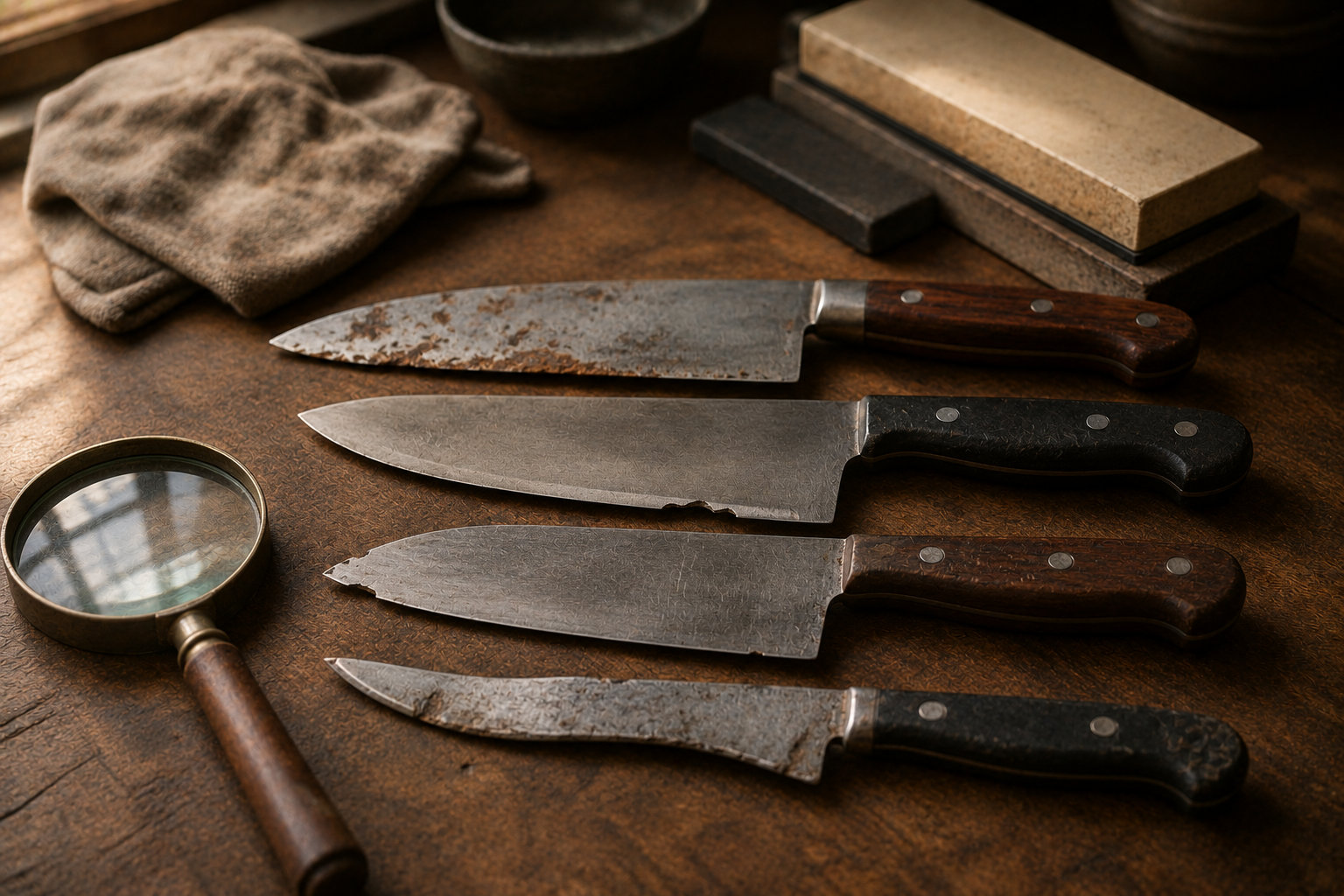
Start With Safety
A dull edge is a maintenance problem. A cracked blade, unstable handle, severe bend, or deep corrosion may be a safety problem.
A Quick Guide
| Condition | General Outlook |
|---|---|
| Routine dullness | Usually a good candidate for sharpening |
| Small chips or a rolled edge | Often correctable after inspection |
| Minor broken tip | May be reshaped with a small profile change |
| Light rust near the edge | May be manageable if sound steel remains |
| Cracked blade | Should not return to use |
| Loose or damaged handle | Sharpening does not correct the safety problem |
| Severe bend or deep corrosion | May require replacement or specialist evaluation |
Dull Knives Are Usually Straightforward
A structurally sound knife that has become dull through normal use is usually an excellent candidate for sharpening. Gibson County Knife Sharpening creates a new edge while removing only the steel needed for the work.
Small Chips and Rolled Edges
Small chips and rolled sections may be corrected by sharpening past the damaged steel and rebuilding the edge. The deepest damaged area determines how much correction is needed.
Large chips can change blade height and geometry. Any noticeable permanent change is discussed before work continues.
Minor Broken Tips
A small or moderate broken tip may be reshaped when enough sound steel remains. The new point may look slightly different from the original.
Major tip loss, a crack behind the break, or very thin remaining steel may make correction impractical.
Conditions Sharpening Cannot Solve
Gibson County Knife Sharpening does not treat sharpening as a fix for:
• Blade cracks.
• Loose or split handles.
• Severe bends or twists.
• Deep corrosion near the tang or handle.
• Widespread flaking steel.
• Ceramic blades.
Manufacturer service, another specialist, or replacement may be more appropriate.
What GCKS Evaluates
For accepted straight-edged kitchen knives and serrated bread knives, evaluation may include dullness, edge rolling, small chips, limited tip reshaping, rust near the edge, uneven prior sharpening, and board-contact problems.
Each knife is evaluated individually. Gibson County Knife Sharpening does not currently provide thinning, handle replacement, crack repair, or major blade straightening.
Bring the Knife Safely
• Stop using the knife.
• Wash and dry it carefully.
• Cover the edge and damaged tip with a blade guard or secure cardboard sleeve.
• Do not place it loose in a bag.
• Explain what happened during intake.
Service is by appointment in Medina.
Key Takeaways
Many Edge Problems Are Correctable
Routine dullness, small chips, rolled edges, and minor tip loss may respond well to sharpening or limited correction.
Structure Comes First
Cracks, unstable handles, severe bends, and deep corrosion can make a knife unsafe.
Every Knife Is Evaluated
The likely result and any meaningful profile change are considered before work begins.
References
The following sources were used in preparing and supporting this article.
Food Services: Kitchen Equipment
Occupational Safety and Health Administration
osha.gov
Sharpening Service
ZWILLING
zwilling.com