Stropping Explained: The Final Finishing Step
A few light, controlled passes can remove burr remnants and leave a cleaner, more stable edge.
Stropping is an edge-trailing finishing technique used after sharpening. It can remove fine burr remnants, refine the apex, and improve cutting feel when performed with light pressure on leather, wood, felt, or another suitable surface.
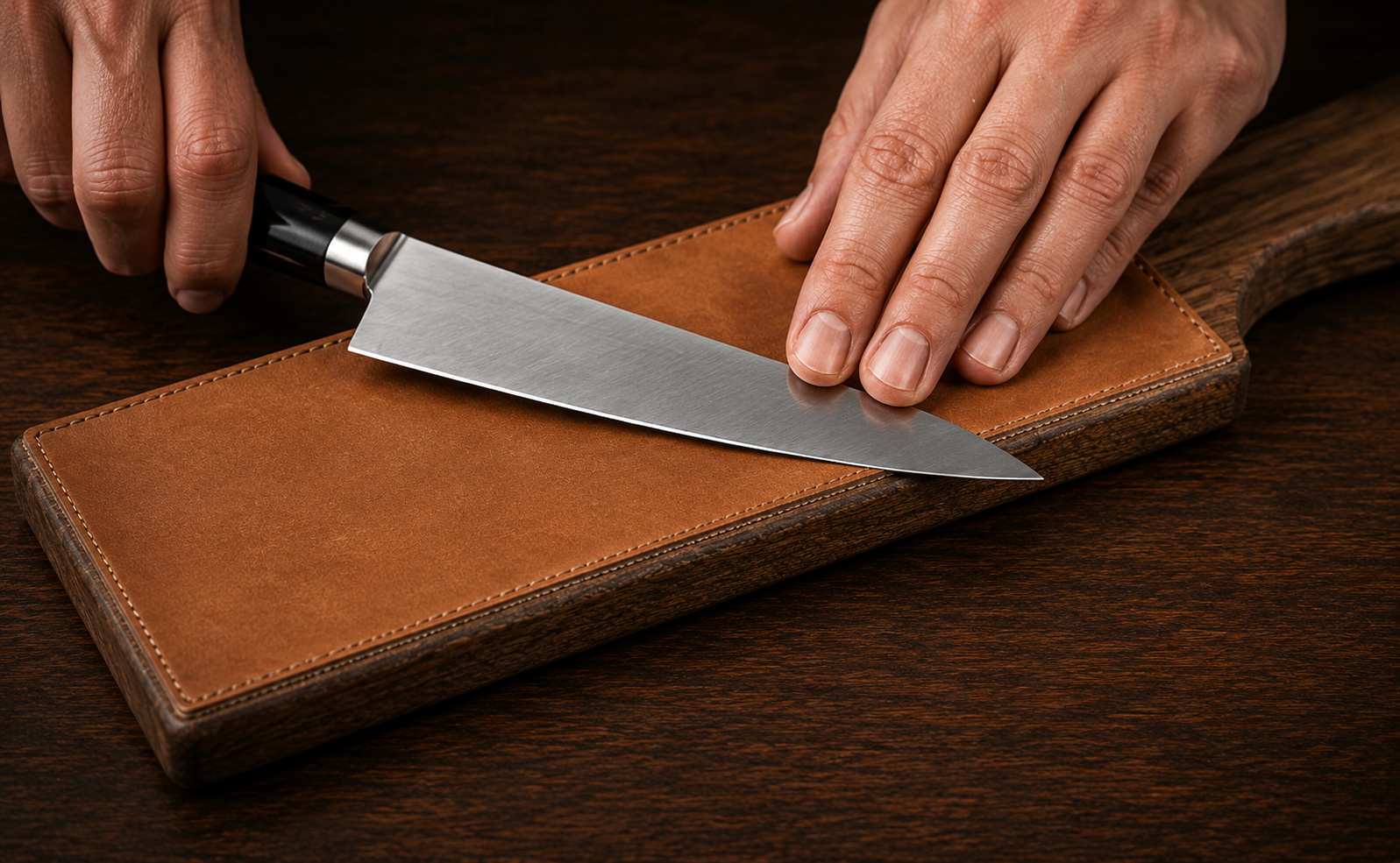
What Stropping Actually Does
Stropping is a finishing step used after the edge has already been sharpened. The knife is moved edge-trailing across leather, wood, felt, or another prepared surface.
A few light passes can remove fine burr remnants, refine the apex, and improve how cleanly the edge cuts. Stropping may also restore some bite to an edge that has begun to lose crispness.
It does not replace sharpening. If the apex is rounded, damaged, or no longer fully formed, stropping alone will not restore it.
Stropping vs. Honing vs. Sharpening
These three processes serve different purposes and should not be treated as interchangeable.
Stropping
Final RefinementPros
Removes fine burr remnants and lightly refines an already-sharpened edge.
Cons
Cannot repair chips, rebuild a rounded apex, or correct major dullness.
Best For
Finishing after sharpening and light maintenance between sharpenings.
Honing
Edge RealignmentPros
Helps straighten or refresh a slightly rolled edge with very little steel removal.
Cons
Has limited effect once the apex is worn, damaged, or rounded.
Best For
Routine maintenance on suitable kitchen knives.
Sharpening
Edge RestorationPros
Removes steel to reform the apex, repair dullness, and restore cutting performance.
Cons
Removes more material and takes more time than stropping or honing.
Best For
Dull, damaged, or uneven edges that no longer respond to maintenance.
Choosing a Stropping Surface
The surface affects how much the strop conforms to the bevel and how much control you have at the apex.
Leather
Slightly conforming and well suited to final burr removal and general edge refinement. Use light pressure to avoid rounding the apex.
Wood
Firmer and flatter than leather, helping maintain crisp bevel geometry while using fine compound.
Felt
Works quickly and can hold polishing compounds well, but pressure and speed must be controlled carefully.
Bare Strop
Useful for light finishing when little or no abrasive action is needed. Results depend heavily on the surface material.
Choosing a Stropping Compound
| Compound Range | General Effect | Typical Use |
|---|---|---|
| 6–4 micron | Removes fine sharpening scratches and burr remnants relatively quickly | Early stropping after sharpening |
| 3–2 micron | Refines the apex and improves edge smoothness | General-purpose finishing |
| 1 micron | Produces a highly refined edge with a finer polish | Final stropping on suitable knives |
| Bare surface | Provides little or no added abrasive action | Light finishing and checking the edge |
Correct Stropping Technique
Place the blade on the strop at approximately the sharpening angle, then move it spine-first so the cutting edge trails behind. Never push the edge forward into the stropping surface.
Use very light pressure. The abrasive should contact the bevel without allowing a soft surface to wrap around and round the apex.
Alternate sides and keep the motion controlled from heel to tip. A few careful passes are usually more effective than many heavy ones.
Common Stropping Mistakes
Most stropping problems come from excess pressure, poor angle control, or too many passes.
Using Too Much Pressure
Heavy pressure allows soft leather or felt to wrap around the edge and round the apex.
Raising the Angle Too High
Lifting the spine too far concentrates pressure at the edge and can blunt the apex.
Stropping Edge-First
Pushing the cutting edge into the surface can cut the strop and damage the edge. Always move spine-first.
Doing Too Many Passes
Excessive stropping can over-polish the edge, reduce useful bite, or gradually round the apex.
Using Stropping Instead of Sharpening
A strop cannot repair chips, correct uneven bevels, or restore a fully worn edge.
How Often Should You Strop?
Strop only when the edge needs light refinement. After sharpening, a few passes may help remove fine burr remnants and clean up the apex.
Between sharpenings, stropping can restore some crispness when the knife still cuts well but has begun to lose bite. Stop once performance improves.
If stropping no longer helps, the edge is likely too worn, rounded, or damaged and needs sharpening instead.
Key Takeaways
Stropping works best as a light finishing and maintenance step—not as a substitute for sharpening.
Strop After Sharpening
A few light passes can remove fine burr remnants and leave a cleaner, more stable apex.
Use Edge-Trailing Strokes
Move the blade spine-first so the cutting edge trails behind and does not cut into the strop.
Keep Pressure Light
Too much pressure can make soft leather or felt wrap around the edge and round the apex.
Match the Surface and Compound
Leather, wood, felt, and different compound sizes produce different levels of refinement and control.
Sharpen When Stropping Stops Working
Stropping cannot repair chips, uneven bevels, or a fully worn and rounded edge.
References
The following sources were used in preparing and supporting this article.
How to Raise a Burr on a Knife
Work Sharp
worksharptools.com
I've Raised a Burr, What's Next?
Work Sharp
worksharptools.com
What Is Stropping?
Work Sharp
worksharptools.com