Patina vs. Rust on Carbon-Steel Knives
Not every dark mark is damage, but active corrosion should never be ignored.
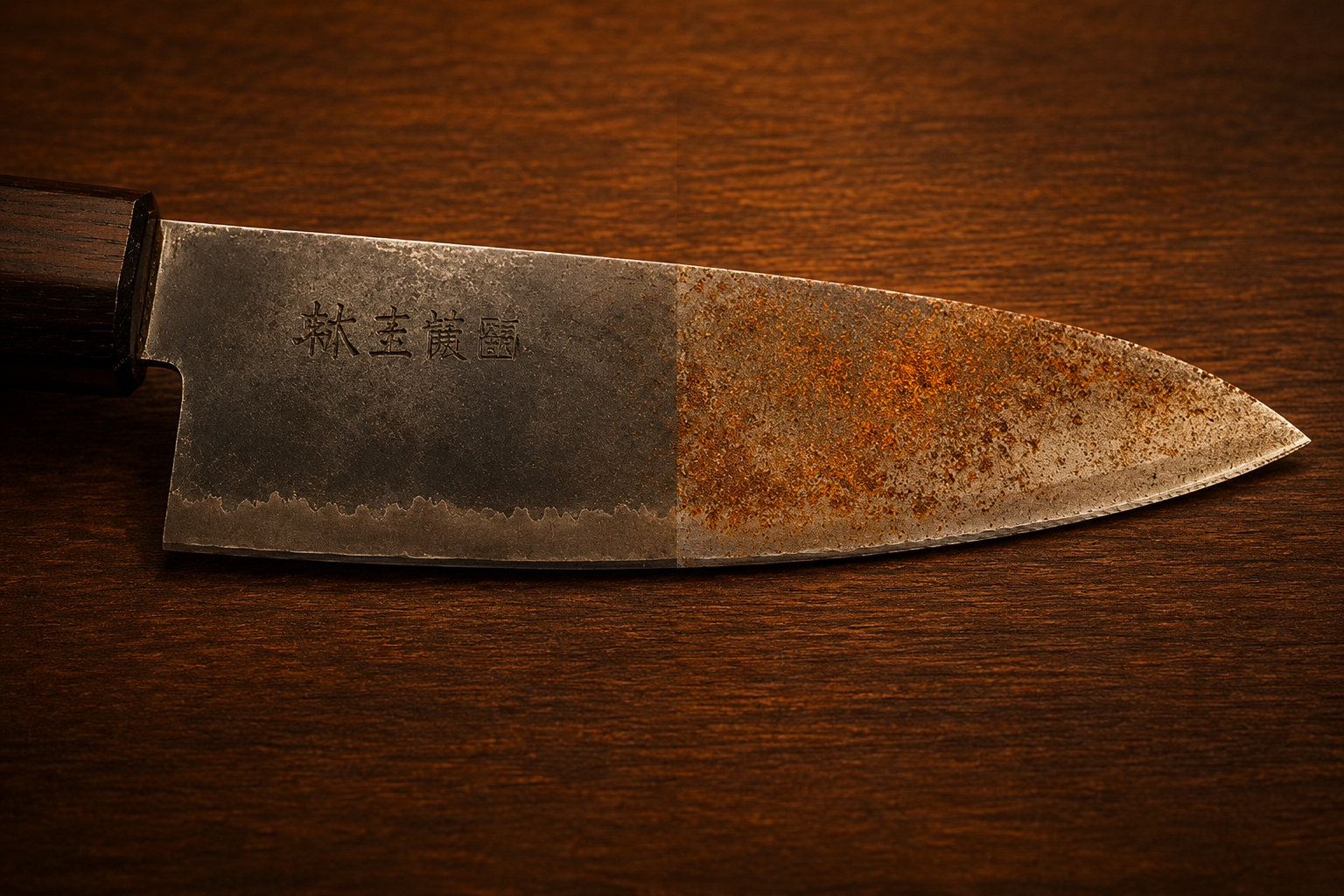
Carbon-steel knives naturally change color during use. Smooth gray, blue, purple, brown, or black areas are often stable patina, while orange, rough, flaky, or spreading spots usually indicate active rust.
Why Carbon Steel Changes Color
Carbon steel reacts with oxygen, moisture, salt, acids, sulfur compounds, and other substances found in food. Those reactions alter the blade surface.
Some changes become smooth, stable patina. Others remain active and continue consuming the steel as rust. The important question is not simply whether the blade changed color, but whether the surface is stable or deteriorating.
Patina and Rust at a Glance
| Feature | Patina | Rust |
|---|---|---|
| Typical appearance | Gray, blue, purple, brown, black, or dark mixed tones | Orange, red, reddish brown, or bright rust-colored spots |
| Texture | Usually smooth and tightly bonded | May feel rough, raised, powdery, or flaky |
| Behavior | Usually remains stable or changes slowly with use | May spread, shed residue, or deepen into pits |
| Effect on steel | May provide limited surface protection | Continues consuming and weakening the steel |
| What to do | Leave stable patina in place and continue normal care | Remove active corrosion promptly and inspect for damage |
Practical identification rule: Smooth and stable usually suggests patina. Orange, rough, raised, flaky, powdery, or spreading areas suggest active rust.
Natural Patina Is a Normal Part of Use
Natural patina develops gradually as the knife contacts different foods. Cooked proteins may encourage blue, purple, or gray tones, while onions, potatoes, apples, and other reactive foods may produce darker or uneven areas.
A mature patina may reduce metallic smell, food discoloration, and direct exposure of fresh steel. It is not a waterproof coating, however. Moisture, salt, acids, scratches, and food residue can still cause rust.
Removing every dark mark is unnecessary. Polishing away stable patina exposes fresh reactive steel and starts the surface-aging process again.
Natural vs. Forced Patina
Both methods change the steel surface, but a forced patina carries more risk because acids are deliberately concentrated on the blade.
Natural Patina
Develops During UsePros
Forms gradually, reflects normal use, and usually presents little risk when the knife is cleaned and dried promptly.
Cons
The appearance may be uneven, unpredictable, and constantly changing.
Best For
Most carbon-steel knife owners.
Forced Patina
Created IntentionallyPros
Can produce a darker, more uniform, or decorative surface in a short time.
Cons
Acids can etch the steel, alter markings, damage finishes, affect cladding unevenly, or lead to rust if not rinsed and dried correctly.
Best For
Experienced owners who understand the knife’s construction and finish.
Rust Warning Signs
Investigate discoloration when the surface looks or behaves differently from ordinary patina.
Orange or Red Spots
Fresh rust often begins as small orange, red, or reddish-brown areas.
Rough or Raised Texture
A surface that feels rough, swollen, flaky, or powdery is more concerning than smooth discoloration.
Residue on a Cloth
Orange or brown material that transfers during wiping suggests active corrosion.
Spreading Discoloration
An area that grows after moisture exposure should be cleaned and evaluated.
Pits or Cavities
Dark holes or craters indicate that corrosion has removed steel below the surface.
Damage at the Edge or Handle
Rust near the cutting edge, bolster, rivets, scales, or handle gaps deserves prompt attention.
Why Location and Construction Matter
Rust at the cutting edge can create roughness, microchips, and weakened sections because the apex contains very little steel. Corrosion near the handle may extend beneath scales, around rivets, or into hidden tang areas.
Stainless-clad carbon knives often develop patina mainly along the exposed core near the edge. Iron-clad knives may react across most of the blade face. Carbon-steel Damascus can patina throughout the pattern, while stainless Damascus is usually more resistant.
Kurouchi is an intentional dark forge finish and should not be mistaken for rust simply because it looks uneven. Active orange corrosion can still form on exposed steel or beneath damaged areas of the finish.
Handling Fresh Surface Rust
Begin with the mildest practical method. Wash and dry the knife first, then confirm that the area is active rust rather than stable patina.
A purpose-made rust eraser, gentle baking-soda paste, fine polish, or finish-appropriate abrasive may remove light surface corrosion. Every abrasive can alter the blade, so work carefully and follow the existing scratch direction on satin finishes.
Avoid chlorine bleach and ordinary steel wool. Bleach can promote pitting and damage handles or finishes, while steel wool can scratch the blade and leave behind particles that later rust.
Valuable markings, etched patterns, polished finishes, vintage knives, and sentimental blades should be evaluated before significant restoration.
A Practical Identification Guide
| What You See | Likely Condition | What to Do |
|---|---|---|
| Smooth blue, gray, purple, brown, or dark coloration | Stable patina | Continue normal cleaning, drying, and storage |
| Dark stain with no roughness or residue | Patina or cosmetic staining | Monitor it and avoid unnecessary polishing |
| Small orange spot | Fresh surface rust | Remove it promptly and inspect the steel beneath |
| Orange area that feels rough or leaves residue | Active corrosion | Clean and remove the rust before it spreads |
| Dark crater or hole | Pitting | Evaluate the depth, location, and effect on cleaning or strength |
| Rust or pitting at the edge | Edge damage | Corrosion removal and sharpening may both be required |
Preventing Rust While Preserving Patina
Stable patina can remain in place, but the knife still needs ordinary carbon-steel care.
Wash Promptly
Remove food acids, salt, and residue soon after use. Never soak the knife or place it in a dishwasher.
Dry Completely
Dry the blade, edge, spine, heel, bolster, handle, and seams before storage.
Store in a Dry Place
Avoid damp blocks, wet guards, humid drawers, and moisture-trapping sheaths.
Address Orange Rust
Leave stable patina alone, but remove orange, rough, flaky, or spreading corrosion promptly.
References
The following sources were used in preparing and supporting this article.
How to Keep Your Shun Knives in Top Condition
Shun Cutlery
shun.kaiusa.com
Caring for Your Japanese Knives: Storage, Cleaning and Maintenance
Shun Cutlery
shun.kaiusa.com
About Carbon Knife Care
Korin
korin.com