What Makes a Santoku Different from a Gyuto?
Two popular Japanese kitchen knives with different strengths.
Santoku and gyuto knives are both useful everyday kitchen tools. The difference is not simply one being better than the other. Blade length, profile, tip shape, and cutting style all affect which one feels best in your kitchen.
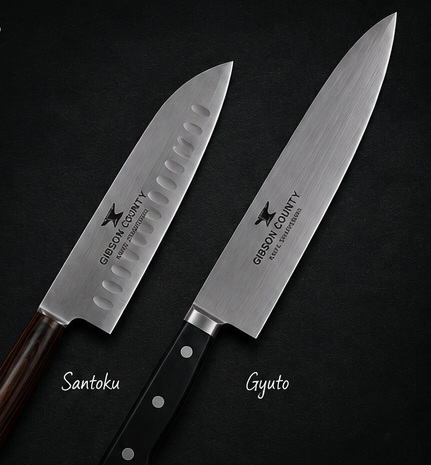
What is a santoku?
A santoku is a Japanese-style multipurpose kitchen knife. It is usually shorter than a gyuto, with a wider blade, flatter edge profile, and a less pointed tip.
Many home cooks like santoku knives because they feel compact, controlled, and comfortable for vegetables, boneless meats, and everyday prep work.
What is a gyuto?
A gyuto is the Japanese version of a chef knife. It is usually longer and narrower than a santoku, with a more pointed tip and a blade profile that supports longer slicing strokes.
Gyuto knives are excellent all-purpose knives, especially for cooks who like more blade length, precise tip work, and a wider range of cutting motions.
Quick comparison
| Feature | Santoku | Gyuto |
|---|---|---|
| Typical Length | Often 5–7 inches. | Often 8–10 inches. |
| Blade Shape | Shorter, wider, and flatter. | Longer, narrower, and more pointed. |
| Tip | Less pointed, often with a sheepfoot-style tip. | More pointed for detail work and slicing. |
| Cutting Motion | Push cuts, chopping, and straight up-and-down cuts. | Slicing, rocking, push cuts, and longer strokes. |
| Best For | Smaller kitchens, vegetables, quick prep, and everyday use. | Longer slicing, larger ingredients, and more versatile chef-knife work. |
Blade profile changes how the knife moves
Santoku knives usually have a flatter edge profile. That makes them feel natural for push cutting, chopping, and clean board contact.
Gyuto knives usually have more curve and a more pronounced tip. That gives them more versatility for longer slicing strokes, tip work, and some rocking cuts.
Which one is easier to use?
Many home cooks find a santoku easier at first because it is shorter and feels less intimidating. The flatter edge can also make quick vegetable prep feel simple and controlled.
A gyuto may take slightly more control because of its length, but it offers more reach and more versatility once you are comfortable with it.
Which one sharpens better?
Both can sharpen very well. The difference is not the knife name, but the steel, heat treatment, blade geometry, edge angle, and condition of the knife.
A santoku's flatter profile may require careful attention near the heel and tip. A gyuto's longer edge requires consistent angle control along more blade length.
Which should you choose?
Choose a Santoku If...
- You prefer a shorter knife
- You do a lot of vegetable prep
- You like push cuts and chopping
- You want a comfortable everyday knife.
Choose a Gyuto If...
- You want more blade length
- You slice larger foods often
- You like precise tip work
- You want a chef-knife style with Japanese influence.
Do you need both?
You do not need both, but many cooks enjoy having both. A santoku can be a quick, compact daily-use knife, while a gyuto can handle larger prep tasks and longer slicing work.
If you only want one all-purpose knife, choose the one that feels best in your hand and matches your cutting style.
Key Takeaways
Both Are Versatile
Santoku and gyuto knives are both excellent all-purpose kitchen knives.
Shape Changes Technique
Santoku knives often favor push cuts, while gyuto knives usually handle longer slicing and rocking cuts better.
Choose What Fits You
The best choice depends on your hand, your cutting style, and the foods you prepare most often.
References
The following sources were used in preparing and supporting this article.
Japanese Chef Knife Catalog and Sharpening Guide
Korin
korin.com
Knife Steels Rated by a Metallurgist
Knife Steel Nerds
knifesteelnerds.com
Six Tips to Sharpen and Maintain Your Knives
Work Sharp
worksharptools.com