Types of Knife Steel
Steel affects sharpness, durability, rust resistance, and maintenance.
You do not need to memorize every steel designation, but understanding the major steel families helps explain why different knives perform and sharpen differently.
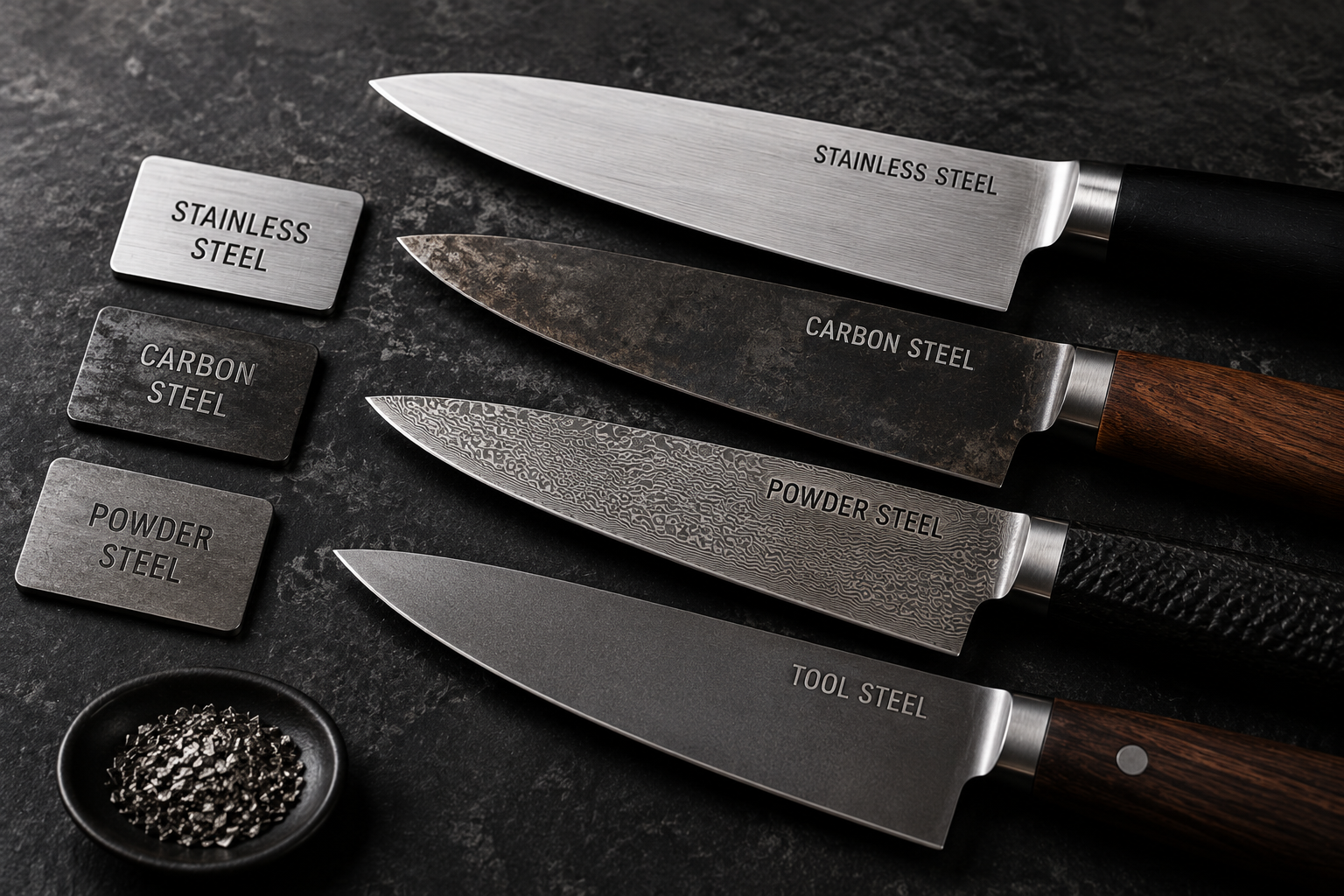
Why knife steel matters
Edge Retention
How long the knife keeps cutting well before it needs sharpening again.
Toughness
How well the steel resists chips, cracks, and impact damage.
Corrosion Resistance
How well the blade resists rust, staining, and acidic foods.
Sharpenability
How easily the steel can be restored to a clean, sharp edge.
The three main steel families
Most kitchen, pocket, and utility knives fall into one of these broad categories. Each has strengths and tradeoffs.
Stainless Steel
The most common choice for everyday kitchen knives. Stainless steel is easy to live with, resists rust well, and is usually forgiving in normal home use.
Carbon Steel
Carbon steel can take an excellent edge and is often loved by enthusiasts, but it requires more care because it can rust and develop a patina.
Powder Metallurgy Steel
Modern powdered steels are engineered for high performance, especially edge retention and wear resistance. They can be excellent, but may be harder to sharpen.
Steel family comparison
| Feature | Stainless Steel | Carbon Steel | Powder Steel |
|---|---|---|---|
| Rust Resistance | Excellent | Low | Good to excellent |
| Edge Retention | Good | Very good | Excellent |
| Toughness | Good | Varies by steel and heat treatment | Varies widely |
| Easy to Sharpen | Usually easy | Often easy to very easy | Often more difficult |
| Best For | Everyday kitchen use | Enthusiasts and traditional knives | High-performance kitchen, pocket, and outdoor knives |
Hardness and toughness are different
A harder steel may hold an edge longer, but it may also be more likely to chip if misused. A tougher steel may be more forgiving, but the edge may roll or dull sooner.
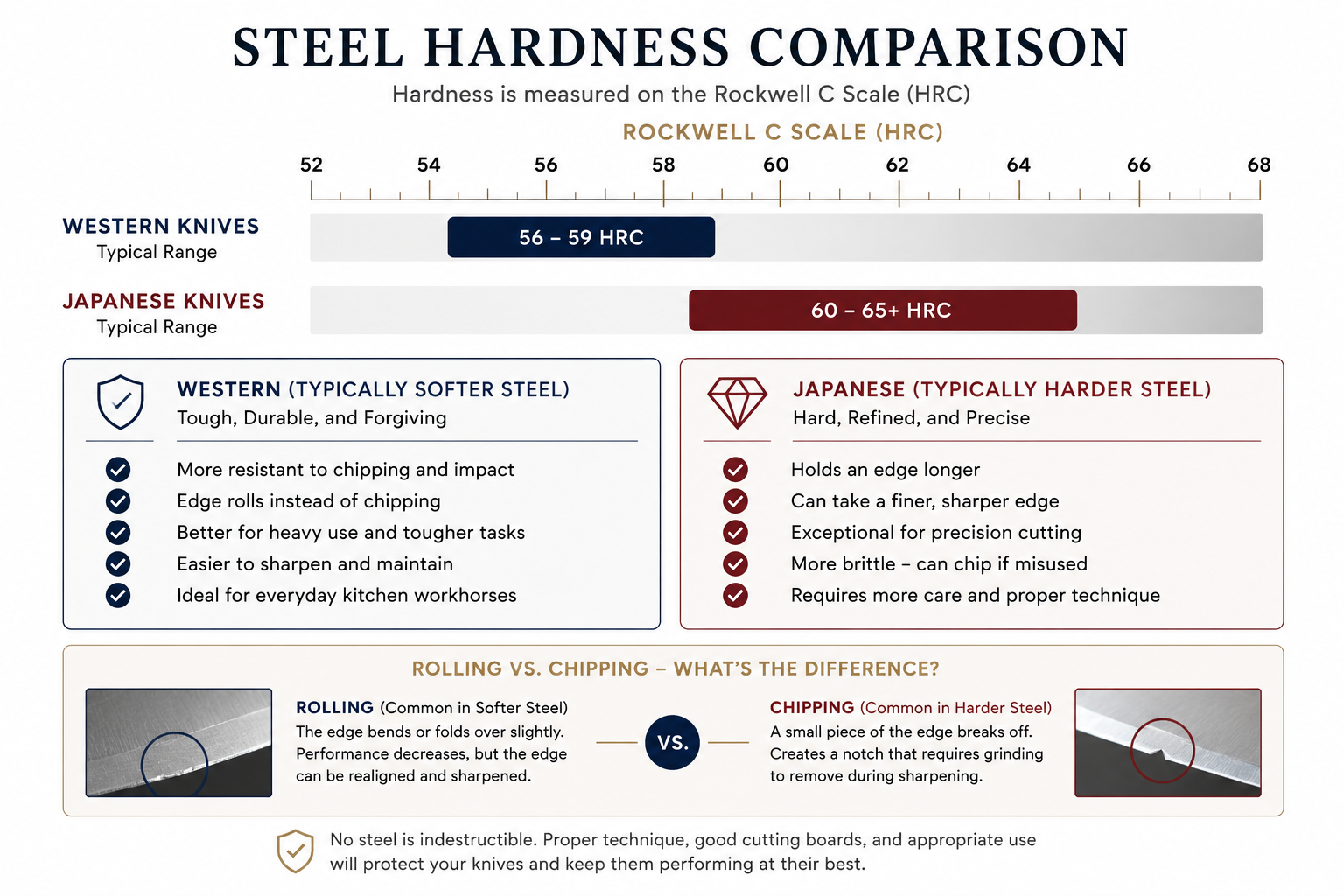
Rolling vs. chipping
Rolled Edge
Softer or tougher steels often roll before they chip. The edge bends slightly out of alignment, making the knife feel dull.
Chipped Edge
Harder, thinner edges may chip if they hit bone, frozen food, glass, ceramic, or stone. Chips require sharpening past the damaged area.
Common knife steels you may see
| Steel | Often Found In | General Notes |
|---|---|---|
| X50CrMoV15 | Many German-style kitchen knives | Stainless, tough, practical, and common in everyday kitchen cutlery. |
| VG-10 | Japanese-style kitchen knives | Popular stainless steel with good edge retention and fine cutting performance. |
| 420HC / 440C | Kitchen, utility, and pocket knives | Stainless steels that vary widely depending on heat treatment and knife quality. |
| 1095 | Carbon steel outdoor and utility knives | Sharpens well and performs well, but needs oiling and rust prevention. |
| White #2 / Blue #2 | Traditional Japanese knives | Excellent carbon steels capable of very keen edges; require careful care. |
| S30V / S35VN | Premium pocket and outdoor knives | Good edge retention and corrosion resistance; harder to sharpen than basic steels. |
| M390 | Premium folders and specialty knives | High wear resistance and edge retention; requires proper abrasives. |
| MagnaCut | Modern premium knives | Known for a strong balance of toughness, corrosion resistance, and edge retention. |
Patina vs. rust
Carbon steel often develops a gray, blue, or dark patina over time. That is normal and can even help protect the blade. Orange rust is different. Rust is active corrosion and should be removed before it damages the steel.
Common steel myths
Myth: Stainless Steel Never Rusts
Stainless steel is stain-resistant, not stain-proof. Moisture, salt, acids, and neglect can still cause rust spots or staining.
Myth: Carbon Steel Is Always Better
Carbon steel can be excellent, but it is not ideal for everyone. It needs more care and may not be the best choice for every kitchen.
Myth: Harder Steel Means a Better Knife
Hardness is only one part of performance. Geometry, heat treatment, toughness, and sharpening all matter.
Not sure what steel your knife uses?
That is completely normal. Many knives have worn markings, unclear labels, or no steel information at all. A knife can still be evaluated by its condition, construction, blade thickness, flex, and how the edge responds during sharpening.
Key Takeaways
Steel Is a Balance
Edge retention, toughness, corrosion resistance, and sharpenability all work together.
Harder Is Not Always Better
Hard steel can hold an edge well, but it may also be more prone to chipping if misused.
Use Matters
The best steel depends on the knife, the heat treatment, the blade geometry, and how it will be used.
References
The following sources were used in preparing and supporting this article.
Knife Steels Rated by a Metallurgist
Knife Steel Nerds
knifesteelnerds.com
Testing the Edge Retention of 48 Knife Steels
Knife Steel Nerds
knifesteelnerds.com
What Is Edge Stability?
Knife Steel Nerds
knifesteelnerds.com