Do Expensive Knives Stay Sharp Longer?
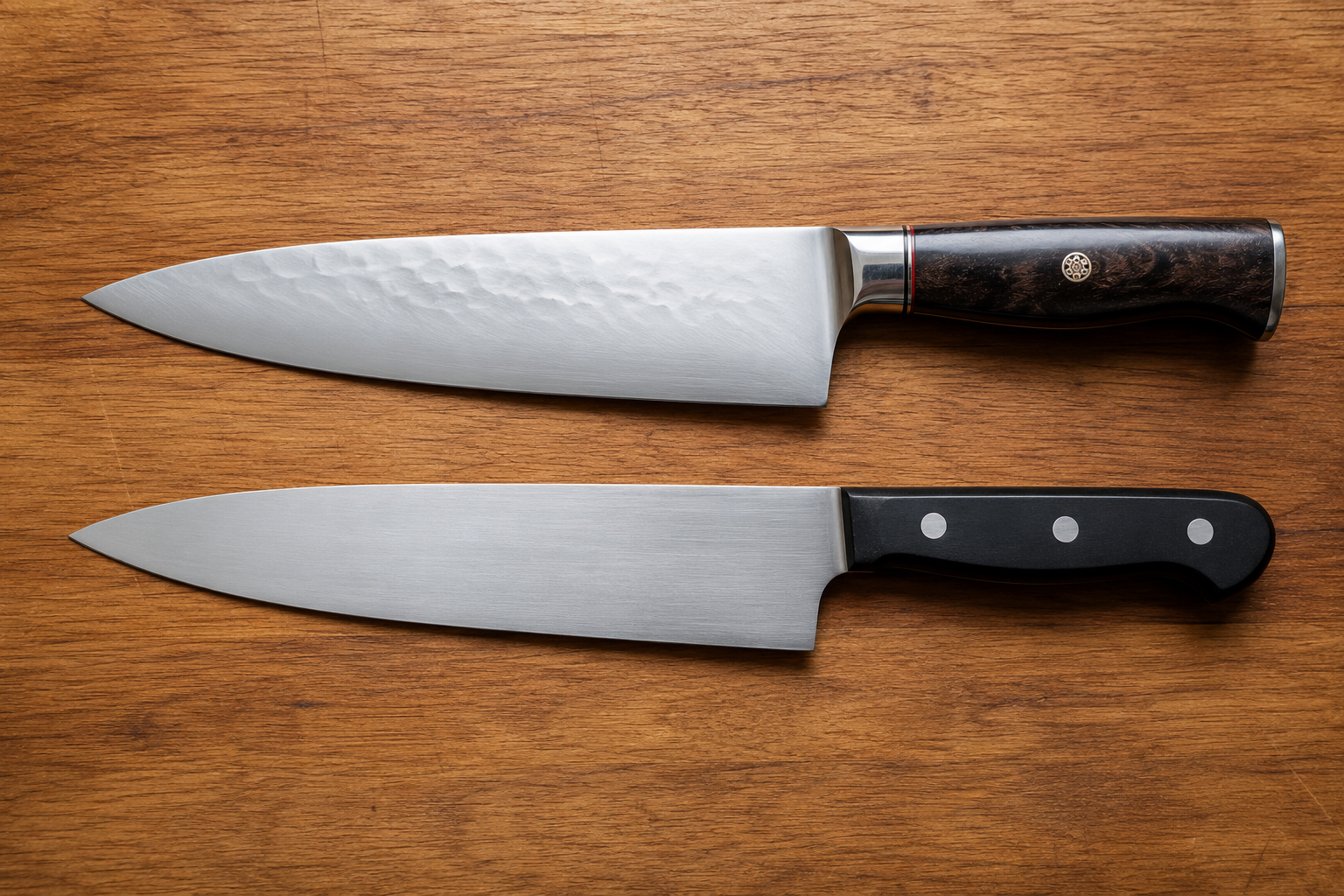
A higher price may reflect better steel, heat treatment, geometry, comfort, finish, or craftsmanship—but price alone does not determine edge retention.
Some premium knives hold an edge extremely well, but lasting sharpness depends on steel, heat treatment, hardness, edge geometry, sharpening quality, cutting habits, boards, cleaning, and storage.
The Practical Answer
Some expensive knives hold an edge very well, but price alone is not a reliable measure of edge retention. Steel, heat treatment, geometry, sharpening quality, use, and care matter more.
What Edge Retention Means
Edge retention describes how long a knife continues cutting effectively before the apex becomes too worn, rounded, rolled, chipped, or otherwise unsuitable for the task.
It is not one fixed property. A knife may retain a fine slicing edge for a long time but chip during rough use. Another may lose its initial razor-like feel sooner while continuing to cut acceptably with a durable working edge.
The food being cut and the user’s expectations also affect when a knife is considered dull.
What Affects How Long an Edge Lasts?
Steel
Alloy composition and carbide structure influence wear resistance, toughness, corrosion resistance, and sharpening behavior.
Heat Treatment
The same steel can perform differently depending on hardening, quenching, tempering, and process control.
Hardness
Higher hardness can improve wear resistance and edge stability, but may reduce toughness when pushed too far.
Edge Geometry
Angle, thickness behind the edge, and apex support strongly affect cutting efficiency and durability.
Sharpening Quality
A clean, fully apexed, properly deburred edge generally lasts longer than one supported by a weak wire burr.
Use and Care
Cutting boards, technique, storage, cleaning, and task choice can preserve or quickly damage an edge.
Price Can Reflect More Than Performance
Knife price may include handle materials, decorative finishes, hand polishing, limited production, packaging, country of manufacture, brand reputation, custom work, and craftsmanship.
Those qualities may make a knife more comfortable, attractive, enjoyable, collectible, or difficult to produce without directly increasing edge retention.
A premium knife can be worth its price even when lasting sharpness is not the main reason.
The Steel Name Does Not Tell the Whole Story
Two knives made from the same listed steel can have different hardness, toughness, carbide condition, geometry, and heat-treatment quality.
One manufacturer may emphasize toughness and ease of maintenance. Another may use higher hardness and thinner geometry to improve cutting efficiency and wear resistance.
Neither approach is automatically better for every owner or every kitchen.
Harder Is Not Automatically Better
Hardness must be balanced with toughness, geometry, and intended use.
Higher Hardness
Wear ResistancePros
Can support lower angles, resist deformation, and retain slicing performance longer.
Cons
May be more sensitive to chips from impact, twisting, bones, frozen food, or hard pits.
Best For
Careful users who value thin geometry and longer intervals between sharpening.
Moderate Hardness
Durability and MaintenancePros
Often easier to sharpen and more tolerant of impact, shared use, and imperfect technique.
Cons
May roll or dull sooner and require more frequent maintenance.
Best For
Busy households, work kitchens, and users who prioritize toughness and easy maintenance.
Geometry Can Matter More Than Price
A thin knife with efficient geometry may continue feeling sharp after the apex has lost some refinement. A thick knife may feel sluggish even when the edge itself is technically sharp.
This is why cutting performance and edge retention are related but not identical.
A moderately priced knife with thin geometry and a well-applied edge can outperform a more expensive but thicker knife in ordinary kitchen work.
Use and Care Can Overwhelm the Difference
Even excellent steel can dull or fail quickly when used outside the knife’s design.
• Glass, granite, ceramic, and stone cutting surfaces accelerate wear.
• Twisting the blade while it is embedded in food can damage a thin edge.
• Bone, frozen food, and hard pits can roll or chip the apex.
• Scraping food sideways with the cutting edge weakens or deforms it.
• Loose drawer storage allows the edge to strike other utensils.
• Dishwasher exposure can damage the edge, blade, handle, and finish.
A carefully used affordable knife may stay sharp longer than a premium knife exposed to damaging habits.
Sharpening Quality Affects Durability
A knife may feel exceptionally sharp immediately after sharpening and then decline quickly if a wire burr remains.
A durable edge should be fully apexed, completely deburred, and finished appropriately for the steel, geometry, and intended use.
The lowest possible angle or finest possible polish is not automatically the longest-lasting choice. The edge needs enough support for the work it will perform.
When Each Price Range May Make Sense
| Choice | Possible Advantages | Best Fit |
|---|---|---|
| Affordable or mid-priced knife | Practical steel, durable geometry, easy maintenance, lower replacement anxiety, and strong everyday value. | Busy households, shared kitchens, newer cooks, and demanding routine use. |
| Premium production knife | More consistent geometry, refined fit and finish, better comfort, specialized steel, and lower weight. | Frequent cooks who value cutting feel, ergonomics, and improved refinement. |
| Custom or handmade knife | Individual geometry, craftsmanship, materials, balance, finish, and direct maker involvement. | Owners who value a tailored tool, artistry, collectibility, or specific performance goals. |
Questions to Ask Before Buying
• What steel is used, and how is it heat-treated?
• Is the knife thin or thick behind the edge?
• Does the geometry suit the foods and techniques I use?
• Is the handle comfortable and secure?
• Can the knife be maintained and sharpened conveniently?
• Am I paying for performance, craftsmanship, appearance, rarity, or brand prestige?
• Will my cutting habits support a harder, thinner edge?
• Would a less expensive knife meet the same practical need?
Key Takeaways
Price Is Not a Guarantee
A costly knife may use excellent materials, but price alone does not determine edge retention.
Steel Is Only One Factor
Heat treatment, hardness, geometry, edge angle, and sharpening quality all affect performance.
Use and Care Matter
Cutting surfaces, technique, cleaning, storage, and maintenance can outweigh the difference in price.
References
The following sources were used in preparing and supporting this article.
Knife Steels Rated by a Metallurgist: Toughness, Edge Retention, and Corrosion Resistance
Knife Steel Nerds
knifesteelnerds.com
Testing the Edge Retention of 48 Knife Steels
Knife Steel Nerds
knifesteelnerds.com
What a Good Heat Treatment Can and Cannot Do
Knife Steel Nerds
knifesteelnerds.com
How to Pick the Best Steel for Every Knife
Knife Steel Nerds
knifesteelnerds.com